 We used to take the time to stop to smell the roses, but not
anymore – thanks in part to those 140 character limits in Twitter.
We used to take the time to stop to smell the roses, but not
anymore – thanks in part to those 140 character limits in Twitter.
Twitter isn't the only social media network cutting into our
already quick-paced attention spans.
The constant flow of status updates on all the social media sites we plug into is as well.
And the 15-year-old wonder kid programmers coding these
social networks are well aware of this – in fact they are encouraging it by
making our social media experiences more visual than textual.
Facebook, Google Plus, and Twitter all recently updated
their web and mobile layouts and user interfaces to make them more graphical.
When you scroll through your Facebook timeline, you’ll be
dazzled by the bright images your friends posted. Google Plus places a huge emphasis on images – they appear larger and bolder than the text descriptions
on both the web and mobile versions of all posts. And Twitter recently added the ability to attach photos to tweets.
Recently Tumblr released a new app – Photoset – which takes
various images you provide, and creates a cool image by combining them into a
frameset. This “photoset” frame can be uploaded to Tumblr – naturally – or shared
via other social networks using the Photoset website. The primary Tumblr app
also got a bit of a makeover, improving it’s graphical user interface too.
And who could forget all the hype when social network giant
Facebook bought social photo sharing network giant Instagram?
 Although the popularity of the very visual Pinterest may be
part of the reason behind these social network changes, there is more
psychology here than you realize.
Although the popularity of the very visual Pinterest may be
part of the reason behind these social network changes, there is more
psychology here than you realize.
Scientists studying our attention spans first realized they
were declining in the 1980’s, as the first video game consoles were breaking
into the ever increasingly distracted world.
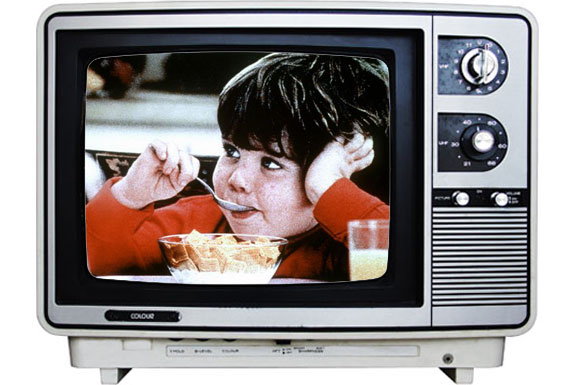
Television further eroded the amount of time it takes before
we get bored, when the first specialty channels started appearing on the dial around the 1980's also.
In the 1950’s, the standard TV commercial ran 60 seconds, by
the 1980’s that standard length was cut in half to 30 seconds. By the 1990’s
your fifteen minutes of fame really was 15 seconds, as that was the average
standard commercial length on TV.
Today, the average broadcast TV commercial
runs between five to 10 seconds! And you’ll notice ads shown at
the start of a commercial break are repeated at the end of the same commercial
break, because our attention spans are so short, we may have forgotten it
within the average two-minute “pack” of commercials!
 The biggest killer to our already faltering attention – the
Internet, arrived in homes in the mid 1990’s, as our attention spans were
already pushed to practically non-existent.
The biggest killer to our already faltering attention – the
Internet, arrived in homes in the mid 1990’s, as our attention spans were
already pushed to practically non-existent.
Although this was long before the
social networks of Myspace, Facebook, Twitter and the rest even were conceived,
the ability to search for whatever you could think of dazzled us to the point
of just wanting to search for the heck of it.
When social networking sites did capture our already
frazzled attention, surprisingly our attention spans increased slightly – at least
online. We were fascinated with the ability to check out former high school
sweethearts, and see who aged worse.

But as social networking became the norm, and mobile devices
made it possible to check in on these social networks wherever and whenever we
wanted, our attention spans declined again.
By the time you have read this sentence, your mind already
is thinking of something else.
That’s our attention span of today – as you concentrate on
the task at hand, you’re already thinking of the next thing. The average North
American’s attention span is only about three-seconds today.
It takes less than a second for our brains to process
images, but twice that long for us to parse a sentence.
That’s why all the social networks are becoming more
visually appealing – they are feeding off of our degraded attention spans.
And it is a degradation – because there is something to be
said for taking the time to smell the roses.

No comments:
Post a Comment
Thank you kindly for your feedback! All comments are reviewed prior to posting.