Showing posts with label IPad. Show all posts

Friday, 9 November 2012

Apple’s iCloud Almost Killed My Outlook


I've said it before, and I’ll say it again – I love my iPhone. From a design, usability, and functionality point of view, it’s an amazing piece of tech.

But, as I've also said before and will say again – I hate Apple’s software which they force you to use on their devices.

Apple’s iTunes often crashes, must be uninstalled and then re-installed to resolve issues, and on more than several occasions, has simply stopped working for no reason whatsoever. One minute it was fully functional, the next it’s hung or “bricked.”

Being an old school techy, I tend to take a while to gravitate to new technologies. I read reviews, read up on bug reports, and wait until I see the initial bugs which come with all early stages of tech are resolved.

I’ve been keeping out of the cloud for this reason – it’s still a new and somewhat experimental technological marvel. I’m used to backing up everything – including my iPhone – to my computer.
However, there are some cool benefits to sharing data with the cloud. Responses to emails from my iPhone would be in my Outlook on my computer, and any other iOS device I share via Apple’s iCloud. All my photos, apps, and other data would be available in the cloud too.

If Apple’s iCloud wasn’t like their other software which is complete and utter garbage.

I’m a very tech-savvy person. You know that friend that you always call when your latest tech suddenly stops working and you can’t figure it out? I’m that friend.

I don’t know why I thought iCloud would be any better of an experience than Apple’s immature iTunes – I read lots of instances of conflicts between MS-Outlook and the iCloud. But there were work-arounds, so I figured, if I encountered one of the many problems I read about, at least I could fix it. (And I'm using MS-Outlook 2007, which is supposedly fully compatible with Apple's iCloud.)

At first, when I tried to just turn on iCloud on my computer, it kept freezing. I did a search, and just like iTunes, the solution was to uninstall the application on my computer, reboot my system, and re-install it fresh.

I did this, and voila – it worked. Though someone should be challenging the Apple software team about why their software becomes corrupted so easily, and OFTEN requires their CUSTOMERS to uninstall and re-install it!

Although iCloud said it would take less than a minute to sync my computer with the cloud, it took about five minutes, and when it was done, my Outlook looked like it had never been used – all my emails, contacts, calendars and notes were gone!

My iPhone, still had all the emails, contacts and calendars which it had originally, but nothing from my PC was on my iPhone which wasn't already there prior to this so-called iCloud ‘sync.’

Now, being a techy geek, I had anticipated potential problems, so I made a backup of my MS-Outlook PST file prior to doing this iCloud thing. I always keep backups, but I made sure to make a current one so I wouldn't lose anything should the iCloud prove as well designed as iTunes.
And that’s a good thing – I immediately turned off iCloud on my iPhone and PC. Uninstalled the iCloud Control Panel on my PC – no I didn't re-install it – are you mad?!?!?

Then I copied the backup MS-Outlook PST file over the now corrupted one by iCloud. All my emails, contacts, calendars and notes were restored. Though I lost a few notes on my iPhone which for some reason iTunes didn’t sync with my PC (which I also did just prior to this iCloud trial), everything was back to normal.

I could only imagine the horror a regular iOS device user (iPhone, iPad, iPod) may go through installing and using iCloud. Most people aren't as geeky as me, and probably wouldn't even know how to backup their MS-Outlook, let alone restore it.

Apple has come under fire recently, as their new iPhone and iPad mini aren't as groundbreaking, heart-stopping amazing tech releases which we came to expect under Steve Jobs.

Many critics claim that since Job’s death just over a year ago, Apple’s once bright star will start to dim.
I don’t think this dimming has as much to do with the tragic loss of Jobs, but instead has been building over time.

Apple started as a computer hardware company, when they launched the first Apple Computers. Their third generation Apple IIe desktop computers back in the 1980’s were the start of their popularity in the home. They were forced to create an operating system – software – for their hardware to run.

Software has always taken a back seat at Apple. Their software has been designed much like their hardware – visually stunning, and extremely user-friendly – almost innate for most people to figure out.

However, as a hardware company first and foremost, their software is always buggy to the point of failing to do what it’s supposed to.

Apple’s iTunes is clunky, crashes, needs to be re-installed, and often fails to sync properly.
My recent experience with Apple’s iCloud – it’s clunky, crashes, needs to be re-installed, and it failed to sync properly.

Sound familiar?

If Apple wants to remain the shining star which Steve Jobs created, it’ll have to start catching up on the software side of things – because although I love my iPhone, as most with these devices do – I can’t stand iTunes or the iCloud – as most forced to use this software probably do too.

Friday, 22 June 2012

Cool Apps Only Work if Used – Duh!

Anyone who knows me knows I love my iPhone. It is far more than a phone, and more than a computer, because it’s so personal.
 
Which is probably why I have over a 150 apps on the thing.

I have an app -- SoundHound -- that will “listen” to songs, identify the name of the song, the band playing it, the songwriters, even display the lyrics in Karaoke format as the music is playing so I can sing along.

I have an app that tells me my current heart rate, and what I should be aiming for at rest and during a workout. I have an app that will help me rest and sleep, by playing soothing sounds, images and binaural beats – which the documentation claims, are psychological sounds to put your mind in specific mental states.

When you have apps to seduce you to sleep at the psychological level – you just know they must have an app for everything.

But then you get apps which do wonderful and amazing things, but they require your friends to use them too.

One of the coolest apps I have is Bump, which allows you to instantly share selected photos and contact details with another person, just by bumping your smartphone (iPhone, BlackBerry or Android) together.

It eliminates the hassle of trying to type in their contact details quickly, and ensures that neither person writes down the wrong information. 

Whenever I want to exchange my contact details with a new friend or colleague, I always ask “do you bump?”

After their initial reaction of “WTF?!?” fades, I explain the Bump app, and ask if they use it.
Although everyone seems really curious how it works – by sharing your contact details over Wi-Fi or 3G networks – they admit that they don’t have the app. So, instead of getting to use this really awesome high-tech way of connecting with someone, we do it the old fashioned way, and either exchange business cards, or verbally tell each other our contact details, as we hammer them into our phones.

What a waste of good tech!

Another really cool app I use which goes to waste far too often is Viber. Viber allows you to make voice calls and send Short Message Service (SMS) text messages to anyone around the world, using your smartphone’s data plan, instead of it’s voice plan. This means you avoid long distance calls, and don’t use up your voice plan’s minutes. 

I’ve used Viber, and text messages are sent and received almost instantly – you’d never know it was being relayed using a data service instead of your service provider’s SMS network. Voice calls are crisp and clear, and you’d never know you were talking on a data plan instead of a voice network.

Problem is – as with Bump – in order to utilize this cool tech, your friends have to use it too. I have a handful of friends using Viber. 

Or should I say, I have a handful of friends that HAVE Viber on their phones. When someone in your smartphone’s contact list installs Viber, you are automatically notified by the app, so you can now use it.

However, you can still make calls and send text messages to those who have Viber using your service provider’s voice and SMS network – and I find on average, most people still do.

Doesn’t this defeat the purpose of having the app? 

Viber doesn’t share any personal information, you don’t have to join anything to use it. Just you and your buddy have to have the app installed and running on your smartphones to make voice or text message calls using it.

I turn off apps when I’m not using them, but I always keep Viber running so that those who have it and have my iPhone’s number can take advantage of it. But they don’t – usually when they call me, it’s through the normal cell network.

Another cool use of tech wasted.

Makes me wonder if I should even bother to keep Viber running, or if I should even bother to keep Viber or Bump installed on my phone. Although they are both great apps, what’s the use if no one is using ‘em?

Sometimes, even the best apps can be so frustrating!

Wednesday, 30 May 2012

Hey Apple – Love the iPhone, Fix the iTunes

The tech world is always buzzing with the latest rumors from Apple. 

Will the next iPhone have a virtual keyboard which projects itself onto any surface? How about a holo-beam, capable of projecting anything on the iPhone’s screen into thin air – similar to the holodeck on Star Trek The Next Generation, only much smaller? Will they introduce a male version of the digital personal assistant Siri, so you can choose whether your phone is male or female?

Apple has an amazing marketing machine. They get the word out about their products through the rumor mill. Usually, when a rumor is spread about a company’s products, services, or even the company itself, it is negative. But Apple intentionally creates rumors about potential products and product features to generate so much media and geekdom hype that come launch day, we’re all like meth addicts climbing the walls waiting for our next fix.

Apple’s products for the most part are also technological break-throughs that rock the world, and change the way we do things for ever.

Remember the original Sony Walkman? A massive -- by today’s standards -- square of plastic, with a row of control buttons on the side.

We’re not talking about the next generation Walkman, which had the CD-player in it, we’re talkin’ the original from the 1980’s – long before anyone had ever seen a metallic disc – unless you’re referring to a heavy metal rock band’s metal-painted record. Remember those?

Both the record and the audio cassette became history as CDs and DVDs took the world by storm.
But the real innovation which shook the world was Apple’s iPod – a tiny portable MP3 player, which allowed you to carry more music, and it was crystal clear because it was digital audio.

When Steve Jobs first announced the iPhone with his famous phrase “this changes everything,” he wasn’t lying.

Before the iPhone, all most of us did on cell phones was talk, text and occasionally surf the net, using really bad text-driven cell phone browsers.

Who would have thought we’d ask our Smartphone for directions, what the weather forecast will be like, or to name the song currently playing in the restaurant?

Apple’s marketing machine is slick and creative, but their hardware products are also equally impressive – if not more so.

However, Apple’s software is surprisingly really, really, REALLY awful. Or at least it is on my MS-Windows machine, which may also be part of the issue.

Whenever I plug my iPhone into my computer to charge and sync with iTunes, I always cringe, watching with a tummy-turning uneasiness to see how iTunes will screw up my iPhone today.

Unless you jailbreak your iPhone, you have to use Apple’s iTunes to download and update apps, podcasts, and the latest updates to the iPhone’s operating system -- iOS.

You’d think Apple would have put as much care into creating iTunes, as they did their iTunes-dependent devices – iPods, iPads and iPhones all require iTunes for content management, unless they are jailbroken.

Think again.

It’s as if iTunes has a mind all its own, some days it’s in a great mood, and syncs without any issues.
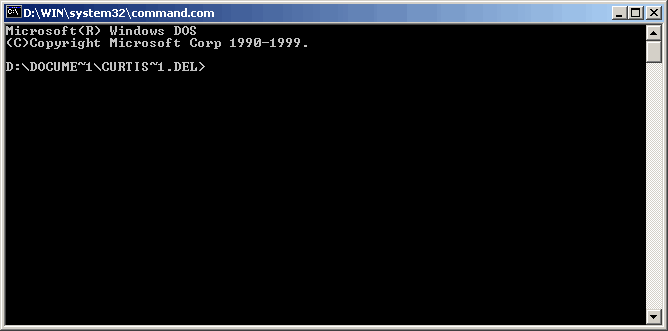
The next day, it gives me an error and refuses to sync. Sometimes all it takes is unplugging my iPhone, closing iTunes, and starting again. Sometimes I have to delete backup files. Sometimes I have to enter crazy chaotic command line codes from an MS-DOS prompt window. Sometimes I just say ?!?!?! it and reset my iPhone to factory settings, and then restore everything from my network’s backup.

iTunes sucks – no – it is a disaster of an application. My iPhone can be working perfectly, and iTunes may have worked just as perfectly previously. But without any updates or warnings to either, when I plug in the iPhone – poof – iTunes decides to go all meshuguna crazy on me, and throws a fit. 

Maybe it’s because of Apple’s long standing rivalry with Microsoft. I run MS-Windows machines – as do about 95 percent of the planet – so maybe the Windows version of iTunes isn’t as error-free as it’s more native Apple-based Operating System (the Mac OS)?

If it is – Apple – get over it. Not everyone using an iPhone is going to change their entire platform to conform to your standards.

Whatever the issue – Apple really needs to seriously fix iTunes. Although Apple let the genie out of the tech bottle by giving the world its first real Smartphone, they are no longer the only game in town.

Friday, 11 May 2012

Why I’ll Never Become a Mac

For those of you who know me, I LOVE my iPhone. I really do! I have over a 150 apps on the thing, and I’m constantly getting new apps that do amazing things.
 
And that is why I really do love my iPhone – it is an amazing mobile device.

Before the iPhone, we thought the ability to surf the Internet in clumsy, text-driven mobile browsers was as good as it was going to get.

As Steve Jobs was famous for saying: “this changes everything,” when he introduced the iPhone.

I get real-time updates from all my social networks on my iPhone, and I can respond in real-time, from anywhere. If I’m standing at a bus stop in Toronto, Canada, I can use a cool app on my iPhone to tell me when the next bus will arrive at the exact stop I’m at – it uses GPS and the latest traffic and scheduling info and it’s never – never – wrong.

If I’m at a bar or restaurant and there is a tune playing in the background I don’t know but like, I have an app that “listens” to the song, identifies it, and even displays the words in karaoke fashion so I can sing along!

I can shoot high quality HD video with my iPhone, cut a whole movie, and upload the piece to YouTube. 

I have an iPhone 4, not the iPhone 4s, so I don’t have Siri. But I have an app that closely mimics Siri (Vlingo) so I can say: “Call Parent’s home” and my iPhone dials my parent’s home. I can ask Vlingo to google things, create text-messages, and a few other cool things that Siri can do.

Oh, yeah, and it is a phone, with text-messaging and all that good stuff too.

Did I mention, I LOVE my iPhone.

Despite my love affair with my iPhone, I’ll never buy an Apple computer. All my life I’ve had PCs. From my first IBM PCjr, running at a staggering 4.77MHz, to my custom-made power computer, which I built myself, running at 1596 MHz – we’ve come a long way since the 80’s.

Not that Apple doesn’t produce cool tech – just look at their iPhone, iPad, even a lone single-purpose device like their original iPod was pretty cool.

But Apple computers are overpriced and as good as their hardware is, their software sucks. Before I get lynched by all the Mac Heads out there, hear me out.

What prompted this writing wasn’t an all-out attack on Apple. It was a software update to my iPhone’s operating system, iOS. Yesterday, I received notification that there was a new update available to my iOS, prompting me to install it.

I ignored it – for now and the immediate future.

Every time I’ve updated my iPhone’s iOS, I spend HOURS fixing, debugging and correcting it to make it work once again. On more than a few occasions – all but one so far – I’ve actually had to revert back to a backup of my iTunes from my network, to restore all my apps and data after an update.
 
Maybe iTunes is just exceptionally buggy – but it’s the software which Apple uses for all iOS devices – iPhone, iPad, iPod – to manage their content and update the operating system software. So you’d figure Apple would make sure it ran smooth as silk, because millions of people around the world are depending on iTunes, to keep their iOS devices up and running.

All operating systems, and most apps have regular recurring updates, but every time my Windows-based systems update, the process takes mere minutes – not HOURS – and I don’t usually have to panic about whether or not the update will cause my device to stop working.
I’ve learned, when Apple releases an update, wait a week or more before installing it, so they can work out the bugs.

I don’t have to do that for my MS-Windows systems.

When Apple updates the iOS, they actually format the hard drive, reset the phone to factory settings, and then re-install the operating system with the new and improved iOS.

When I update my MS-Windows systems, a small patch file is downloaded, and updates the parts of the program which have been modified, not the whole system.

There have been many comparisons between Steve Jobs and BillGates. Although they competed for market share in the highly competitive tech sector, they became good friends. But the approaches both took in deploying their products shows.

When Apple releases an update, they know they will get a lot of calls to tech support and people dropping into their Apple Stores seeking help to get their devices running again.
When Microsoft releases an update, they expect it’ll work on most of the computers out there, and don’t anticipate any need to offer additional support.

Maybe that’s why Apple’s products are so much more money? For the cost of a mid-range Mac, I can buy a far more powerful PC. Maybe Apple builds their constant need for tech support and personal customer attention into their product pricing?

Whatever the reason, although I’m sold on my iPhone 4, and looking forward to the iPhone 5 when it comes out, I’ll never switch to the Apple platform for computers.

Apple will have to work hard to earn that respect from me. And they can start by creating iTunes updates which don’t make me worry whether or not my iPhone will work afterwards.


Monday, 7 May 2012

iSociety -- How Rude?

There's been much talk of late about manners, technology and society. Seems the more technology brings us closer together, the further it takes us from being a civilized society.

No longer does one wait by the phone, or rush to the mailbox for an anticipated call or letter. Thanks to email, online chat and the social networks, we can now reach out to one another instantly.

But technology is also making our society -- well, to be blunt -- rude.

This past weekend for example, I decided to enjoy the summer-like sun by taking a hike in my local park trail. I always have my iPhone with me, and because of the amazingly warm wonderful weather, decided to take some pictures of Mother Nature in one of her good moods.

Being all alone, I had no one to hold my iPhone. So, I'd find a nice picnic table or park bench to rest my phone on, and using one of my self-photo timer apps to snap pics with me in them.

Picnic table Many picnic tables in this area h...
Picnic table Many picnic tables in this area have suffered burns from portable barbecues, but this one has been modified to incorporate a heatproof barbecue stand. (Photo credit: Wikipedia)
I was sitting at one of these picnic tables, viewing some of the shots I snagged, when a couple came over and sat down next to me.

Odd, and awkward I thought -- usually people don't venture up to strangers like they used too. And if they do, it is only polite to ask if you can join them.

Then this couple -- not kids, probably married and in their 40's -- began setting up a picnic lunch. The man began fiddeling with his picnic basket, and the woman unfurled a plastic red and white checkered table cloth over the whole table. 

The table cloth actually covered part of me, and my iPhone, which prompted the woman to make her first and only contact with me -- "sorry" she said. Without a bat of an eyelash, or even the slightest hint of concern or interest in me, she adjusted the table cloth to cover the table, and leave me a small corner of space.

iDevices Make for an iSociety of Me's?

How rude!

I know, I don't own the picnic table, it isn't mine. But I was sitting there, obviously using it, the proper thing to do is to politely ask if you can join someone, and then ask if they can set up their picnic blanket. Not simply toss it over anyone and everyone already present, without a care in the world.

Not to slam one of my heros, but maybe Steve Jobs created a society of monsters by creating the iSociety we live in, unintentionally of course, when he first announced the iPod, the iPhone and then the iPad?
Steve Jobs shows off the white iPhone 4 at the...
Steve Jobs shows off the white iPhone 4 at the 2010 Worldwide Developers Conference Español: Presentación del iPhone 4 por Steve Jobs en la Worldwide Developers Conference del año 2010 (Photo credit: Wikipedia)

We spend so much time with our mobile devices interacting with those we know and care about, that when face-to-face communications with real people in the real world occurs, we just don't know how to deal.

But there is more to it than that. Because we spend so much time interacting within our iSociety, we have lost the one thing which separates us from the animals.

That one thing makes or breaks social structures, and can make or break your day.

It's a sense of empathy for those around us, and a sense of self awareness within that group of others around us.

Essentially, we've stopped caring about those around us that we don't know, and when others demonstrate this lack of caring towards us, we feel anger and resentment.

We've truly become an iSociety, where the only people that matter are me, myself and I.

How sad. For you and for me. 

Enhanced by Zemanta