Thursday, 29 November 2012

Canada’s Largest City is Full of – Well – You Know


As most of the major urban centres across the globe embrace environmental policies, Canada’s largest city of Toronto appears not too.

Earlier this month, they paved over bike lanes on a major downtown street, to allow more room for gas guzzling cars, taking away space from environmentally-friendly clean pedal-powered cyclists.

Then yesterday, they reversed their decision banning the sale of single use plastic bags, after pressure from retailers claiming it would kill them.

Cry me a river – retailers in Toronto and many of the surrounding suburbs already charge five-cents for plastic bags, even though the City of Toronto removed that green by-law this past summer. Many retailers in – and for some reason out of Toronto – still charge five-cents if you want to carry home the stuff you just paid for.

Actually, charging for plastic bags is a good idea. It encourages people to bring their own reusable cloth bags when shopping. However, retailers shouldn't be allowed to profit from a green initiative – those funds should be put back into city programs specifically for improving our environment.

But the ultimate issue which Toronto Council backed away from favouring business over the environment is the outright ban on plastic bags in the first place.

Plastic – a chemical composition of fibres created from filthy petrochemicals – takes years to decompose, and when it does, it leaves the chemical residue in it’s wake, causing further pollution. Even biodegradable plastics leave this chemical residue.

An economical and environmentally-friendly alternative is to bring your own cloth bags – which a ban on plastic encourages.

It also encourages retailers to think of alternatives for packaging their products, which is something the suits and ties that run retail just don’t do enough of.

Although we’re a far more environmentally aware society, we still are very much a disposable one. From fast-food containers, to all the stuff we buy wrapped in layers of plastic, paper, cardboard and Styrofoam.

If manufacturers, retailers and anyone else selling goods gave more thought to how their customers will carry their products upon purchase, we’d all be better off.
We want the stuff we buy to be clean and unbroken, and expect a method of getting it from store shelf to home or business in it’s original clean and unbroken state. But we don’t need all the packaging materials most things are crammed with.

Packaging materials which eventually find their way to landfills in many instances, and recycling if we’re lucky.

Or worse – in the case of plastic bags – enjoying a lifespan buried beneath our homes, businesses and schools, leaching Cancer-causing chemicals into our drinking water, the Earth we grow our food, feed our livestock with and allow our kids to play on.

Banning plastic bags was a good idea Toronto.

Reversing that decision because you got cold feet will be felt by you, me, our children, their children their children’s kids and their kids, and countless other generations.

All because a small group of politicians in Canada’s largest city stopped thinking green. 

Wednesday, 28 November 2012

Feds Go After Social Media Giant Concerned for Privacy – And It’s Not Facebook


Canada’s federal government is formally requesting Twitter testify before a House of Commons committee studying privacy and social media, after they refused to voluntarily appear when initially approached.

Second only to Facebook, Twitter is one of the most popular social media networking services, with an estimated 500 million users. Facebook has over 600 million users, while Google Plus draws in an estimated 400 million users.

Both Facebook and Google voluntarily appeared before the Canadian government’s committee – yet Twitter refused.

Last May, the Commons committee began investigating how social media companies protect the personal information of their users, because of high profile interventions from Canada’s Privacy Commissioner with Facebook and Google just weeks earlier.

Usually it’s social media mega-site Facebook which is in the news for its self-serving privacy policies, but this time, the social network seemingly with something to hide is Twitter.
Twitter’s refusal to appear before the committee hearing falls amidst the company’s aggressive positioning to take-over the top spot in social media.

Many companies have gone out of business, as Twitter adds features and functionality to its social networking service, which previously could only be found through third-party companies. 

As Twitter adds these new perks to its service, it disables the ability of these third-party companies from providing the same service, by changing its Application Programming Interface (API).

Twitter has been consistent in denying third-party companies from providing apps which “replicate its core user experience,” as the company puts it. However, as Twitter adds to that “core user experience” it is putting companies out of business and people out of work.

However, this past August, Twitter announced major changes to its API, and since then, has been rolling out many features previously provided by third-party companies to its service.

As these new features are rolled into the giant social networking site – commonly called the world’s largest microblogging site – one has to question how the company is managing its member’s personal information?

Perhaps Twitter has been so busy gobbling up third-party features, the top brass has let that part of their business slide?

Or perhaps Twitter has discovered new ways to use that personal private information, which they fear could land them in the penalty box at a federal government investigation into privacy and social media?

We’ll have to wait and see, because the Canadian government’s House of Commons Committee hasn't sent out the formal letter to appear to Twitter as of this writing.

The motion to formally call Twitter to testify came after a representative from Facebook took committee members through that company's privacy policies.

Although Facebook’s relationship with Canada’s Privacy Commissioner has improved much since their initial meeting, by exploring the types of personal information collected, managed and stored with the world’s largest social networking service, the Canadian government is convinced they need Twitter’s participation to protect the interests of Canadians, and ultimately all of its users.

Canadians are among the top users of social media, along with the United States and the United Kingdom.

There are just over 10 million Twitter accounts based in Canada, according to a recent study by a Paris research group.

Another recent study says that Facebook has about 18 million Canadian users, more than half the country's total population.

Tuesday, 27 November 2012

Judge Fires Canadian Big City Mayor to Bully the Bully


Yesterday, a Canadian judge made international headlines when he fired the mayor of Canada’s largest city on a technicality.

Rob Ford, the now out-going Mayor of Toronto, was told he had 14-days to vacate his seat on council, giving up his leadership post as Mayor, because he violated a provincial conflict of interest law. The judge is said to have gone easy on Ford, because he could have also banned him for running for council – and in effect for mayor again -- for seven years.

There is no doubt that Toronto’s controversial mayor was in a direct conflict of interest. He voted ‘no’ during a council vote on whether or not he should pay back money to residents and businesses he had solicited to support the high school football team he coaches. He should have abstained from that vote, because it directly involved him – that’s the technicality which cost Rob Ford his job.

Whether or not he solicited donations to his high school football team inappropriately or not wasn't the issue which the judge ruled on yesterday. However, it’s been argued in Toronto council that the mayor used city letterhead in his dealings with donors.

So now, Rob Ford has two weeks to transition the power of governance of Canada’s largest city to – oh wait – who?

It’s up to Toronto council how they proceed, and this is where it becomes clear that the judgement against Rob Ford -- the first of its kind ever in Canada, and possibly in North America – was more political than practical.

By firing Toronto’s mayor, the judge opened up the barn doors to the political back-stabbing within the city’s council chambers. It’s no secret that many city councillors despised Rob Ford’s policies – some may question whether or not that hatred even became personal too.
Although every member of council is an elected representative of their local community on council, none of them were individually elected by the people of Toronto to be mayor.

And that’s the real issue left in the wake of this landmark decision – and worse – it shows how even our democracy has become infected by bullies.

For the brief two-years of Rob Ford’s leadership, he has constantly bullied council, businesses, and residents into following him – or else.

When the city’s public transit commission appeared to favour a different transit plan than his, Rob Ford fired the general manager of the Toronto Transit Commission – a post he had successfully filled for over two decades.

When there was public outcry against service cuts and user fees, the Mayor showed his lack of concern for the people directly affected. He held an unprecedented 24-hour public hearing, where anyone could come address him personally, making their views known. Problem was, people were rushed through their two-minutes to speak, and Mayor Rob Ford clearly wasn't paying much attention, often looking like he was about to nod off during the whole fiasco.
Bullies seldom care what others think – they just do.

When his advisers – hell even his opponents – advised him it was a conflict of interest to raise funds for his high school football team in the manner he was doing, he ignored them and continued on.

Then, when a well-to-do citizen had enough, he hired one of the most prominent lawyers in the country – Clayton Ruby – to file charges of conflict of interest against the mayor.
If there is anything a bully can’t stand, is another bully cutting in on his turf.

So instead of admitting he made a mistake, he defended his decisions, claiming he didn't know all the rules of conflict of interest – which incidentally are printed and distributed every year to all members of council – and the race to remove Canada’s biggest city’s mayor began.

It was a quiet race, rarely covered in the press, until judgement day yesterday. That was when one bully succeeded over the other. In true blood sport style, they got Rob Ford in their clutches, and crushed his proverbial political neck, leaving a twisted mess of destruction for the remaining city councillors to clean up.

It was like watching one of those dinosaur shows on Discovery Channel, where the giant T-Rex is swarmed and killed by a group of savage Raptors.
Only in this case, Toronto’s city council is breathing a slight sigh of relief, as now they don’t have Rob Ford in all his pig-headed arrogance to bully them into following his leadership.

However, it remains to be seen who will take the reins of Toronto council, and lead the city going forward.

And worse, a bullied environment creates a culture where being bullied is the norm. So the next leader of Canada’s largest city may follow in their predecessors footsteps, and be just as stubborn and arrogant as before.

Monday, 26 November 2012

When Old Faithful Let’s You Down


For over nine-years, we've considered the Pickle BarrelRestaurant at Yonge Street and Eglinton Avenue in Toronto, ‘Old Faithful.’

That’s what we call our favourite place to go, when we just can’t think of anywhere else we’d like to be for a night on the town. Old Faithful. It’s our regular family restaurant visit to celebrate the start of the weekend.

Actually, I've been going to the Pickle Barrel long before they had more than one location, as I grew up going to this great Jewish deli with my family when I was a kid.

It was – and for many still is – the place to go after Saturday services for lunch for many Jewish families in Toronto.

My girlfriend and I have been going to the Pickle Barrel for as long as we've been dating – over nine years, be it weekly or sometimes more or slightly less. Whenever we can’t think of any place else to go for a night out, we always fall back on what we call ‘old faithful’ – the Pickle Barrel.

We've come to know many of the staff by name at the Yonge/Eglinton location in mid-town Toronto, and we always get exceptional food and service there.

Our favourite waiter – Peter up at the Yonge/Eglinton location always says hi, and chats us up a bit, even if we’re not able to get seated in his section.

We've always enjoyed the wonderful service and great feel-good comfort foods of the Pickle Barrel.

Which is why we were shocked and dismayed when we didn't receive the same calibre of food or service at the downtown Toronto location in the Atrium across from the Eaton Centre.

Our waiter – Bob—seemed friendly and upbeat at first, giving us plenty of time to figure out what we want. Even though we probably know the menu by memory (after almost a decade we should!) we still take a bit of time to decide on what we want.

We always share an appetizer, and one of our old favourites happens to be the warm pumpernickel bread which has been served since I was a kid. I love the onions baked in the top, and it comes as a mini-loaf, and is always served warm with butter.

Or at least that’s how we've always had it – this past Friday night when it came to our table it was cold, stale, and hard as a brick.

When the waiter came by to check on us, I told him the bread was stale and asked if he could get us another one.

He told us he could, but because they freeze them, it would be exactly the same. He said he could heat it up for us – in the microwave.

Now, I’m not a professional chef, but I know stale bread when I see it. I also know that if you heat up bread in a microwave, it just becomes soggy – not very good at all.

And certainly not up to what we've ever witnessed in our nine-plus-years of enjoyment of the Pickle Barrel over the years. We've had the occasional bump along the way, but it has always been corrected right away, and without any question.

However, Bob, our waiter – didn't appear to think anything was wrong with serving cold stale bread to customers.

Bob, not knowing we’re regular customers, did say that the bread would be on the house.
The bread is always on the house! This appetizer isn't one we've ever been charged for in all the years we've been visiting this Toronto restaurant chain.

It’s one of those appetizers not on the menu, that I suppose original customers always ask for, so they have kept it available.

We occasionally do get some of the other appetizers which you have to pay for – the Asian Nachos with little bits of chicken, veggies and a sweet teriyaki sauce and cheese is one of our favourites.

Perhaps Bob was trying to up sell us to another appetizer, because he wanted a bigger tip?
Or maybe the restaurant just didn't have much of the pumpernickel bread left. Or maybe Bob was just lazy?

Who knows – regardless of the reason – serving stale cold bread in any restaurant is wrong. Mistakes happen, and occasionally something stale may get served. But in that instance, the staff should admit the mistake, and correct it right away.

They shouldn't tell the customer that’s just the way it is –deal with it – which essentially was Bob’s answer.

As Bob wasn't willing to do anything and I didn't want to make a big deal over bread, we let it go. That loaf of uneaten, stale cold bread just sat between my girlfriend and myself, glaring up at us throughout the remainder of our meal.

Our meal also wasn't up to the usual Pickle Barrel standards we've come to expect in our nine-years of being regular customers.

My girlfriend’s eggs Benedict was luke-warm when it arrived – not hot as it should be. My Hot BBQ Beef sandwich, which is supposed to be smothered with gravy had gravy on the side. The dill pickle which accompanies my meal looked like it was barely a baby dill – not the usual big deli one we get up at the Yonge/Eglinton location. And the bowl of coleslaw on the side of my order was barely half full – in fact it looked like it was left over from someone else’s meal.

Typically when we eat at the Pickle Barrel at Yonge/Eglinton we’re there on average about three-hours for dinner, racking up a bill over of $170 for just the two of us. We see other couples and families come and go around us. We just keep ordering drinks as we enjoy a long lazy dinner. We always get desert, no matter how full we feel, because it’s tradition.

Last Friday, it was as if we couldn't get out of that place fast enough. We only got iced teas, wolfed down our dinners, and skipping our tradition of desert. We paid our bill and were out of the restaurant in a record-breaking 45-minutes or less.

My girlfriend was very upset – after nine-years of wonderful dining experiences, old faithful had let us down. She kept telling me how she couldn't believe what just happened, and worried about going to our usual location ever again, for fear of it happening again.

I was also appalled at the whole situation, and wondered if this was the end of an almost decade long relationship with Old Faithful?

Friday, 23 November 2012

The Darkness of Black Friday


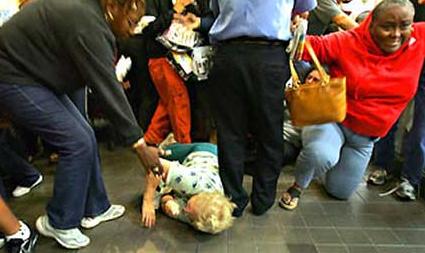
Today is Black Friday in the United States of America. It’s traditional for the first Friday following the American Thanksgiving, for stores to start their holiday shopping sales, and for American’s to start their holiday shopping.

It’s also traditionally a time when American’s remind us all about our primal roots, as news reports always show rushes of people, trampling each other – sometimes even climbing over each other – to get first dibs on the cheaper merchandise.

Over the years, hundreds of American’s have died by being trampled, crushed, or simply stressed out and their hearts have stopped, by this American holiday tradition.
There have been a few reports of people having heart attacks at Black Friday sales. Whether or not they would have had the heart attack wherever they may have been at the time, and it just so happened to coincide with them being at a Black Friday event – we’ll never really know.

Those who have died by the rush of people crushing them like bugs as they clamour for on sale items are directly linked to this holiday tradition south of the border.

Hope we don’t see the same savage primal behaviours erupt on this side of the border, as this year many Canadian retailers are promoting Black Friday sales.

It makes sense from a business perspective. The economy in much of the world, including here in North America, hasn't recovered much – if at all – over the past decade. We've been up and down as the cycles of the economy typically go, but mostly we've been down, and when it goes down, it drops like a rock from the sky.

Holiday shopping is the big money maker for retailers across the world. It’s when people do most of their big ticket buying. And it’s also the make or break factor in going forward business decisions for the coming year for these retailers.

We’ll know which retailers had a great holiday shopping season this year, and which ones did not, come February or March – that’s typically when retailers that had poor sales during the holidays go belly up out of business.

And we don’t want any stores to go belly up out of business, because that means more people out of work, unable to spend money, in an economy that is already struggling to make ends meet.

The more people working, the more people able to spend money in that economy, and the better the economy goes.

It’s a vicious cycle.

But I sometimes wonder what is more vicious – the cycle of the economic ups and downs we all face, or the horrible experiences faced by those being trampled on Black Friday?

Maybe our economy is too closely linked with our primal animal instincts, and it is all the more clearly demonstrated by our uncivilized way we treat our fellow human beings, just to save some cash?

Thursday, 22 November 2012

You Have the Attention Span of Your Social Media


We used to take the time to stop to smell the roses, but not anymore – thanks in part to those 140 character limits in Twitter.

Twitter isn't the only social media network cutting into our already quick-paced attention spans. 

The constant flow of status updates on all the social media sites we plug into is as well.

And the 15-year-old wonder kid programmers coding these social networks are well aware of this – in fact they are encouraging it by making our social media experiences more visual than textual.

Facebook, Google Plus, and Twitter all recently updated their web and mobile layouts and user interfaces to make them more graphical.

When you scroll through your Facebook timeline, you’ll be dazzled by the bright images your friends posted. Google Plus places a huge emphasis on images – they appear larger and bolder than the text descriptions on both the web and mobile versions of all posts. And Twitter recently added the ability to attach photos to tweets.

Recently Tumblr released a new app – Photoset – which takes various images you provide, and creates a cool image by combining them into a frameset. This “photoset” frame can be uploaded to Tumblr – naturally – or shared via other social networks using the Photoset website. The primary Tumblr app also got a bit of a makeover, improving it’s graphical user interface too.

And who could forget all the hype when social network giant Facebook bought social photo sharing network giant Instagram?

Although the popularity of the very visual Pinterest may be part of the reason behind these social network changes, there is more psychology here than you realize.

Scientists studying our attention spans first realized they were declining in the 1980’s, as the first video game consoles were breaking into the ever increasingly distracted world.

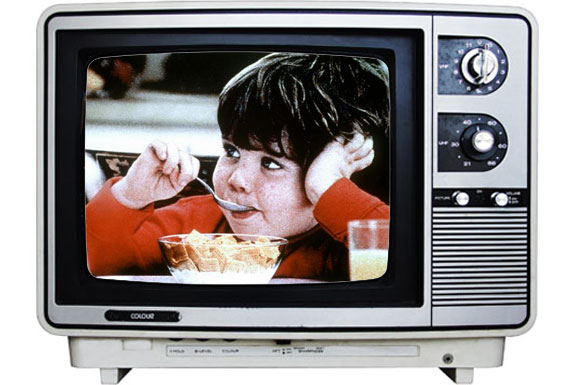
Television further eroded the amount of time it takes before we get bored, when the first specialty channels started appearing on the dial around the 1980's also.

In the 1950’s, the standard TV commercial ran 60 seconds, by the 1980’s that standard length was cut in half to 30 seconds. By the 1990’s your fifteen minutes of fame really was 15 seconds, as that was the average standard commercial length on TV. 

Today, the average broadcast TV commercial runs between five to 10 seconds! And you’ll notice ads shown at the start of a commercial break are repeated at the end of the same commercial break, because our attention spans are so short, we may have forgotten it within the average two-minute “pack” of commercials!

The biggest killer to our already faltering attention – the Internet, arrived in homes in the mid 1990’s, as our attention spans were already pushed to practically non-existent. 

Although this was long before the social networks of Myspace, Facebook, Twitter and the rest even were conceived, the ability to search for whatever you could think of dazzled us to the point of just wanting to search for the heck of it.

When social networking sites did capture our already frazzled attention, surprisingly our attention spans increased slightly – at least online. We were fascinated with the ability to check out former high school sweethearts, and see who aged worse.

But as social networking became the norm, and mobile devices made it possible to check in on these social networks wherever and whenever we wanted, our attention spans declined again.

By the time you have read this sentence, your mind already is thinking of something else.

That’s our attention span of today – as you concentrate on the task at hand, you’re already thinking of the next thing. The average North American’s attention span is only about three-seconds today.

It takes less than a second for our brains to process images, but twice that long for us to parse a sentence.

That’s why all the social networks are becoming more visually appealing – they are feeding off of our degraded attention spans.

And it is a degradation – because there is something to be said for taking the time to smell the roses. 

Wednesday, 21 November 2012

Environment Always Drives from the Backseat


Just a few weeks ago, many environmental groups pointed out that for the first time in decades, climate change wasn't mentioned at all during the American Presidential elections.

People still care about the environment – just not enough to talk about it.

But if we don’t talk about the environment, nothing happens. That’s the nature of our political systems in democracies like the United States of America, and here in Canada.

We see politicians beating their chests and yelling like savage gorillas on the evening news. We joke about the name calling and other occasional unprofessional blunders spoken by these seemingly wild beasts we elect into public office.

However, wild the media makes mockery of the people we freely elect to make our laws, spend our tax dollars, and plan for the future, politics is all about talk.

So when the environment doesn't get talked about at all during debates for what some call ‘the most powerful office in the free world,’ we should all be concerned.

The environment has traditionally been a backseat driver in political campaigns. Usually the environment is one of the key issues which all candidates, at all levels of government, discuss. 
Usually because the environment is cited in electioneering polls as an issue of interest to registered voters.

Environmental issues are usually raised quickly, and then forgotten in most political campaigns. They don’t have as much staying power as the other issues on the table – jobs, the economy, national security, and employment.

But at least the environment is talked about – it’s part of the political dialogue, making it part of the political process, and in turn, something which we know will be managed regardless of who wins the election.
This time around, who knows?

Environmental issues were not discussed much during the American Presidential election. 
Climate change – the biggest environmental issue facing all life on Earth – wasn't even mentioned.

The Keystone XL Pipeline was discussed – but the issue was more of national pride, and the financial cost involved, in having foreign oil from Canada being piped into the almighty USA. Environmental concerns were not the centre of this debate.

Has the environment been ejected from the back seat of political debate in North America and the free world?

If it has, we’re all going to suffer, because regardless of all the other issues, we all need our home – planet Earth – to survive.

Tuesday, 20 November 2012

Equality My Ass – International Gender Days Aren’t


What did you do to celebrate International Men’s Day?

Nothing.

What?

Never heard of it?

But I bet you've heard of International Day of the Girl which was held last month, on October 11.

Yesterday was International Men’s Day (IMD) according to the United Nations Educational, Scientific and Cultural Organization (UNESCO), a specialized body of the United Nations to promote – among other things – gender equity in education, science and culture.

And it’s not as if International Men’s Day is new – according to UNESCO it’s been celebrated in Australia, The Caribbean, North America, Asia, Europe and Africa since it’s inception in Trinidad and Tobago in 1999.

I saw something briefly flash across the Twitter universe about IMD but that was it – one lone tweet from the UN.
International Day of the Girl on the other hand, was plastered in papers, broadcast on the television and radio newscasts, and made truly international headlines.

And you've probably heard of International Women’s Day – or you will when it gets just as much press as the International Day of the Girl on March 8.

All days of gender-specific celebration and awareness are organized by the exact same organization – UNESCO.

However, obviously, not all receives equal opportunity – pun intentional.

When International Women’s Day rolls around, every year, the media goes berserk to capture video, images and audio for their television, print and radio stories.
International Day of the Girl made all the major wire services, was carried locally here in all the big national papers, on the evening newscasts, and even was tweeted about repeatedly on Twitter.

But International Men’s Day – what a yawn – one lonely tweet, just to acknowledge it exists.

Last month, in this blog, we wrote about how International Day of the Girl is discriminatory against men, women and even little boys.

We are all human beings, and we shouldn't honour or celebrate our differences of any kind – that’s the foundation for any line of discrimination.

If we as a species are going to continue to grow and prosper in a world which is constantly getting harder to survive in, we need to pull together as a species, sharing our strengths, instead of highlighting the very things which makes us work apart.

Global warming, economic turmoil, war, famine, terrorism – none of these will ever be beaten if we continue a battle of the sexes, as these – and most issues affecting our survival – are not divided along gender, but span across all of humanity.

So what did I do to celebrate International Men’s Day?

Nothing.

Why would I want to celebrate a sexist day of division, when we really need to co-exist and work together?

Monday, 19 November 2012

Happy Thanksgiving US of Eh?


Here in Canada, we've already celebrated our version of Thanksgiving, earlier in the month, while this week our neighbours to the south celebrate what we often refer to as ‘American Thanksgiving.’

Tourists from other continents coming to Canada and the States may not be able to see the differences between our two nations. We’re so similar, and also so very different – but most of our differences are ideological instead of cultural.

American’s have an enormous sense of passion and national pride in being American. Even most of those from other lands that become permanent residents fall in love with American nationalism.

In Canada, we have pride in our nation – if your parents were born here. Those from other lands talk about the benefits of living here, but always complain about how they miss home, and are just here so their families can have a better life. Often they move into pockets where others from their homeland settled, so they don’t have to participate in Canadian culture, society, or – sadly – with anyone that doesn't speak their language.

When people immigrate to the United States, they become Americans. They pledge allegiance to the flag, and swear they’ll uphold the values and laws of the land.
When people immigrate to Canada, they become hyphenated Canadians, many don’t speak either of our official languages (English or French) and although they live according to our laws, they certainly don’t embrace Canadian values, preferring to continue living as they would in their homeland.

When parents with kids come to America, they enrol their kids in American schools, and hope their children will realize the potential of the American Dream.

When parents with kids come to Canada, they intentionally move into areas where there are schools with other children from their culture. In many cases, they have special schools which are cultural-specific to their homeland, so their kids although living in Canada, are raised with the same values and beliefs back home.

Settled immigrants in the States that have made it for themselves, embrace the American Dream, and feel a sense of obligatory pride in helping other American’s realize that dream, hiring other American’s regardless of race or culture to expand and grow the American economy.

Settled immigrants in Canada lack a sense in being Canadian, and having only done business with others from their homeland, they only hire others of the same race or culture of themselves.
They take away jobs and opportunities for those who were born outside of their culture, which although it may grow their business, it harms the Canadian economy, and eventually may harm their business, which is in that Canadian economy.

Canada and the States are both highly prosperous, safe, democracies which both have a lot to be thankful for during our mutual Thanksgivings.

Though, being Canadian, sometimes I’m envious of my American neighbours  as it appears they have more to be thankful for going forward, because as more people come from other lands to our distinct countries, America grows as a nation, while we Canadians struggle to maintain a sense of nationhood.

Friday, 16 November 2012

How a Union Killed the Twinkie

Unionized labour in North America is strong. Too strong. So strong it’s putting the very employees its supposed to protect in harms way.

Thanks to the unions at Twinkie maker, Hostess, the American giant in the junk food industry is closing it’s doors – forever – putting the company’s employees out of work.

Hostess, founded as Interstate Bakeries Limited in 1930, is one of the largest bakeries in North America, baking up Wonder Bread, Twinkies, Ho-Hos, Ding-Dongs, Dolly Madison, and other well known baked goods.

Now these products may disappear off of store shelves, as the company was forced into Chapter 11 Bankruptcy today, because of an on-going dispute with the Bakery, Confectionery  Tobacco Workers and Grain Miller’s International Union (a Teamster’s Union) and company management.

The union represents most of the 6,600 Hostess employees, and was supposed to ultimately protect those employees from job loss.

However, as with all disputes involving terrorists, common sense doesn't prevail. And unions do act more like terrorist organizations of late, instead of collective bargaining units.

We've seen this with the auto industry and their unions. The world’s largest automaker, General Motors was almost put out of business because the unions kept insisting the employees deserve more money to build cars. If federal governments in Canada and the United States didn’t provide bail-out funding to General Motors, to offset the outrageous demands of the terrorists – we mean the union – then the world’s largest automaker would be no more, and thousands of people would be out of work.

Granted, the union movement grew out of a real need to protect employees from unsafe and even inhumane working conditions.

Early in the 1900’s, at the start of the industrial revolution, as companies grew richer, their power-hungry owners began making uncivilized demands on their staffs. From forcing them to work overtime without paying for that overtime, to providing unrealistic deadlines, even limiting the amount of bathroom breaks employees could take throughout the day.

Labour unions originally solved many of these problems in unionized shops around the world. 

Although in a consistently declining North American economy, many non-unionized office jobs are starting to revert back to the dark ages, as many crazy bosses are restricting employee bathroom and lunch breaks today.

Getting a job at a union shop meant getting a decent paying gig, with an employer that treated you right. The labour movement had succeeded in making these workplaces safe and secure.

However, now that the workplace was safe and secure, what could unions do? What role did a union have in the company?

It should be to advocate on behalf of employees, and ensure that the safe and secure workplace continues. And labour unions did this, but they took it upon themselves to push for constant increases in benefits, pay, and job security.

Job security always has – and always will be – a false notion which was conjured up by the labour movement.

No one’s job is any more or less secure – as we've seen with Hostess today. If a company can’t fiscally function any more, it doesn't matter what a bunch of thugs in the labour union say or do, once the company goes out of business, usually that means the jobs which were supposed to be secure forever, just don’t exist anymore.

Union battles to increase benefits and pay constantly over time drive away the potential for this fictitious notion of job security – which ironically they themselves created. The more benefits afforded employees, the greater the cost to the employer. The more pay given to workers, the greater cost to the employer.

Not that employees don’t deserve better pay and benefits – we all want to work for someone that cares enough about their staffs to pay them well, and treat them well.

But labour unions fight tooth and nail to secure more pay and benefits for the employees they represent, despite constant claims from companies that they can’t afford it, putting the company in danger.

Unions always claim the companies aren't telling the whole story, and say they don’t have the money for increased benefits and pay as a tactic to avoid doing it. They threaten to walk out and go on strike, which means the company can’t produce what it makes, and loses even more money.

So companies gave in to these outrageous demands – just like law enforcement has had to do with terrorists in some situations.

Eventually, if the business turns around, and the company starts to make more, it survives, and can absorb the outrageous costs the unions place on it’s operating budgets. OR, as we've seen today, things don’t get better for the company, and it’s forced out of business, because of increased operating costs – often brought about by the union.

Unions were once needed, to bring about better working conditions, which they did do. Then they got greedy, and today they are forcing companies to shut their doors, like Twinkie giant Hostess.

So, say good-bye to your Twinkies, thanks to the union.

Thursday, 15 November 2012

The Ying and Yang of Being Held Hostage by Big Oil


It’s amazing how gullible the oil and gas executives think we are. For years in Canada and the United States, there have been concerns of price fixing on the famed – or now infamous – fossil fuel which runs the world.

The oil and gas industry claims these sudden price changes are due to the constant supply and demand of the market. The more oil and gas we consume, the higher the price. The less we consume, the lower the price, as the more supply.

Sounds like basic high school economics. But it’s just a ruse to throw us off their money making plans.

Federal governments in both halves of North America, and even in other parts of the world have launched investigations into these price fixing concerns – never being able to prove it because of the sneaky Arab oil tycoons that control the big oil and gas companies.

We haven’t heard much about price fixing for a while. As in the past, the sneaky tyrants running the world by controlling the flow of oil have a way to keep us off their tracks.

Today, the price at the pumps – as it has become known – is expected to drop by 1.1 cents per litre. Yes, drop – as in be cheaper!
That sounds pretty good, unless you factor in previously it rose by 2.1 cents per litre.

The cost of fuel for our gas guzzling cars has constantly increased and decreased by mere cents every day, for the past several months.

If you plot the course of gas on the whole, the price has actually risen more than fallen. But most are none the wiser – as we rejoice when we here gas prices drop by a mere fraction of a penny, thinking that’s a bargain!

What a deal – I might as well fill up my car now.

That’s the whole ploy – raise prices slowly over time, slightly dropping them every so often to give the appearance of a real economic supply and demand price structure – but in the end, it’s clever math used to by devious oil and gas tycoons to deceive you.

One day, governments will catch on to this latest ruse and again the price fixing talk will hit the press. Until then, rejoice in learning that the auto industry actually may be moving away from big evil dirty oil.

Yesterday, Motor Trend Magazine named it’s car of the year – and it doesn't run on gas.

The Tesla Model S is a completely electric vehicle (EV for short), and it’s designed to compete against the luxurious BMW 5 series.

It does so well – Motor Trend isn't the only auto reviewer I've heard give award-winning marks to the Tesla Model S, but Motor Trend is the major auto magazine which sets the standard for auto reviewers worldwide.

And it’s about time an alternatively fuelled vehicle made the top pick.

For years we've heard governments and automakers a like brag about how they are leading the way in terms of researching alternative fuelled vehicle research to break our dependence upon foreign oil.

Funny, the first car to become a real alternatively fuelled vehicle of choice isn't from any of the major automakers.

A little company called Tesla Motors, which started in almost a decade ago, had a vision of making electric vehicles which not only had the pep of a gas engine, but didn't scare you with ridiculously low distance limits before the battery needed a charge.

Tesla impressed us with their super car, which not only didn't have short distance woes, but was able to get from zero to 60 in under five seconds – comparable to Porsche, and other gas-powered high-end sport cars.

The Tesla Model S continues these amazing stats, and unlike their super car – the Tesla Roadster which was just a two-seater – the Tesla S has room for four full-sized adults, groceries, and all the comforts of a high-end everyday driving sedan.

Congratulations Tesla –and keep it up.

The world needs innovative and imaginative inventors like you, to break us from our dependencies on big black oil.

Because it’s sadly obvious, governments and the traditional big automakers aren't going to do it – they talk, and talk and talk.

Occasionally the major automakers release a demo of one of their concept cars.
But none has come out with anything really practical – like Tesla.

Even General Motor’s Chevy Volt and the Nissan Leaf have limits which make them only practical for city dwellers. And the Nissan Leaf looks like an egg with it's back cut-off -- not very attractive!

Both GM and Nissan are still peddling gas guzzling vehicles. Until they break their ties completely with big oil, they will never make a decent EV or other alternative fuelled vehicle.

Once you make a deal with the devil, you play by the devil’s terms. And the devil – in this case big Arab oil – won’t allow the major automakers to manufacture anything which really cuts into the oil and gas tycoon’s profits.

Tesla Motors never made that deal with the devil. From day one, they were making cars which ran on free electrons, instead of filthy – and costly – black oil.

The world needs more Tesla Motorheads – willing to stand up to the devil.