Showing posts with label jobs. Show all posts

Friday, 29 March 2013

The New Economy – Free Labour Pains


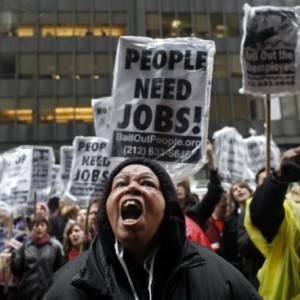
The global depression we’re in is seeing an increased in volunteering “positions” as companies find new ways – albeit borderline legal ones – of cutting costs.

Used to be, the only ones “working” for free were the interns, and to be in one those roles, you had to be enrolled in a recognized post-secondary program, or a co-op program through high school.

These days, I’m hearing horror stories of people with years of experience and education putting in full-time hours in the corporate world, yet they aren’t receiving any pay.

It’s questionable advice many career counsellors are giving to the unemployed and underemployed – instead of having gaps in their work histories on their resumes, it’s better to volunteer and show you were doing something.

Yeah, right.

Next time I go out for dinner, I’ll just offer to voluntarily enjoy the meal, so the restaurant doesn’t have any empty seats.
I’m sure that’ll go over well.

NOT!

But if you volunteer, you might have to do that, because how are you going to pay for food in your tummy, clothes on your back, and a roof over head?

Volunteering for a non-profit charitable organization is a good thing – for the community and those who take the time to make a difference in the lives they affect by doing some good.

But we’re talking about people volunteering at for profit companies – companies which are making money off of the backs of those so desperate for work, they are willing to work for free.

Despite the poor advice from some career counsellors, it’s really up to each company whether or not they accept volunteers or not.

Those that do – shame on you!

Exploitation of those misplaced during the worse depression since the 1930’s isn’t anything less than evil.

Evil.

Mega Evil.

Dr. Evil never would stoop so low –that we know of.

What’s worse, is these evil companies accepting volunteers while making a profit are in many cases, expecting their volunteers to work just like their paid staffers – putting in full-time hours, signing contracts which limit their outside activities during office hours, even going so far as to having their volunteers pay for their own background checks, prior to being “hired.”

But there’s no pay – and no hope of ever being paid.

If you’re working for free, why would they start paying you? They’ll just find another desperate person willing to do your work for nadda.

Yet that’s the hope driving many volunteers – that one day, their evil slave owners – for that’s what volunteering is when someone else is benefiting from your hard unpaid work – slavery – will see the value of their slave – I mean volunteer – and hire them on staff.

It’s the same dilemma many contractors go through – also victims of our global depression.
Contractors give it their all, hoping they will be offered a lucrative and stable staff job.

There are the occasional stories of volunteers and contractors being brought on-board into staff roles. But those are so few and far between, you can count them on less than one hand for the most part.

It just doesn’t make sound business sense – anyone willing to offer their services for less than they are worth are going to be raped for those services. That’s the unfortunate nature of our society.

Which is why the onus is on big business to lay down the law, and to have clearly defined policies and procedures which prohibit staff from using volunteers in established businesses.

Because people displaced by the global depression may not know any better.

So it’s up to business leaders to set the standard, to avoid exploitation, and creating a society where slavery is once again an acceptable form of work.

Wednesday, 27 March 2013

Hey You Millennials – Want to Be Taken Seriously? Wear a Tie


Last week, I attended a business workshop on revving up your business, and this week I’ve met with a handful of young adults interested in sharing their ideas, and growing their businesses.

Instantly upon meeting them I knew I’d be going away empty handed. Within seconds of meeting these individuals on separate occasions, I already felt that they just weren’t serious about their own success – so why entrust them with my success?

How’d I know this so fast?

None were dressed for success.

Hey, don’t get me wrong – I have my favourite pair of torn and worn blue jeans, soft and cuddly warm fleece hoodies, and occasionally on weekends I’ve been known to skip shaving, and maybe not even comb my hair.

But when meeting someone for business or professional purposes, unless you’re a well known rock star and already have a bank account bigger than mine, you’d better be wearing a tie.
Okay, a tie is a bit over the top in this modern era of corporate casual dress.

But ripped blue jeans, tattered T-shirts, and uncontrolled body hair are just too relaxed for making that all important first impression.

Even when I do conference calls from the comfort of my home, I dress professionally – and I don’t have a video phone.
I find I’m in more of a professional mindset when I dress like a professional, so I can ask the tough questions and figure out pretty quickly if you’re worth my time – or not.

Maybe that’s my secret advantage – just dressing for success. Perhaps those still in their pyjamas are more ready for bed, than talking business, so when the tough questions need to be answered, they yawn away any attempts of winning me over?

That’s great if I’m negotiating a better price – but really sucks for them because they just got taken to the cleaners.

What’s worse – for us both – is we feel our time was wasted, because my bias is to not take anyone seriously if they themselves don’t take themselves seriously.

And the easiest way to show me how seriously you need and want my business, is really very simple – dress professionally.

So listen up you millennials – I know who you are – sitting there in your parent’s basement, sipping on your diet caffeine free flavourless colas, wearing torn jeans that are three-sizes too large and your favourite Justin Bieber or Katy Perry T-shirt – drop the useless cola, put on some decent clothes, and dress like you know a thing or two about being a professional.

And then, I’ll treat you like one.

End of story.

Tuesday, 26 March 2013

Job Hunting 101 – Don’t Be Like This Guy


As I build an on-demand digital media company from scratch, I see many cover letters and resumes.


From kids right out of school looking for their first big break, to veterans of the working world, victims of the worst depression since the 1930’s.

It’s the latter that need to take note, because although we all know it’s tougher out there than ever before, showing your frustration and bitterness doesn’t improve your chances any:

“If this application finds its way to an employment agency, please disregard it. I’m tired of working on contract-to-perm – if they were truly contract-to-perm roles, I wouldn’t have to keep looking for work now would I?”

That’s an actual quote from a cover letter I received just the other day. Snarky sarcasm sure got my attention, but not in a good way.

Yes, our government has dropped the ball in letting companies outsource their workforces to such a deep degree that it’s exceedingly rare to find a secure, stable full-time staff job these days. And this unstable workforce just makes the economy even more uncertain, as those with unstable contract work don’t make the big ticket purchases which fuel the economy.

Governments need to put legislation in place to fix our broken economy – and they need to take a tough stand on the over use of contracted out consultants, and outsourcing to other nations, if that legislation is going to have any real impact.

However, complaining about it in a cover letter just sounded like sour grapes, screams attitude problem, and caused me to do what most employers probably would – instantly put that resume into the recycling bin.

Another example of what NOT to do if you want to get the jobs you are applying to:


“I’ve been a consultant not by choice, that’s all I can find. So if this is a contract of any kind, I’m just not interested.”
Neither am I interested – even though I’m looking to bring aboard full-time permanent people. If you actually spell out the limits of your employment in a cover letter or resume, you’ll probably be waiting forever for the phone to ring.

I certainly won’t be calling that person any time soon.

Despite all the doom and gloom echoed in many of the cover letters and resumes I see, occasionally I get one that makes me smile.

One of the keys to getting a job is standing out from all the other resumes, and one person recently caught my eye.

"Please check my resume and job hunting campaign below:

There is a $10,000 placement reward." 

If you follow the link, you are taken to a bright and welcoming website, with a cute video about this person calling himself Fredd Basser, who’s tired of being told he’s overqualified, so he’s offering a reward for anyone that finds him a job. He’s hoping to create a social media campaign that becomes so popular, it lands him work, and he’s offering money as an incentive to push that campaign forward.

Clever solution to a real problem in today’s economy, people with extensive experience unable to find work.

I haven’t talked to this person, but I hope he finds work – his idea is innovative and positive.

And we all need to remain positive in this horrible economy.

Thursday, 7 March 2013

Budget Axe May Grind Away Toronto Teachers – Good Riddance


Last night, the Toronto District School Board (TDSB) had to reduce its annual operating budget – in the Province of Ontario, Canada, public school boards aren’t allowed to be in debt.

On the budget chopping block are numerous full and part-time teaching positions, mostly in the high school level.

Good riddance to the bloated, ego-maniacal teachers – serves them right if they lose their jobs.

Normally, I’d have the utmost respect for those charged with educating our kids.

However, since the school year began last September, our kids have been stuck in the middle of a labour war between the teachers, their union, and the Province of Ontario.

The province imposed – as they are rightfully allowed to being the public school teachers employer – a new contract, which the union didn’t like.

Since then, there have been random walkouts, picket lines and worse for the future leaders of tomorrow – no extra-curricular activities.

There’s more to life than reading, writing and arithmetic – although those are important. The after school sports, clubs and events which has been a part of most children’s – until this school year – foundation of learning forms the basis for learning more than books can teach.

From being a good sport, to learning how to work well with others, to thinking outside the box – sounds a lot like what you’d find in a job ad – extra-curricular activities teach our kids how to function in society, and lead meaningful lives.

That is unless you live in Ontario, where the teachers haven’t been doing their job.

At first blush, it appears to be a labour issue, where the teachers and their union are working to rule in protest against their boss, the provincial government.
But just two weeks ago, the union asked teachers to resume extra-curricular activities, as the union was forging ahead with negotiations. Most of the teachers – the good apples – joyfully did just that.

But according to the union, about 20 percent of the province’s teachers are holding out, STILL refusing to give kids the education they need, by refusing to do extra-curricular activities.

These bad apples aren’t just holding innocent children hostage, they are now making it clear they don’t deserve to have a good paying government job.

As unemployment worldwide climbs in the worst depression since the Great Depression, apathy is anything but your friend. And lazy-ass teachers, can’t hide behind their union in Ontario and claim extra-curricular activities are part of their protest – the union made it clear that’s not the case anymore.
So, when school boards across the province face laying off slacker teachers to balance their budgets, cry me a river, because they deserve the seeds they sowed.

Unfortunately, another “benefit” of unionized labour is time in. The longer you’ve been in the union, the more clout you carry, and that means the teachers that most likely will face unemployment are the young new ones, which aren’t necessarily lazy-ass slackers.

Unionized labour – good grief.

Wednesday, 20 February 2013

When Women Are the Minority It’s OK – But Men It Isn’t?


Yesterday, the Toronto District School Board (TDSB) announced it wanted more men, to keep in line with its equal opportunity hiring practices.
For years, women, visible minorities and the disabled have had a leg up on jobs, simply because of these politically correct hiring practices to “balance” out the minority in the workforce.

But apparently, that balance has shifted slightly, as the TDSB admits it has too many women, and not enough men educating our young people.

The TDSB did qualify that, by saying they are looking for men, which are racially diverse, aboriginal or disabled.

Sorry if you’re a white able-bodied man – you’re still not wanted.

Women’s groups were up in arms that after the largest school board in Canada’s announcement that they would give a job to a man, instead of a qualified woman.

The irony in all of this, is it goes how wrong being politically corrupt – whoops I mean politically correct – really is.

Whenever a company boasts about being an “equal opportunity employer” it might as well go a step further and tell us which gender, race, ethnic background, and other discriminatory factors they really are looking for, because there isn’t anything “equal” about their employment practices.

Hiring someone because you don’t see the token black blind man anywhere in your office isn’t giving someone who wouldn’t normally get hired a break, its discrimination in the worst possible way – its blatantly labelling people for what they are instead of who they are.

I applaud the TDSB for recognizing they don’t have enough men in their workforce. But if they got off their lazy butts and actually hired qualified teachers – regardless of gender – then maybe they wouldn’t be in this situation in the first place.

At least the TDSB publicly admitted it’s shortcomings – most companies continue to use “equal opportunity employment” lingo to discriminate regardless of how obvious it is when you walk into their offices what the dominant culture is.
I’ve worked at some companies – American Express, BMO Bank of Montreal – just to name a handful of offenders, where their so-called “equal opportunity employment” standards were so lacking, I felt like I was in another country – yet I was right here in Toronto, Canada.

At American Express Technologies (AET) at their Canadian offices in Markham, out of well over 300 people, all were Chinese. Well, all except myself, and maybe five to 10 others – you could literally count on your fingers the number of people that weren’t Asian on that team.

BMO Bank of Montreal’s Trader’s Help Desk in Toronto, Canada had one or two non-Asian women, while the remaining 30 or so individuals were Chinese men, when I was working for that company.

BMO and Amex both have equal opportunity employment policies, but just as the TDSB, they don’t work very well unless you happen to be the specific racial or gender group they want to hire.

Seems to me that “equal opportunity employer” gives some companies the ability to only hire those they WANT to work with – people that look like the hiring managers.

That’s certainly not “equal” but I suppose it does give an opportunity for the employer.

But that’s not an opportunity I’ll have in my company – we hire based on something sadly forgotten in today’s politically correct world – talent.

Tuesday, 19 February 2013

This IS the Worst Depression Since The Dirty Thirties


To say economists are a very conservative bunch doesn’t even scratch the surface. However, their overly cautious descriptions of what most call “an economic slowdown” are so far from the truth, it really does hurt.

We’ve come a long way from the soup kitchens providing meals to the homeless during the Great Depression of the 1930’s, but from an economic perspective, we’ve sunk to new lows never seen – even back those 80-plus-years.

Although recently the Canadian federal government announced unemployment has dropped slightly, the reality of the situation came in their findings that the number of people that just stopped looking for work has risen.

I see the horrid sad stories of people struggling to find their way, as I build the teams in my new business. I’ve put out a handful of postings for specific roles we’re looking to fill as we gear up for our initial round of hiring, and within the time frame it takes to order and receive a pizza, I’ve received literally hundreds of responses.

Many of the replies show the exasperation and desperation of the underemployed and the unemployed – two key groups facing the toughest challenges in this economy.

Such as the person who starts off her cover letter with: “If this is an agency, please do not contact me and if this is a legit position, I am truly interested.” Her desperation and understandable frustration with the sorry state of our contracted out economy sums up her thoughts: “[I’ve been] doing various contract positions and am now looking for a position with stability.”

One of the many reasons our economy is in such tatters is because of the proliferation of recruitment firms hiring people on a project basis, instead of placing people in full-time permanent positions. Sure it’s better for the recruitment firm, as they get a regular take on re-using people as contracts run their course. 

However, as a contract runs out, and the poor person in that role doesn’t know if or when they will ever work again, they don’t purchase the big ticket items which fuel the economy, and it continues to decline.

Worse yet, as they continue to look for stable employment, but are only offered temporary contract gigs, they lose faith in the economy, and become bitter and angry, as is echoed in this person’s cover letter – yes that is an actual quote from a cover letter I received to one of our posted positions.

Economists have to get their heads out of the sand, and wake up to the reality of our dismal depression – yes that’s what it is – and start calling it just that.

We’ve been in this “economic slowdown” more than the required time to define it as a depression, and we haven’t seen this many people out of work and desperate since the Great Depression over 80-years-ago.

I understand the fear that economists are trying to avoid, by NOT using the “D” word – but until they start calling a spade a spade, the world will continue to spiral out of control, because governments and big business will continue to heed their conservative interpretations, and that’s not good for any of us – employed or not.

Tuesday, 29 January 2013

Should Criminals Host TV Shows?


Criminal record checks have become all too common as part of the hiring process. Employers want to know that you won’t steal their pencils.

But in some jobs, a criminal record check really does prevent problems for both employer and employee down the road.

Last thing a major television network wants, is to have it’s top rated morning show host taken away in handcuffs.

But if you’ve done the time for your crime, should you be allowed on television?

Television’s perfect home body, Martha Stewart is back on the TV, after doing time for securities fraud.

In Canada, media baron Conrad Black may be following the home body’s lead, as there is talk that he may get his own talk show on a cable channel available across the nation.

Conrad Black served time for fraud as well, just a different kind. His was to do with his newspaper empire, and made headlines in some of those papers, as he continued to write columns while in prison.
Now he may be on the airwaves, broadcasting his thoughts on television.

Which raises the question – should convicted criminals be hosting television shows?

We all make mistakes, and both Stewart and Black have paid for those mistakes by serving out their criminal sentences in prison.

But millions of people are denied even the most entry level of jobs, because of their criminal past.

Such as the teenage mom, that can’t get a job working in a retail store, because her criminal background check shows she was charged with theft. What it doesn’t show is she stole a loaf of bread to feed her kid.

There are other reasons why criminals don’t usually get put on the tube. The last thing any network president wants, is to turn on his station, to see someone telling the world how to break the law.

It’s unlikely Black or Stewart would publicly tell others to do something illegal. But the possibility is always there.
And our television personalities are role models for us all. We get hooked on their energy and drive, and often mimic them.

So putting criminals on television is bad for our kids, and ourselves.

Do we want others to follow Lance Armstrong?

Before the cyclist came forward with confessions of “doping” while competing he was a role model to many.

Now that he’s come out and spoken publicly about his drug-laden past, he’s on television even more – explaining himself and what he did.

Fair enough, television does provide a forum for public debate, and all sides should be allowed to participate.

But if someone were to offer Armstrong his own television show, I’d question that person’s motives.

And you should too.

Thursday, 17 January 2013

What Would It Take to Win You Back?


After a brutally long labour dispute, the National Hockey League (NHL) is trying to win back fans, with freebies. Well, at least the American teams are. Here in Canada, the league’s worst team – yet surprisingly most profitable – the Toronto Maple Leafs, is only giving out free access to today’s practice, and a complimentary bag of popcorn and a cup of hot chocolate.
In the States, many NHL teams are trying to buy back fan loyalty with free tickets, free parking, free hot dogs, jerseys and even half-priced beer.

Despite the free stuff being handed out to weary hockey fans, for once a professional sporting franchise actually may have lost more than most of the regular season, and a bunch of fans.

Unions making unreasonable demands in these uneven economic times have laid to rest big businesses. Just ask the 3,000 Twinkies makers now looking for work, thanks in part to their union’s long battle with Hostess. Hostess has gone out of business.

What good is a union if it puts it’s members out of work?

The National Hockey League Player’s Association, the union representing the millionaire twentysomethings playing a kids game for profit, cost the NHL more money to ratify their latest collective agreement, in an economy where people are more worried about paying their rent, than paying to see a hockey game.
In such an economy, doing anything – anything – which alienates your customers isn’t exactly the brightest idea.

But that’s exactly what the player’s union did, as they battled management, leaving fans out in the cold.

Now the NHL is in an uncomfortable and awkward situation, spending more money to woo back customers, so they can afford the latest demands from the union.

Unions have a respectful history, ensuring protection of worker’s rights when none existed. We’ve come a long way since the Industrial Revolution, and thanks to unions lobbying governments, labour laws prevent most of the atrocities of the past.

These days, unions are more Mofia-like thugs, threatening walkouts, strikes and other nasty business, if they don’t get more money, more job security and other things which aren’t really to protect workers rights, as they are to justify the union dues members pay.

And given the ways unions handle negotiations in such a hostile fashion, one wonders if perhaps union bosses wished they were in the mob?

What if comes down to is money.

Unions cost their members money, not just in dues taken right off the top of their hard earned pay, but also in the wages. When they force their members to walkout, strike, work-to-rule and other mob-like tactics, their members only get partial salaries, commonly called “strike pay.”

And unions threaten the viability of a business, by cutting off the goods sold to the customer – be it Twinkies, or hockey tickets and a plastic cup of beer.

Unionized labour’s time has come and gone.

Thursday, 10 January 2013

Teachers Harm Their Students in Blind Self Interest


As the economy continues to nose dive, labour unrest grows, as everyone is worried about their job.

That’s understandable, given a job is the foundation for keeping us fed, clothed and sheltered in our modern, always on and available world.

From pilots, at a small Canadian airline – Porter – going on strike, to the loss of Twinkies in the States thanks in part to a union’s increasing costs to the profit losing-company Hostess, organized unions aren't very – well – organized – these days.

The latest victim to the labour movement are perhaps those most unprepared for it – our children.


Granted, that collective agreement was mandated upon them by the government, however, last I checked, the government was well within its legal and some may argue ethical, rights to do just that.

Since the school year began last September, the teachers just haven’t been very deserving of apples, as they hold our kids hostage all so they can guarantee something no one can anymore – job security and salary increases. The teachers have stopped hosting extra-curricular activities, coaching school sports teams, and even forced kids to cross picket lines.
Imagine, being a scared child, and having to be rushed through an angry mob just to get to class!

Maybe Ontario’s teachers skipped economics class, because most know when the economy tanks, job security and guaranteed wage increases just don't happen.


Unless you've got a mafia – I mean union boss – threatening – I mean negotiating – on your behalf.

Seriously, unions act just like organized crime. They come around, force you to sign up for “protection,” threaten your job if you refuse, and then they go out and bully your manager if they don’t get what they want.
Maybe they can enlist the cast of The Sopranos to do a new TV show, only instead of leading a crime family of gangsters, Tony Soprano will lead a group of high school teachers?

Whatever happened to teachers that gave a damn about teaching? Where did the teachers go that actually got into the profession to shape future generations?

Millions of people globally are struggling just to find a basic job – yet the average Ontario teacher makes a very comfortable middle-class income, and all we ask of them is to take care of our kids so they too can have a future.

Mr. Dalton McGuinty, Premier of Ontario, you’re too nice. You should abolish the union, fire any teacher instantly that refuses to do their job, and hire one of the thousands of Ontarian’s out of work.

That’ll teach the teachers a lesson in economics.

Monday, 7 January 2013

Game On but The Union Should Be Out


Canada’s national sport has been in a state of limbo since it was supposed to begin this season. That’s because the game’s players went on strike, leaving fans waving their flags in empty sadness.


Unions seem to be taking the more aggressive approach these days when it comes to labour negotiations.

Strikes, walkouts, protests, work to rule, and work slowdowns and even work stoppages are becoming more common than sitting at the bargaining table and talking like grownups.

Remember when you were a kid, and you’d throw a temper tantrum by kicking and screaming until you got your way?

Unions seem to lack the maturity to negotiate in good faith as they throw their own hissy fits, only when a union throws a hissy fit, it affects more than just those in the room.

Here in Ontario, Canada, the province’s teachers are constantly throwing hissy fits as their union threatens action over a piece of paper that takes away their collective right to strike.

Since the school year began last Sept. Students have continued to suffer, because the teachers refused to run the extracurricular activities which makes our schools well rounded places of learning. There is more to life than reading, writing and arithmetic – and that’s what those after school programs and clubs is for.

Yet the people charged with helping bring today’s youth into the adult world don’t seem to care if those kids aren't well adjusted members of society, so long as they can throw their hissy fits whenever they don’t agree with their employers terms of employment, they’ll do their job – that is if they aren't throwing a childlike hissy fit.

Unions don’t just force their employers to cave in among unreasonable and unrealistic demands, they have also taken to throwing their hissy fits when governments interfere with their right to be treated better than anyone else in society.
It isn’t uncommon for the unions representing pilots and airline workers to throw a strike just as a major holiday season is upon us in Canada or the States, requiring governments to get involved to barter the peace, and keep innocent travellers moving.

Unions once had their place in society. At the turn of the 1900’s when the industrial revolution began, and employers treated their employees like garbage, unions made the world of work better for all.

Labour laws were brought in, thanks in part to the union movement, which prevents horrendous abuses by employers.

So unions these days, fight for things which most of us non-union stiffs could only dream of – job security, guaranteed wage increases, the right to throw a hissy fit whenever we want.

A few years ago, the largest corporation in the world sent a clear message to it’s union – make all the demands you want, but we’ll go out of business if we give in.

General Motors actually threatened to shut down, to declare bankruptcy, to go belly-up and cease to exist, if the unions persisted in their outrageous threats to strike for better wages and job security.

See, in the real world which unions don’t seem to be, wages can only increase if the company can afford to pay those wages. In a declining economy as we've seen for the past decade – a recession really – people don’ t buy cars. When people don’t buy cars, why is it that the automotive unions continue to insist on wage increases and job security?

Just another example of childlike behaviour in the real world, by union leaders.

Abolish unions for the good of everyone. That’s what we need do.

Monday, 31 December 2012

Good-Bye 2012 – You Were Quite the Year


As the end of one year ends, and another begins, many of us reflect on the past, as we look towards the future.

For me, 2012 was a challenging, trying and at times epic year of life altering experiences.

As our economy continues to teeter on the brink of collapse, and business and political leaders continue to apply outdated, old school, band-aid solutions in a rush to keep us all from falling over the fiscal cliff, it’s time for us to re-think our world, and our way of living in it.

The fiscal cliff isn't just an American catchphrase for economic pot holes – it’s a good way of describing the new economy of an ever more frightening world in which to live.

Major corporations, once the cornerstone for economic prosperity and security in most of the world are no longer that stable or secure employer they once were.

One used to graduate from high school, get an entry level gig at one of these big major corporations, such as General Motors, General Electric, IBM, Proctor & Gamble, American Express, even McDonald’s, and over time, work one’s way to the top.

Not anymore.
A job for life at a big American company, with benefits, and regular salary increases to keep pace with the cost of living isn't the American Dream – it’s just a dream.

Although the economy is growing globally, it’s actually shrinking in the process. Companies may offer their products and services all over the world now, but few of them are hiring people at decent wages with quality benefits anymore.

Gone are the days when you could get a job where your employer actually gave a damn about your quality of life. All they care about is their own bottom line – regardless of the fact that a staff constantly worried about paying their bills, doesn't do their jobs as effectively.

When I worked at one of the largest financial institutions – one of the top five banks in Canada – I saw just how employee loyalty does not go both ways.

My team’s Project Manager had been with the bank for over 35 years – for some that is a lifetime. She was exceptional at what she did, I considered myself very lucky to have her on my team. At the end of a bank-wide project, her boss told her that her services were no longer required, and they’d give her six-months to find another role within the bank, and then they’d just give her a severance package and send her on her way.
This was the way the bank forced people that cost too much out. Obviously my Project Manager wasn't going to find another role at the same pay scale she was used to – when have you ever seen a job posting requiring 35 years of experience?

And even if she bit the bullet, and was willing to accept a lower pay just to keep a job for a thankless employer, hiring managers would look down at her, and wonder how loyal she would remain, doing the same thing for a fraction of what she previously was being paid.

This was how one of the largest banks in Canada, retired my team’s Project Manager. And its how many big businesses force long-term employees to retire.

Loyalty.

That’s a tricky word in today’s business world.

Used to be if you worked hard, went the extra mile to impress your boss, then over time, you’d get promoted, not retired.

I've known many people that had dedicated most of their adult lives to one big corporate employer, only in the end to be let go, simply because they got promoted too often and became too expensive to keep.

2012 was the year that I learned the hard way just how hard work, dedication and loyalty to your employer doesn't matter. In the end, you really are just a dollar figure to your boss.

The bean counters think it’s only a matter of dollars to replace someone with years of experience, contacts, and know-how with a recent college graduate.

And that’s why our economy is really falling apart. Studies show wages continue to fall, while the costs of living continue to rise.

Especially as our population ages, and more of those long-term, dedicated and loyal employees find themselves dumped by their disloyal employers.

The new kids they replace long-term employees with don’t make enough to make major purchases to keep the wheels of the economy moving.

How many twenty-something’s do you know have their own mortgage?

In order to get over the fiscal cliff, big businesses need to get over their fear of paying people what they are worth. They need to stop seeing their staff as numerical figures on a balance sheet, and start seeing them for what they really are.

The very same people that keep the economy moving – earning a decent living, and spending that living – well – living. 

Thursday, 6 December 2012

Has Our Digital World Destroyed the Next Generation?


As I grow my new business, I’m talking to all sorts of folks who are looking for work, and want to join my fledgling new venture.

But I’m noticing a disturbing trend with many of the young adults I’m talking too – sort of a lacklustre aloofness. It’s as if they are just floating through life, without a care in the world.

I’m not unsympathetic, when I was in my early twenties I was still very much discovering myself. 
But at least I was trying different things, taking on the adventures the world tossed my way openly, as I feasted on all the new things I was learning about the world around me, and myself.

But kids today seem to lack that sense of self-exploration which my generation had. They are too tied to their mobile devices, their tech toys, and their small circles of close friends which are also tied to their mobile tech toys.

Has our digital world destroyed the next generation?

Are kids today so enveloped in technology, they have forgotten the world around them?

I’m building an on-demand television network, so when someone tells me they've always wanted to be on television, shoot a camera, edit a video, or just work within a television production, and I ask them why, I expect a long-winded answer.

Usually when someone is really interested in something, you can’t shut them up. If someone asks you about something you are passionate about, you should be able to go on, and on, and on – like the Energizer Bunny. 

But when I ask young adults why they've always wanted to be a TV reporter, host, producer or any other role we have, I usually get a deadpan answer more fitting for someone about to have a root canal than talk about their life-long dream.

When I ask them what they watch, read or listen to for inspiration in their self-admitted life-long dream, they usually tell me they don’t watch, read or listen to anything of the sort.

Even before I did my graduate work in broadcast journalism, while I was doing my undergraduate degree in a completely different field, I watched every major newscast, listened to various radio news shows, read all the daily papers, numerous magazines, and biographies of all the big name reporters, news anchors, publishers and producers.

If someone asked me why I wanted to be a journalist, I’d light up like a tree at Christmas, talking up a storm about the business which fuelled the fire of my soul.

These days, the only thing apparently igniting the souls of our future generations are their tech toys.

They are nose-deep buried in their mobile devices, texting tweeting and updating their social networks.

Although to a degree, I’m also buried in my mobile tech toys, I still have a passion, an interest – hell – a life – outside and away from my digital world.

Although I’m starting a digital media company, I know there is more to it than just being immersed in the digital world – as with any technology-based company.

No matter how dependent upon technology we all become, end of the day, it’s not iPhones, BlackBerry phones, laptops or tablets which make the world work – it’s people.

There’s an old saying, that those who are exceptionally good at what they do, have a real passion for what they do. They don’t just go to work, they go to play.

I've always believed in that – and hoped my passion for my work shone through in my work’s quality.

However, I’m concerned that future generations are so digitally distracted, they lack any passion for what they do.

Not just because the quality of their work suffers, but ultimately their lives suffer too.

Friday, 16 November 2012

How a Union Killed the Twinkie

Unionized labour in North America is strong. Too strong. So strong it’s putting the very employees its supposed to protect in harms way.

Thanks to the unions at Twinkie maker, Hostess, the American giant in the junk food industry is closing it’s doors – forever – putting the company’s employees out of work.

Hostess, founded as Interstate Bakeries Limited in 1930, is one of the largest bakeries in North America, baking up Wonder Bread, Twinkies, Ho-Hos, Ding-Dongs, Dolly Madison, and other well known baked goods.

Now these products may disappear off of store shelves, as the company was forced into Chapter 11 Bankruptcy today, because of an on-going dispute with the Bakery, Confectionery  Tobacco Workers and Grain Miller’s International Union (a Teamster’s Union) and company management.

The union represents most of the 6,600 Hostess employees, and was supposed to ultimately protect those employees from job loss.

However, as with all disputes involving terrorists, common sense doesn't prevail. And unions do act more like terrorist organizations of late, instead of collective bargaining units.

We've seen this with the auto industry and their unions. The world’s largest automaker, General Motors was almost put out of business because the unions kept insisting the employees deserve more money to build cars. If federal governments in Canada and the United States didn’t provide bail-out funding to General Motors, to offset the outrageous demands of the terrorists – we mean the union – then the world’s largest automaker would be no more, and thousands of people would be out of work.

Granted, the union movement grew out of a real need to protect employees from unsafe and even inhumane working conditions.

Early in the 1900’s, at the start of the industrial revolution, as companies grew richer, their power-hungry owners began making uncivilized demands on their staffs. From forcing them to work overtime without paying for that overtime, to providing unrealistic deadlines, even limiting the amount of bathroom breaks employees could take throughout the day.

Labour unions originally solved many of these problems in unionized shops around the world. 

Although in a consistently declining North American economy, many non-unionized office jobs are starting to revert back to the dark ages, as many crazy bosses are restricting employee bathroom and lunch breaks today.

Getting a job at a union shop meant getting a decent paying gig, with an employer that treated you right. The labour movement had succeeded in making these workplaces safe and secure.

However, now that the workplace was safe and secure, what could unions do? What role did a union have in the company?

It should be to advocate on behalf of employees, and ensure that the safe and secure workplace continues. And labour unions did this, but they took it upon themselves to push for constant increases in benefits, pay, and job security.

Job security always has – and always will be – a false notion which was conjured up by the labour movement.

No one’s job is any more or less secure – as we've seen with Hostess today. If a company can’t fiscally function any more, it doesn't matter what a bunch of thugs in the labour union say or do, once the company goes out of business, usually that means the jobs which were supposed to be secure forever, just don’t exist anymore.

Union battles to increase benefits and pay constantly over time drive away the potential for this fictitious notion of job security – which ironically they themselves created. The more benefits afforded employees, the greater the cost to the employer. The more pay given to workers, the greater cost to the employer.

Not that employees don’t deserve better pay and benefits – we all want to work for someone that cares enough about their staffs to pay them well, and treat them well.

But labour unions fight tooth and nail to secure more pay and benefits for the employees they represent, despite constant claims from companies that they can’t afford it, putting the company in danger.

Unions always claim the companies aren't telling the whole story, and say they don’t have the money for increased benefits and pay as a tactic to avoid doing it. They threaten to walk out and go on strike, which means the company can’t produce what it makes, and loses even more money.

So companies gave in to these outrageous demands – just like law enforcement has had to do with terrorists in some situations.

Eventually, if the business turns around, and the company starts to make more, it survives, and can absorb the outrageous costs the unions place on it’s operating budgets. OR, as we've seen today, things don’t get better for the company, and it’s forced out of business, because of increased operating costs – often brought about by the union.

Unions were once needed, to bring about better working conditions, which they did do. Then they got greedy, and today they are forcing companies to shut their doors, like Twinkie giant Hostess.

So, say good-bye to your Twinkies, thanks to the union.