Showing posts with label Television. Show all posts

Thursday, 2 May 2013

Crowdfunding’s Appeal is It’s Biggest Drawback


We’re well into our crowdfunding project to raise funds for the world’s first crowdfunded On-Demand Internet Television network.

I’d like to say it is going better than expected.

I’d LOVE to say that.

But I can’t.

Because it’s not – if anything it’s either exceedingly slow, or not even getting off the ground – and we are well into our second week.
We’re doing everything we are supposed to according to all the research we’ve done. We’ve got a great project video, a compelling story about what we are doing and why, great perks at various price points so as to not exclude low funders nor limit high rollers.

We’re promoting this project all over the place, we’ve had some press, and you can find us on all the major social networks.

We even have what I’ve begun calling our “social media army” tweeting, re-tweeting, posting, and sharing our project across their social networks.

We know we are reaching people, we average between 1,500 to 2,000 unique visitors to our Indiegogo project page every day.

Still, we are well below our predicted funding goals for this time in the project.

Why?

I’ve been debating that question with friends and colleagues since we started, as the project never really took off.

Is our project video not interesting enough?

We’ve re-done the video three times, each one different to see if that’s the cause.
Is the content just not interesting or informative enough?

Again, this has been re-jigged a couple of times, to see if that’s the problem.

Do we not have enough perks, or are the perks just not good value for the money?
We explored numerous other projects, comparing ours to ones that have exceeded their funding goals. Our perks seem to be in line with these, in some cases they are better.

For every possible reason, there are a zillion other reasons.

The caveat I’m learning as we take our lumps through this crowdfunding project is the lure of the masses, but those masses sometimes just don’t bite.

That’s the great appeal of crowdfunding – reaching out to millions of people, getting them behind your cause, and watching your dreams grow.

That appeal is also the biggest drawback – when your idea falls flat, fails miserably to attract anyone, and you feel exposed, naked in the wind, as your dreams are blown away.

Crowdfunding may be a great way to raise funds, but if the concept you’re putting forward doesn’t take, it’s a painful process to go through.

And that’s crowdfunding’s biggest drawback.


Thursday, 25 April 2013

Ever Wanted to Be On TV? Here’s Your Chance


We’ve added some cool swag – perks, gifts, give-a-ways – to our On-Demand Internet Television crowdfunding project, including an all expense paid trip for you and a friend to Toronto, Ontario, Canada, to appear in a television show!

If you’ve always wanted to appear on TV, or just want a vacation in one of the cleanest, friendliest and most exciting big cities in the world – here’s your chance.

We really are sick and tired of not finding anything good on television, and we want to change that.

How do we change that?

We ask YOU what you want to see.

No joke.
We’ll have discussion forums, where you can suggest a show idea, discuss and debate show ideas, and the shows which get enough interest could eventually end up being produced by our award-winning production teams, and shown exclusively on our hip and trendy new network.

And because our network is on-demand, you can watch what you want, when you want, and where you want.
But we can’t do any of this without support from YOU.

So, if you are also sick and tired of never finding anything good on television, please support our On-Demand Internet Television crowdfunding project.

Thank you for making On-Demand Internet Television matter.

Wednesday, 24 April 2013

Why Television As We Know It Must Change


When television first broadcast black and white signals several decades ago, life was simple.
Families were used to spending time together, gathered around the radio listening to radio shows, and naturally did the same when television first entered our living rooms.

Times have certainly changed.

Many families have so many televisions at home, they rarely, if ever watch anything together.
And even if they only have one television, because of the Internet and the ease of streaming video, even single TV homes rarely gather ‘round the tube, watching television.

This fragmentation of audiences is the big reason On-Demand Internet Television is the wave of the future.

Family members don’t scatter after dinner because they can’t stand each other – at least we hope they don’t.

NO.

They scatter because of their individual interests, which mean they all like to watch different things on television.

And On-Demand Internet Television provides the ability for everyone – Mom, Dad, the kids, even the dog if he has a favorite show – to all be easily entertained, each with their own show.

On-Demand Internet Television provides a narrowcasting model, where you the viewers discuss, debate and ultimately vote on the shows you want to see.

Broadcast television stations have been losing viewers since streaming videos on the net became a past time. Today, they are at a tipping point, where if they don’t get into the speciality narrowcasting market, they’ll eventually disappear.

Though how they will go about doing just that remains to be seen, as their entire business model wraps around a broad audience, not a narrowcasted fragmented one.

Maybe that’s why On-Demand Internet Television matters? 

Tuesday, 23 April 2013

Circumcising Your Own Cord – Doesn’t Have to Hurt


Millions have cut the cord with their cable or satellite providers across the globe – and you can too.

And you know what?

It doesn’t hurt.

Really.

For years big corporations have forced us to order channels we never wanted, because they bundled them together in packages.

For even the cheapest channel you don’t watch, that’s many dollars wasted.

Far worse, after a hard day’s work, when you just want to fall into the comfy confines of your favorite easy chair and watch a little television to relax, you can easily get frustrated flipping around, just trying to find something worthwhile to watch.

You don’t have to be a victim to bad television anymore.


On-Demand Internet Television is a crowdfunding project, to create the world’s first Internet-based television network, which shows what you want to watch, available at anytime and from any connected device.

How does a television network know what you want to watch?

Through forums and discussion groups, viewers are encouraged to provide show concepts and ideas, which will be discussed among the greater viewer-base.

Shows which receive a lot of viewer support will be created, and placed on-demand online.
So you really can have a say in what is available on television.

And finally, after a long hard day at work, when you collapse into your favorite chair, and switch on your television, there will be something on just for you!

You have the power of choice.

Exercise your power.

Make On-Demand Internet Television Matter.


It won’t happen without YOU.

Monday, 22 April 2013

So What Is On-Demand Internet Television?

Millions have already cut the cord with their cable or satellite providers, and are enjoying television anytime, and on any device they have via on-demand services over the Internet.

Problem with many of these on-demand services, is they serve up the same distasteful menu of Reality TV, sitcoms, game shows, and even re-runs of once great shows, but nothing new, and original.

And when they do their own programming, just because it receives rave reviews from the television critics, doesn’t mean you are going to like it.

Television is like food – we all have different tastes.

Some like it spicy, others run to the bathroom at the mere thought.
The same goes for television shows. Actually, it’s even more so for television – we all have such varied and unique interests, hobbies, career aspirations – so naturally we’ll all have very different tastes in what we like to watch on television.

That’s the magic of our crowdfundng project – we open up the discuss forums, giving you a voice.

Be heard – tell us what YOU want to see on television.

If enough people get talking about it, we’ll create the show – and FINALLY there will be something YOU want to watch on television.

Even better, because it’s on-demand over the Internet, YOU can watch it when you want too, and on any connected device.

So while waiting in line at the grocery story, you can be watching your favorite show on your mobile phone, and thanks to cloud-based computing, you can continue watching your favorite show after you put your groceries away on your connected big screen television in your living room!

All of this can only happen with YOU.

So please help us make on-demand Internet television possible. DONATE to our crowdfunding project NOW – we’ve got some great gifts as our way of saying ‘thank you.’

Once you’ve made your contribution, don’t forget to spread the word – the more people that know we exist, the better. Tell EVERYONE you know via Twitter, Facebook, Google+, Pinterest – whatever social network you are on – please share this link. 

Thank you for making On-Demand Internet Television matter.

Saturday, 20 April 2013

End Boredom, Get a Perk, Feel Good -- Why Not?

Yesterday I launched my very first crowdfunding project on Indiegogo -- On-Demand Internet Television.


Crowdfunding is using social media to  raise funds for anything – be it a business, a creative project, or as in my case – a bit of both. From a business start-up point of view, it’s also a great way to see if the business idea has a market, because you can see by how many fans do – or don’t – jump on board to support it either through promoting it via their social networks, contributing ideas to help it grow, or even donating to the cause to ensure it takes shape.

You may have heard of websites like Kickstarter and Indiegogo – these are the biggest and most talked about crowdfunding websites out there, which help people raise funds by growing a social following of people interested in seeing their ideas happen.

Of course, there’s also something in it for the fans that donate to the cause – gifts are set at different levels of funding which encourage people interested in making the idea happen, to open up their wallets.

The On-Demand Internet Television crowdfunding project is a really cool one -- which I hope you will check out, select a perk, and even share it with your social circles to make it happen.

Help us rid the world of boredom, by creating the first television network with programming that you'll actually watch.

How do we know you'll watch it?

Check out the crowdfunding site here to learn more, and please help us make this possible by donating to the cause and sharing the site with your friends.

Over the next 50 days, I'll be using this blog to share my thoughts, feelings, successes and failures about crowdfunding the worlds first viewer created television network.

See what challenges we go through as we crowdfund -- great if you have an idea you've always wanted to try, but just don't know how to raise money to start it.

Thanks for reading this blog -- and for supporting our crowdfunding project!


Tuesday, 9 April 2013

Have You Cut the Cord?


As digital cable and satellite services increase the amount of channels on the dial, you’d think there would be more on television to watch.

Think again.

Much of the crap they serve on cable and satellite is all owned by the same giant conglomerate companies.

And what’s the fundamental business model of most giant conglomerate companies? To be cost effective – AKA – cheap.

Although you may have thousands of channels to choose from, if you really take the time to explore them, you’ll find many channels run the same shows over and over again. Other channels show old re-runs of those very same shows. And still other channels lack anything that interests you.

It’s how these giant conglomerate corporations save money, while providing the illusion of vast and varied programming.
And it’s why between 10-15 percent of North American’s are “cutting the cord” with their cable and/or satellite providers, and switching to on-demand Internet television.

On-demand Internet television is always fresh – it costs a fraction to produce high quality shows as the giant conglomerate companies, and it’s made just for you.

Really.

NO.

Really.

On-demand Internet television is a smaller market, so the shows are created for very narrow demographic groups, which means you are much more likely to find the shows you really want to watch.

Instead of flipping through an endless stream of repeated syndicated and stale programming.

So if you haven’t cut the cord yet – what are you waiting for?

Tuesday, 2 April 2013

Where Do You Watch It?


Remember the old days, when you had to rush home to catch your favorite show on TV?

People would literally dash out of social functions with friends to turn on their television, sit in the dark, alone, and watch their favorite show.

That was if they were polite. Some would just tune into their favorite shows wherever they were, often without asking the host first!

The VCR certainly changed that – but they weren’t fool-proof, occasionally eating a tape, or if there wasn’t enough tape left you’d miss the end of whatever you were recording.

Personal Video Recorders (PVRs) also called Digital Video Recorders (DVRs) have made the recording of television shows almost fool-proof. Almost. If there’s a power failure, or your cable or satellite service goes down, there still is nothing you can do.

That’s where the power of on-demand Internet Television comes into the picture – pardon the pun. It’s on-demand, so you don’t have to worry about missing anything, because you choose when and where you watch.

And because it’s on the Internet, you can be just about anywhere in the world – so long as you have access to the net.
Over 15 percent of Canadian households claimed they got most of their television via on-demand digital media last year. That number is expected to climb to well over 40% over the next decade, and could even go as high as 60% by some estimates.

No longer do you have to run home to ensure your PVR catches your favorite show.
You can be anywhere and watch.

From your bathroom, a party at a friend’s place, work, or even in the park.

Toss in cloud-based computing technologies, and you have some cool television tech – it gives you the ability to continue watching on-demand Internet Television exactly where you left off, somewhere else and on a completely different device!

So that show you were watching on your iPhone during lunch but only got halfway through can be viewed right where you left off, on your connected large screen TV in your living room at home after work!

Though being able to watch on-demand Internet television anywhere can raise eyebrows too.
Listening to someone chatter on their mobile device while in the bathroom stall next to you is awkward enough. Overhearing them watching a television show while they do their “business” is downright dirty.

Not all content available on-demand is suitable for children. As some bus riders found last year, when a man began watching an adult movie on his tablet while on the bus.

Televisions across the globe have been used for years by couples to avoid contact during arguments. With on-demand Internet Television, those arguments can be extended to public spaces, as people continue to avoid each other by streaming their “distractions” on their mobile devices so they don’t have to actually talk to each other.

Speaking of public spaces, society already has become more anti-social, as we spend more time with our mobile devices, than with each other, even in social settings. Just go into any coffee shop that has free Wi-Fi, and you’ll see most people are busy watching their mobile devices, instead of interacting with each other.

Used to be, coffee shops were a great place for singles to mix and mingle, because you could easily go up to a stranger, and have a nice conversation over a couple of hot beverages.

Mobile devices have become gatekeepers in a sense, making it harder to approach someone that you can’t make eye contact with, because they never look up from their mobile device.
Still, it’s better than listening to someone watch TV in the bathroom.

Damn that flushing toilet – now I’ll never know what happened to JR!

Friday, 8 March 2013

If Everyone Hates Reality TV – Why Do We Watch?


Ever notice how quick we’ll complain about nothing being on television other than reality TV shows, but somehow, you happen to watch one of these highly popular shows?

Wonder why?

Perhaps it’s our human nature to watch others suffer more than ourselves?

Naw – you say – I’m not that sort of person.

Wanna bet?

Ever rubberneck?

Rubberneck. You know – when you slow down while driving or walking past an accident on the highway or road, to see what’s going on?

Everyone rubbernecks. So much so, many local governments have enacted anti-rubbernecking laws, so that people don’t stop too long and hold up traffic while passing accidents on local roadways.

Rubbernecking is a lot like watching reality TV – or at least the psychology behind them is identical.

Life is full of challenges. We all have our highs and our lows. That’s the way it goes.

However, scientists tell us we naturally take comfort in knowing we’re not alone in our lives. Not just the hugs, kisses and affection of loved friends and family – though that helps.

Science tells us we are genetically predisposition to seek comfort in other’s struggles with life. It makes us feel whole, complete, and above all – normal.

One of the most common complaints patients suffering from depression complain of, is a lack of fitting in with society. According to studies, these people delve deeper into depression’s ugly grips because they’ve cut themselves off from the outside world, and don’t see others going through life’s many challenges.

It’s not that we naturally feel better by the worse fates of others, instead, we’re comforted knowing we are not alone in our struggles to exist, and live meaningful lives.

So even though we all complain about reality TV, in some ways its therapeutic – which is why we all watch reality TV.

Now if only we could find something therapeutic in another format of television, to rid the world once and for all of silly, pointless reality TV.

Pass the remote control – it’s time for my therapy.

Monday, 4 March 2013

In the 24-Hour News Cycle Nothing Matters


I remember when I was a kid, and I’d be watching my favourite shows on television, when all of a sudden, the screen would dip to black. You’d swear you could hear mumbled voices, and then a still image of the network logo would appear on the screen, followed by the news anchors voice saying: “We interrupt regular programming to bring you a special breaking news broadcast.”

My parents would often gather around the TV when this happened, because back then, when breaking news was happening, it really was breaking news.

Think about the millions of dollars major television networks lost as they cut from their regular paid programming, to go to a live unsponsored telecast.

This is how the world learned of things that really did matter before the Internet and the always on news channels of CNN, BBC News and CBCnewsworld.
However, thanks to our vast information society, the term “breaking news” just doesn’t carry the same weight. Occasionally there is something really urgent going on which captures the attention of the world.

But because of the Internet and the 24-hour news networks, television and radio stations don’t feel the need to interrupt their regular programming anymore, and so “breaking news” has become a cliché used by these 24-hour news networks to keep people watching.

Breaking news isn’t really important anymore.

Most of the world watched in awe, as man walked on the moon – that was breaking news. Or when US President John Kennedy was shot dead, and the attempted assignation of another American leader, Ronald Reagan – these were breaking news events, as the world rallied around the success, mourned the loss, and feared for the future.

When NASA’s Space Shuttle Challenger and Columbia fell from the sky (in separate, but equally tragic incidents) those were breaking news events because we were reminded as advanced as our tech makes us, we are all still mortal.

Today’s “breaking news” was about Queen Elizabeth’s release from a weekend hospital stay, after a bout of indigestion.

Really?

Yes, the Queen is an internationally recognized figure head, considered a leader of the British people –but because she ate something which didn’t agree with her, we’re supposed to be glued to our “tellies” cheering her recovery?

For all we know, she spent the weekend in and out of the bathroom doing what most of us do when we have a bad tummy – and I certainly don’t want to know about that!
Our information in an instant world is a wondrous thing. But sadly, it has changed our culture and society for the worse.

We no longer all gather ‘round the television when the words: “we interrupt our regular broadcast to bring you this special breaking news event,” are uttered in a rushed state.

Because “breaking news” these days isn’t really as the name implies, we no longer share in the important life lessons learned by our society, as truly globally important events shape humanity.

And that’s perhaps the saddest thing of all about our information age – although we all know what’s going on in the world, we don’t experience it anymore.

Tuesday, 29 January 2013

Should Criminals Host TV Shows?


Criminal record checks have become all too common as part of the hiring process. Employers want to know that you won’t steal their pencils.

But in some jobs, a criminal record check really does prevent problems for both employer and employee down the road.

Last thing a major television network wants, is to have it’s top rated morning show host taken away in handcuffs.

But if you’ve done the time for your crime, should you be allowed on television?

Television’s perfect home body, Martha Stewart is back on the TV, after doing time for securities fraud.

In Canada, media baron Conrad Black may be following the home body’s lead, as there is talk that he may get his own talk show on a cable channel available across the nation.

Conrad Black served time for fraud as well, just a different kind. His was to do with his newspaper empire, and made headlines in some of those papers, as he continued to write columns while in prison.
Now he may be on the airwaves, broadcasting his thoughts on television.

Which raises the question – should convicted criminals be hosting television shows?

We all make mistakes, and both Stewart and Black have paid for those mistakes by serving out their criminal sentences in prison.

But millions of people are denied even the most entry level of jobs, because of their criminal past.

Such as the teenage mom, that can’t get a job working in a retail store, because her criminal background check shows she was charged with theft. What it doesn’t show is she stole a loaf of bread to feed her kid.

There are other reasons why criminals don’t usually get put on the tube. The last thing any network president wants, is to turn on his station, to see someone telling the world how to break the law.

It’s unlikely Black or Stewart would publicly tell others to do something illegal. But the possibility is always there.
And our television personalities are role models for us all. We get hooked on their energy and drive, and often mimic them.

So putting criminals on television is bad for our kids, and ourselves.

Do we want others to follow Lance Armstrong?

Before the cyclist came forward with confessions of “doping” while competing he was a role model to many.

Now that he’s come out and spoken publicly about his drug-laden past, he’s on television even more – explaining himself and what he did.

Fair enough, television does provide a forum for public debate, and all sides should be allowed to participate.

But if someone were to offer Armstrong his own television show, I’d question that person’s motives.

And you should too.

Tuesday, 15 January 2013

Bigger TV Requires Bigger House


How big is your television? The common answer across much of North America is 52’ – some are larger, many are smaller, but by in large, the average household with a high definition TV has one in that range.

Coming soon though – thanks to the Consumer Electronics Show(CES) recently held in the States – 80’ TVs and larger.

Yeppers, LARGER.

For the past couple of years, the major television manufacturers have been toying with new TV tech. This new technology uses a combination of filters, screens, and video compression technologies to bend light into moving p

That’s why they are calling it 4K – or technically 4K Ultra High Definition or 4K UHD. This new standard in television viewing produces resolutions of 3840 X 2160.
As with all electronics these days, not only are the manufacturers making things better, but also smaller. So these new 4K TVs are thinner and lighter than even the slimmest full 1080p HDTVs today.

This means they can – and do – make these new 4K TVs even BIGGER.

The smallest one I’ve heard about was 70’ – the largest was over 102’ – remember the average size currently in North America is about 52’.

With a bigger screen and better picture comes a much bigger price. These 4K UHD TVs have been listed at CES and other tech shows in price from $10,000 to $25,000 and up.

You can walk into your local Wal-Mart and pick up a pretty decent 52’ HDTV for under a grand.
Even if you have the outrageous dough to purchase one of these new 4K TVs, don’t – it’ll take a while before anyone is producing content in that resolution.

If you currently subscribe to HD cable, you’ll still see a lot of standard definition stuff on the dial – not everything is in HD even today.

And it’ll take even longer for TV stations, networks and production companies to fork out the millions required to upgrade to the lights, cameras, editing software and other tech to produce 4K broadcast-quality television.

Give it about five years or more. But by then, the even higher resolution will be entering the marketplace. 8K UHD is already being tested by the very same television manufacturers about to unleash 4K on the cash strapped tech world.

102’ TV?

Sheesh.

I need a bigger house just to accommodate that!

Wednesday, 5 December 2012

Television Isn’t Worthy of One Eye


Broadcast television just isn't what it used to be.

Remember when you turned on the tube, sat down, and within seconds you were enjoying something interesting?

Even with the over 500 channel digital television universe, most things “aired” by broadcasters aren't worthy of one eye, let alone both. They hit below the belt – way below – for content these days.

Just ask Matt Lauer.

The television personality that has the honour of co-hosting NBC’s flagship morning show 'Today' was making his own news – if you can call it that – by doing a bit on how one of his colleagues slapped him on the butt behind the scenes.

They did a whole “bit” on how inappropriate it was, trying to make us laugh. Instead, if you have half a brain cell left after watching fellow co-hosts Kathy Lee Gifford and Hoda Kotb drink themselves silly before most of us even have had a cup of coffee, were left wondering – WTF?
Gifford and Kotb both deny being alcoholics, yet they drink wine every morning. It’s just their thing – to drink first thing in the morning, at work, on TV.

If a high school teacher was doing the same thing at work in front of a class of kids, that teacher would be fired and sent to AA.

NBC isn't the only major American network producing brain numbing content, leaving us wondering what the hell?

Most American and Canadian networks produce crap these days – it’s a sad reality in this era of tasteless reality shows.
The Learning Channel – TLC – doesn't teach us much anymore. Unless you enjoy learning about someone crazy’s addiction to eating her dead husband’s ashes, in their show ‘My Strange Addiction.’

There are still some great shows on television. Showtime’s ‘Californication’ and HBO Canada’s ’Call Me Fitz’ are really amazing shows. They are well written, shot and directed.

'Californication' follows the wild life of novelist Hank Moody played by the undervalued David Duchovny, while 'Call Me Fitz' stars Canadian Jason Priestley as 'Fitz' -- an egomaniac used car salesman constantly battling his conscious.

The writers are both those shows is a thing even Shakespeare would give a nod too.
And that’s the real problem with most television these days – it’s not well written.

Writers are always undervalued – I was one – once. It doesn't matter whether it’s television, radio, print or even the web – they are still underpaid, overworked and treated like second-class citizens.
Which is why the shows are so poorly structured – you’d produce crap if you were treated like a slave.

So we get poorly written shows, with talent-less drunken hosts on major broadcast networks talking about butt-slaps, as our brain cells melt away in the miserable million channel universe.

Where’s my remote control? I can’t take it anymore.

Monday, 15 October 2012

The Insanely Dangerous Things We Do to Get On TV


The Austrian dare-devil dropped about 1, 100 kilometres per hour (684 miles per hour) breaking several world records, while becoming the trending topics on most of the social networks, and having his space-suit-mug plastered on all media around the world.

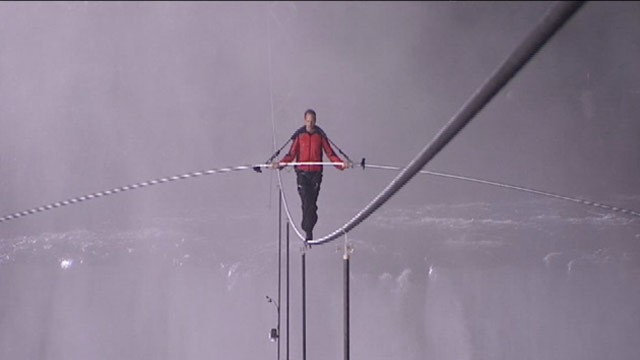
This isn't the first – and it won’t be the last – insanely dangerous thing someone has done to garner instant fame. Remember this past June when Nik Wallenda walked across Niagara Falls on a tight rope?
Both dare-devils survived their crazy stunts, and both made the headlines for the next few days.

Maybe it’s the reality TV generation we unfortunately are in, but it appears the only way to get on television these days is to be doing insanely crazy stuff.

From shows which test people’s level of bravery like Survivor, to ones that test our patience like The Jersey Shore, you don’t have to be a talented actor or have any sense of real intellect or creativity these days to get on a major network.

Just being beautiful and allowing yourself to be humiliated for all to see appears to be the norm.

And if you aren't beautiful, or willing to be voted off the island, you can always jump out of a balloon high up near the barrier between space and Earth, or walk across Niagara Falls.

Why do television networks produce this puff? Whatever happened to shows which actually made us think, feel and laugh?

Truth is, broadcasters have always catered to the largest and widest possible audiences. That’s why they are called “broad” casters. It’s like fishing, they toss their net of shows out into the viewing ocean, and whatever people fall into their net they contain with mindless drivel, while the rest escape to their digital, on demand podcasts.

Perhaps that’s why television and radio are dying – because of the failure of broadcasters to keep pace with the competition from the on demand digital media.

Television and radio broadcasters on the major networks in both Canada and the States have reported significant drops in their viewing and listening audiences over the past decade.

Over a decade ago, on demand digital media didn't exist. We were forced to watch and listen to whatever television and radio programming network executives thought we wanted.

Now we the people are calling the shots. With on demand digital media, we the people are our own program directors. We may occasionally surf late night television, and tune into local radio shows for our morning commutes. However more of us are just saying no to the broadcasters stilted and stale programming choices, as we discover shows that actually mean something to us on our podcast catchers, and other digital media such as Netflix, Apple TV, and on demand networks and shows available through other similar systems.
Although watching someone free-fall from a low Earth orbit may entertain and amaze us for 15-seconds, that 15-seconds of fame is long gone almost as fast as it began.

To really have a successful television or radio show, you need a stable of steady, regular, dedicated viewers and listeners. Tossing out the old fishnet and hoping you catch something is very fleeting, and won’t build a dedicated fan-base to sell advertising.

And if you don’t continue to sell advertising, eventually you won’t be in business, because that’s what pays the bills.

But hey, look on the bright side – at least you can get your 15-seconds of fame. Well, so long as the broadcast television and radio stations continue to exist in the ever growing world of on demand digital media.

How much time is left?

Better hurry up.

Fifteen-seconds doesn't last long.

Nope.

Not long at all.

Wednesday, 20 June 2012

Flashback to the Old Hot Wax Days

My age was showing, but I was glowing, as I reminisced about days of old with a couple younger colleagues today.
 
We were discussing desktop publishing, layout and design, and we were discussing the various software applications people use in this field, when one of my colleagues asked what ever happened to Adobe Pagemaker.

Ah, Pagemaker, that takes me back to days long before computers were popular for layout and design. Incidentally, Adobe Pagemaker was morphed into Adobe’s Creative Suite (CS) and became Adobe InDesign.

But my mind began to wander, as I described the old days of layout and design. Back then, the tools of the trade were anything but high tech. Cork cutting boards, X-Acto knives, rulers, scissors, rollers and burning, BURNING hot wax littered the layout and designer’s desks.

Many times I’d burn myself on the hot wax, rushing to paste together a story in time for a print run. Luckily it was like a candle burn, nothing major.

Back then, printed pages were literally cut and pasted together on long wax coated pages called “proofs.” Hot wax was rolled onto these proofs, and each story was cut into pieces, and each piece was coated in this hot wax. The wax would allow you to slide each bit into the perfect spot in the layout, creating a page in the newspaper. Then the pages were hung like freshly washed clothes to dry.

It was a time consuming process, requiring steady hands, and a solid eye for being able to see when things were aligned just right. The most skilled at this could eyeball a single line of type (say a headline) without a ruler, and just know when it was perfectly straight on the page.

Though each proof came with pastel pink and blue grid lines, showing you the way. 

To reduce some of the repetitive tasks of this time consuming process, layout designers kept many common elements on the side of their desks ready to go. The “paste-up board” as it was often called, because it had elements (such as page identifiers, logos, staff by-lines, datelines, place lines and so on) were all lying there, pre-sized and waiting to be pasted-up onto the page.

The area surrounding your pages in most desktop layout design applications is still called the paste-up board today, and is used to story common elements which can be copied into place.
These completed waxed pages would then be sent to the printers, where they would take them and create plates which they’d use for a print run.

When breaking news occurred, the poor layout designer literally had to start from scratch, because nothing was electronically designed, so the page or pages affected by the new story had to be recreated.

This is was why deadlines were so very important back in those days, as a breaking news story could delay the print run of a newspaper for hours. 

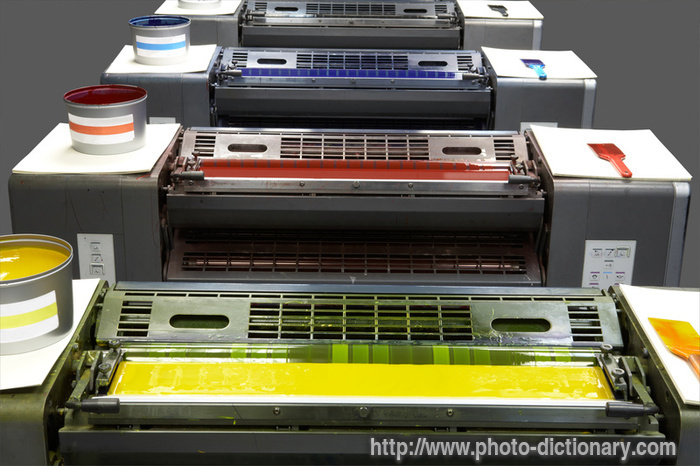
Once a print run begins, it takes some time to get started again, because of the way inks are printed in layers at different stages to achieve different colors and effects. So it still takes time to stop and start the actual production of a paper.

That’s why most major daily papers have two or three print runs, say a morning, afternoon and evening run. Some even have different edition runs, say one for the city, and one for distribution outside the city in the suburbs. If a breaking story changes the paper, they will toss the revised story into the next print run, instead of stopping the presses completely.

This is partially why newspapers are dying. Often, by the time they have hit newsstands, many of the stories are already out of date.

With 24-hour, seven-day-per-week news channels on television and radio, and with the global reach of the always on Internet, developing news stories change constantly. Newspapers can’t change once printed.

The always on digital media also has driven us to expect news to be new the second we see it. When you read something in a newspaper, it was current at the time it was written.
And newspapers take so much time to read, while television, radio, even the Internet can broadcast the news to us bringing us up-to-speed in minutes.

Although newspapers are a dying breed, I miss the old days of the hot wax, Xacto Knives, and paste-up boards. Back then, laying out a page was a much more hands-on process, because you physically placed stories on the page. These days, you point, click and drag your stories into place.

It just doesn’t have the same feel.