 Yesterday, “Fearless” Felix Baumgartner became an instant
television star after jumping over 38-kilometres (23.61 miles) above the Earth,on verge of space.
Yesterday, “Fearless” Felix Baumgartner became an instant
television star after jumping over 38-kilometres (23.61 miles) above the Earth,on verge of space.
The Austrian dare-devil dropped about 1, 100 kilometres per
hour (684 miles per hour) breaking several world records, while becoming the
trending topics on most of the social networks, and having his space-suit-mug
plastered on all media around the world.
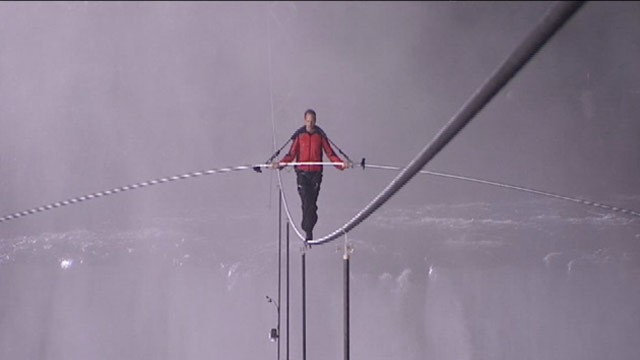
This isn't the first – and it won’t be the last – insanely dangerous
thing someone has done to garner instant fame. Remember this past June when Nik Wallenda walked across Niagara Falls on a tight rope?
Both dare-devils survived their crazy stunts, and both made
the headlines for the next few days.
Maybe it’s the reality TV generation we unfortunately are
in, but it appears the only way to get on television these days is to be doing
insanely crazy stuff.
From shows which test people’s level of bravery like
Survivor, to ones that test our patience like The Jersey Shore, you don’t have
to be a talented actor or have any sense of real intellect or creativity these
days to get on a major network.

Just being beautiful and allowing yourself to be humiliated
for all to see appears to be the norm.
And if you aren't beautiful, or willing to be voted off the
island, you can always jump out of a balloon high up near the barrier between
space and Earth, or walk across Niagara Falls.
Why do television networks produce this puff? Whatever
happened to shows which actually made us think, feel and laugh?
Truth is, broadcasters have always catered to the largest
and widest possible audiences. That’s why they are called “broad” casters. It’s
like fishing, they toss their net of shows out into the viewing ocean, and
whatever people fall into their net they contain with mindless drivel, while
the rest escape to their digital, on demand podcasts.
 Perhaps that’s why television and radio are dying – because of
the failure of broadcasters to keep pace with the competition from the on
demand digital media.
Perhaps that’s why television and radio are dying – because of
the failure of broadcasters to keep pace with the competition from the on
demand digital media.
Television and radio broadcasters on the major networks in
both Canada and the States have reported significant drops in their viewing and
listening audiences over the past decade.
Over a decade ago, on demand digital media didn't exist. We
were forced to watch and listen to whatever television and radio programming
network executives thought we wanted.
 Now we the people are calling the shots. With on demand
digital media, we the people are our own program directors. We may occasionally
surf late night television, and tune into local radio shows for our morning
commutes. However more of us are just saying no to the broadcasters stilted and
stale programming choices, as we discover shows that actually mean something to
us on our podcast catchers, and other digital media such as Netflix, Apple TV,
and on demand networks and shows available through other similar systems.
Now we the people are calling the shots. With on demand
digital media, we the people are our own program directors. We may occasionally
surf late night television, and tune into local radio shows for our morning
commutes. However more of us are just saying no to the broadcasters stilted and
stale programming choices, as we discover shows that actually mean something to
us on our podcast catchers, and other digital media such as Netflix, Apple TV,
and on demand networks and shows available through other similar systems.
Although watching someone free-fall from a low Earth orbit
may entertain and amaze us for 15-seconds, that 15-seconds of fame is long gone
almost as fast as it began.
 To really have a successful television or radio show, you
need a stable of steady, regular, dedicated viewers and listeners. Tossing out
the old fishnet and hoping you catch something is very fleeting, and won’t
build a dedicated fan-base to sell advertising.
To really have a successful television or radio show, you
need a stable of steady, regular, dedicated viewers and listeners. Tossing out
the old fishnet and hoping you catch something is very fleeting, and won’t
build a dedicated fan-base to sell advertising.
And if you don’t continue to sell advertising, eventually
you won’t be in business, because that’s what pays the bills.
But hey, look on the bright side – at least you can get your
15-seconds of fame. Well, so long as the broadcast television and radio
stations continue to exist in the ever growing world of on demand digital
media.
How much time is left?
Better hurry up.
Fifteen-seconds doesn't last long.
Nope.
Not long at all.

No comments:
Post a Comment
Thank you kindly for your feedback! All comments are reviewed prior to posting.