Showing posts with label Radio. Show all posts

Monday, 15 October 2012

The Insanely Dangerous Things We Do to Get On TV


The Austrian dare-devil dropped about 1, 100 kilometres per hour (684 miles per hour) breaking several world records, while becoming the trending topics on most of the social networks, and having his space-suit-mug plastered on all media around the world.
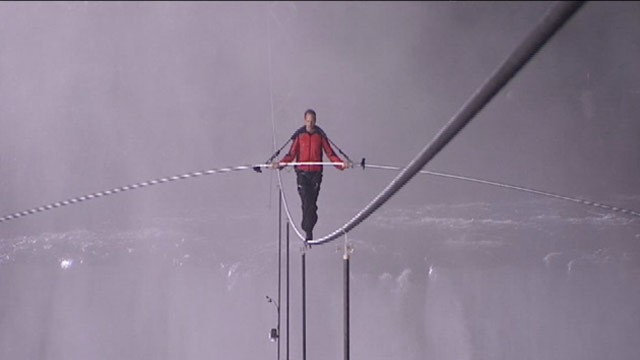
This isn't the first – and it won’t be the last – insanely dangerous thing someone has done to garner instant fame. Remember this past June when Nik Wallenda walked across Niagara Falls on a tight rope?
Both dare-devils survived their crazy stunts, and both made the headlines for the next few days.

Maybe it’s the reality TV generation we unfortunately are in, but it appears the only way to get on television these days is to be doing insanely crazy stuff.

From shows which test people’s level of bravery like Survivor, to ones that test our patience like The Jersey Shore, you don’t have to be a talented actor or have any sense of real intellect or creativity these days to get on a major network.

Just being beautiful and allowing yourself to be humiliated for all to see appears to be the norm.

And if you aren't beautiful, or willing to be voted off the island, you can always jump out of a balloon high up near the barrier between space and Earth, or walk across Niagara Falls.

Why do television networks produce this puff? Whatever happened to shows which actually made us think, feel and laugh?

Truth is, broadcasters have always catered to the largest and widest possible audiences. That’s why they are called “broad” casters. It’s like fishing, they toss their net of shows out into the viewing ocean, and whatever people fall into their net they contain with mindless drivel, while the rest escape to their digital, on demand podcasts.

Perhaps that’s why television and radio are dying – because of the failure of broadcasters to keep pace with the competition from the on demand digital media.

Television and radio broadcasters on the major networks in both Canada and the States have reported significant drops in their viewing and listening audiences over the past decade.

Over a decade ago, on demand digital media didn't exist. We were forced to watch and listen to whatever television and radio programming network executives thought we wanted.

Now we the people are calling the shots. With on demand digital media, we the people are our own program directors. We may occasionally surf late night television, and tune into local radio shows for our morning commutes. However more of us are just saying no to the broadcasters stilted and stale programming choices, as we discover shows that actually mean something to us on our podcast catchers, and other digital media such as Netflix, Apple TV, and on demand networks and shows available through other similar systems.
Although watching someone free-fall from a low Earth orbit may entertain and amaze us for 15-seconds, that 15-seconds of fame is long gone almost as fast as it began.

To really have a successful television or radio show, you need a stable of steady, regular, dedicated viewers and listeners. Tossing out the old fishnet and hoping you catch something is very fleeting, and won’t build a dedicated fan-base to sell advertising.

And if you don’t continue to sell advertising, eventually you won’t be in business, because that’s what pays the bills.

But hey, look on the bright side – at least you can get your 15-seconds of fame. Well, so long as the broadcast television and radio stations continue to exist in the ever growing world of on demand digital media.

How much time is left?

Better hurry up.

Fifteen-seconds doesn't last long.

Nope.

Not long at all.

Wednesday, 20 June 2012

Flashback to the Old Hot Wax Days

My age was showing, but I was glowing, as I reminisced about days of old with a couple younger colleagues today.
 
We were discussing desktop publishing, layout and design, and we were discussing the various software applications people use in this field, when one of my colleagues asked what ever happened to Adobe Pagemaker.

Ah, Pagemaker, that takes me back to days long before computers were popular for layout and design. Incidentally, Adobe Pagemaker was morphed into Adobe’s Creative Suite (CS) and became Adobe InDesign.

But my mind began to wander, as I described the old days of layout and design. Back then, the tools of the trade were anything but high tech. Cork cutting boards, X-Acto knives, rulers, scissors, rollers and burning, BURNING hot wax littered the layout and designer’s desks.

Many times I’d burn myself on the hot wax, rushing to paste together a story in time for a print run. Luckily it was like a candle burn, nothing major.

Back then, printed pages were literally cut and pasted together on long wax coated pages called “proofs.” Hot wax was rolled onto these proofs, and each story was cut into pieces, and each piece was coated in this hot wax. The wax would allow you to slide each bit into the perfect spot in the layout, creating a page in the newspaper. Then the pages were hung like freshly washed clothes to dry.

It was a time consuming process, requiring steady hands, and a solid eye for being able to see when things were aligned just right. The most skilled at this could eyeball a single line of type (say a headline) without a ruler, and just know when it was perfectly straight on the page.

Though each proof came with pastel pink and blue grid lines, showing you the way. 

To reduce some of the repetitive tasks of this time consuming process, layout designers kept many common elements on the side of their desks ready to go. The “paste-up board” as it was often called, because it had elements (such as page identifiers, logos, staff by-lines, datelines, place lines and so on) were all lying there, pre-sized and waiting to be pasted-up onto the page.

The area surrounding your pages in most desktop layout design applications is still called the paste-up board today, and is used to story common elements which can be copied into place.
These completed waxed pages would then be sent to the printers, where they would take them and create plates which they’d use for a print run.

When breaking news occurred, the poor layout designer literally had to start from scratch, because nothing was electronically designed, so the page or pages affected by the new story had to be recreated.

This is was why deadlines were so very important back in those days, as a breaking news story could delay the print run of a newspaper for hours. 

Once a print run begins, it takes some time to get started again, because of the way inks are printed in layers at different stages to achieve different colors and effects. So it still takes time to stop and start the actual production of a paper.

That’s why most major daily papers have two or three print runs, say a morning, afternoon and evening run. Some even have different edition runs, say one for the city, and one for distribution outside the city in the suburbs. If a breaking story changes the paper, they will toss the revised story into the next print run, instead of stopping the presses completely.

This is partially why newspapers are dying. Often, by the time they have hit newsstands, many of the stories are already out of date.

With 24-hour, seven-day-per-week news channels on television and radio, and with the global reach of the always on Internet, developing news stories change constantly. Newspapers can’t change once printed.

The always on digital media also has driven us to expect news to be new the second we see it. When you read something in a newspaper, it was current at the time it was written.
And newspapers take so much time to read, while television, radio, even the Internet can broadcast the news to us bringing us up-to-speed in minutes.

Although newspapers are a dying breed, I miss the old days of the hot wax, Xacto Knives, and paste-up boards. Back then, laying out a page was a much more hands-on process, because you physically placed stories on the page. These days, you point, click and drag your stories into place.

It just doesn’t have the same feel.

Thursday, 24 May 2012

All The News, But Not The News You See

How come in this fine city of mine, with no less than five twenty-four-hour news channels, when you see something going on which is really big, and you rush to one of these channels, they have nothing on it?

This has happened twice in the past week to me. I saw them close down a whole stretch of highway, and there were red, white, blue and orange flashing lights as far as the eye could see. Clearly something big was going on – but I couldn’t see it all. So I turned on the local twenty-four-hour news channels, watched and listened for at least 45-minutes – but nothing was ever said.
 
When a blackout occurred at a friend’s place, we noticed the whole street was dark, and there were fire trucks, police cars, and hydro crews everywhere. An ambulance left the scene with lights and siren – clearly taking away someone involved in a horrible accident.

When I got home, what did I do?

I ran to the tube, turned on the local twenty-four-hour news channels and watched to see what was going on.

Again, NOTHING! ZIP! Not even a little blurb in those really annoying scrollers that practically yell out at you as you’re trying to watch the cluttered screen.

What good is a twenty-four-hour news channel, if you can’t get news off of the thing?

Now I know a lot happens in a day, but back when I was working at a paper, news was stuff that actually mattered to people. News was happening too people in your local community. News was about the people, places and things which affected you.

These days, whenever Justin Beiber sneezes, that’s news.

WHY?

Will it actually ever affect YOU?

If Britney Spears doesn’t wear panties and decides to spread her legs showing herself to the world – how on earth will that affect you?

But when something happens that causes all the offices, including yours, to send you and all the employees home – that does affect you. Aside from getting to go home early, all those companies – including the one ya work for – lost business that day. There will be missed meetings, projects that need to get extended, angry customers to deal with – these things appear to have more of an impact on us than whether or not Britney Spears is wearing panties.

Still, the news media and their never ending quest for content to fill their twenty-four-hour news stations seems to find lots of stuff to put on there.

Problem is, most of it is irrelevant crap that really has no impact on those forced to watch it.

We tune into these channels for insight into the world around us, but instead we are fed puff pieces that just don’t deserve the oxygen used to voice them.

It’s a sad day, when you see news with your own two eyes, yet all the local stations cover some slutty celebrity and her decision to wear or not to wear underwear.

I think the broadcast regulators are the real villains behind all of this – they regulate and license the twenty-four-hour news stations.

As a requirement of having a broadcast license, each television station must provide the types of content described in its licensing agreement.

When Sharon Stone almost re-created 'Basic Instinct' momentI don’t know what the lawyers in the television news business are smoking, but it must be pretty good stuff if their licenses provide for content which is meaningless, pointless, sexually charged, and potentially offensive.

I would hope that the regulators have clauses which tell the twenty-four-hour news channels to carry interesting, informative journalistically sound pieces, which have meaning and worth to the viewer.

But who am I kidding – the regulators probably get off watching clips of Britney Spears imitating Sharon Stone’s infamous leg uncross.