Showing posts with label Digital Media. Show all posts

Thursday, 2 May 2013

Crowdfunding’s Appeal is It’s Biggest Drawback


We’re well into our crowdfunding project to raise funds for the world’s first crowdfunded On-Demand Internet Television network.

I’d like to say it is going better than expected.

I’d LOVE to say that.

But I can’t.

Because it’s not – if anything it’s either exceedingly slow, or not even getting off the ground – and we are well into our second week.
We’re doing everything we are supposed to according to all the research we’ve done. We’ve got a great project video, a compelling story about what we are doing and why, great perks at various price points so as to not exclude low funders nor limit high rollers.

We’re promoting this project all over the place, we’ve had some press, and you can find us on all the major social networks.

We even have what I’ve begun calling our “social media army” tweeting, re-tweeting, posting, and sharing our project across their social networks.

We know we are reaching people, we average between 1,500 to 2,000 unique visitors to our Indiegogo project page every day.

Still, we are well below our predicted funding goals for this time in the project.

Why?

I’ve been debating that question with friends and colleagues since we started, as the project never really took off.

Is our project video not interesting enough?

We’ve re-done the video three times, each one different to see if that’s the cause.
Is the content just not interesting or informative enough?

Again, this has been re-jigged a couple of times, to see if that’s the problem.

Do we not have enough perks, or are the perks just not good value for the money?
We explored numerous other projects, comparing ours to ones that have exceeded their funding goals. Our perks seem to be in line with these, in some cases they are better.

For every possible reason, there are a zillion other reasons.

The caveat I’m learning as we take our lumps through this crowdfunding project is the lure of the masses, but those masses sometimes just don’t bite.

That’s the great appeal of crowdfunding – reaching out to millions of people, getting them behind your cause, and watching your dreams grow.

That appeal is also the biggest drawback – when your idea falls flat, fails miserably to attract anyone, and you feel exposed, naked in the wind, as your dreams are blown away.

Crowdfunding may be a great way to raise funds, but if the concept you’re putting forward doesn’t take, it’s a painful process to go through.

And that’s crowdfunding’s biggest drawback.


Tuesday, 23 April 2013

Circumcising Your Own Cord – Doesn’t Have to Hurt


Millions have cut the cord with their cable or satellite providers across the globe – and you can too.

And you know what?

It doesn’t hurt.

Really.

For years big corporations have forced us to order channels we never wanted, because they bundled them together in packages.

For even the cheapest channel you don’t watch, that’s many dollars wasted.

Far worse, after a hard day’s work, when you just want to fall into the comfy confines of your favorite easy chair and watch a little television to relax, you can easily get frustrated flipping around, just trying to find something worthwhile to watch.

You don’t have to be a victim to bad television anymore.


On-Demand Internet Television is a crowdfunding project, to create the world’s first Internet-based television network, which shows what you want to watch, available at anytime and from any connected device.

How does a television network know what you want to watch?

Through forums and discussion groups, viewers are encouraged to provide show concepts and ideas, which will be discussed among the greater viewer-base.

Shows which receive a lot of viewer support will be created, and placed on-demand online.
So you really can have a say in what is available on television.

And finally, after a long hard day at work, when you collapse into your favorite chair, and switch on your television, there will be something on just for you!

You have the power of choice.

Exercise your power.

Make On-Demand Internet Television Matter.


It won’t happen without YOU.

Monday, 22 April 2013

So What Is On-Demand Internet Television?

Millions have already cut the cord with their cable or satellite providers, and are enjoying television anytime, and on any device they have via on-demand services over the Internet.

Problem with many of these on-demand services, is they serve up the same distasteful menu of Reality TV, sitcoms, game shows, and even re-runs of once great shows, but nothing new, and original.

And when they do their own programming, just because it receives rave reviews from the television critics, doesn’t mean you are going to like it.

Television is like food – we all have different tastes.

Some like it spicy, others run to the bathroom at the mere thought.
The same goes for television shows. Actually, it’s even more so for television – we all have such varied and unique interests, hobbies, career aspirations – so naturally we’ll all have very different tastes in what we like to watch on television.

That’s the magic of our crowdfundng project – we open up the discuss forums, giving you a voice.

Be heard – tell us what YOU want to see on television.

If enough people get talking about it, we’ll create the show – and FINALLY there will be something YOU want to watch on television.

Even better, because it’s on-demand over the Internet, YOU can watch it when you want too, and on any connected device.

So while waiting in line at the grocery story, you can be watching your favorite show on your mobile phone, and thanks to cloud-based computing, you can continue watching your favorite show after you put your groceries away on your connected big screen television in your living room!

All of this can only happen with YOU.

So please help us make on-demand Internet television possible. DONATE to our crowdfunding project NOW – we’ve got some great gifts as our way of saying ‘thank you.’

Once you’ve made your contribution, don’t forget to spread the word – the more people that know we exist, the better. Tell EVERYONE you know via Twitter, Facebook, Google+, Pinterest – whatever social network you are on – please share this link. 

Thank you for making On-Demand Internet Television matter.

Saturday, 20 April 2013

End Boredom, Get a Perk, Feel Good -- Why Not?

Yesterday I launched my very first crowdfunding project on Indiegogo -- On-Demand Internet Television.


Crowdfunding is using social media to  raise funds for anything – be it a business, a creative project, or as in my case – a bit of both. From a business start-up point of view, it’s also a great way to see if the business idea has a market, because you can see by how many fans do – or don’t – jump on board to support it either through promoting it via their social networks, contributing ideas to help it grow, or even donating to the cause to ensure it takes shape.

You may have heard of websites like Kickstarter and Indiegogo – these are the biggest and most talked about crowdfunding websites out there, which help people raise funds by growing a social following of people interested in seeing their ideas happen.

Of course, there’s also something in it for the fans that donate to the cause – gifts are set at different levels of funding which encourage people interested in making the idea happen, to open up their wallets.

The On-Demand Internet Television crowdfunding project is a really cool one -- which I hope you will check out, select a perk, and even share it with your social circles to make it happen.

Help us rid the world of boredom, by creating the first television network with programming that you'll actually watch.

How do we know you'll watch it?

Check out the crowdfunding site here to learn more, and please help us make this possible by donating to the cause and sharing the site with your friends.

Over the next 50 days, I'll be using this blog to share my thoughts, feelings, successes and failures about crowdfunding the worlds first viewer created television network.

See what challenges we go through as we crowdfund -- great if you have an idea you've always wanted to try, but just don't know how to raise money to start it.

Thanks for reading this blog -- and for supporting our crowdfunding project!


Tuesday, 9 April 2013

Have You Cut the Cord?


As digital cable and satellite services increase the amount of channels on the dial, you’d think there would be more on television to watch.

Think again.

Much of the crap they serve on cable and satellite is all owned by the same giant conglomerate companies.

And what’s the fundamental business model of most giant conglomerate companies? To be cost effective – AKA – cheap.

Although you may have thousands of channels to choose from, if you really take the time to explore them, you’ll find many channels run the same shows over and over again. Other channels show old re-runs of those very same shows. And still other channels lack anything that interests you.

It’s how these giant conglomerate corporations save money, while providing the illusion of vast and varied programming.
And it’s why between 10-15 percent of North American’s are “cutting the cord” with their cable and/or satellite providers, and switching to on-demand Internet television.

On-demand Internet television is always fresh – it costs a fraction to produce high quality shows as the giant conglomerate companies, and it’s made just for you.

Really.

NO.

Really.

On-demand Internet television is a smaller market, so the shows are created for very narrow demographic groups, which means you are much more likely to find the shows you really want to watch.

Instead of flipping through an endless stream of repeated syndicated and stale programming.

So if you haven’t cut the cord yet – what are you waiting for?

Tuesday, 2 April 2013

Where Do You Watch It?


Remember the old days, when you had to rush home to catch your favorite show on TV?

People would literally dash out of social functions with friends to turn on their television, sit in the dark, alone, and watch their favorite show.

That was if they were polite. Some would just tune into their favorite shows wherever they were, often without asking the host first!

The VCR certainly changed that – but they weren’t fool-proof, occasionally eating a tape, or if there wasn’t enough tape left you’d miss the end of whatever you were recording.

Personal Video Recorders (PVRs) also called Digital Video Recorders (DVRs) have made the recording of television shows almost fool-proof. Almost. If there’s a power failure, or your cable or satellite service goes down, there still is nothing you can do.

That’s where the power of on-demand Internet Television comes into the picture – pardon the pun. It’s on-demand, so you don’t have to worry about missing anything, because you choose when and where you watch.

And because it’s on the Internet, you can be just about anywhere in the world – so long as you have access to the net.
Over 15 percent of Canadian households claimed they got most of their television via on-demand digital media last year. That number is expected to climb to well over 40% over the next decade, and could even go as high as 60% by some estimates.

No longer do you have to run home to ensure your PVR catches your favorite show.
You can be anywhere and watch.

From your bathroom, a party at a friend’s place, work, or even in the park.

Toss in cloud-based computing technologies, and you have some cool television tech – it gives you the ability to continue watching on-demand Internet Television exactly where you left off, somewhere else and on a completely different device!

So that show you were watching on your iPhone during lunch but only got halfway through can be viewed right where you left off, on your connected large screen TV in your living room at home after work!

Though being able to watch on-demand Internet television anywhere can raise eyebrows too.
Listening to someone chatter on their mobile device while in the bathroom stall next to you is awkward enough. Overhearing them watching a television show while they do their “business” is downright dirty.

Not all content available on-demand is suitable for children. As some bus riders found last year, when a man began watching an adult movie on his tablet while on the bus.

Televisions across the globe have been used for years by couples to avoid contact during arguments. With on-demand Internet Television, those arguments can be extended to public spaces, as people continue to avoid each other by streaming their “distractions” on their mobile devices so they don’t have to actually talk to each other.

Speaking of public spaces, society already has become more anti-social, as we spend more time with our mobile devices, than with each other, even in social settings. Just go into any coffee shop that has free Wi-Fi, and you’ll see most people are busy watching their mobile devices, instead of interacting with each other.

Used to be, coffee shops were a great place for singles to mix and mingle, because you could easily go up to a stranger, and have a nice conversation over a couple of hot beverages.

Mobile devices have become gatekeepers in a sense, making it harder to approach someone that you can’t make eye contact with, because they never look up from their mobile device.
Still, it’s better than listening to someone watch TV in the bathroom.

Damn that flushing toilet – now I’ll never know what happened to JR!

Tuesday, 5 March 2013

Why Won’t Print Just Die


The death bell has been ringing for years in the newspaper business, as digital on-demand media becomes the way most of the western world keeps connected.

SO how come print just won’t die?

Funny thing about technology – it makes it possible for even old things to be new once again.

Maybe we’re just waiting for the right genius kid to discover a new technological solution to re-ignite the newspaper business?

That kid better hurry up – there’s not much left at most newspaper offices these days except a few old curmudgeons and the blurry eyed interns that don’t see the proverbial forest for the trees.

When I was a kid, we got The Toronto Star delivered to our home every day. When it came, we’d take turns ripping through it, looking for our favourite sections.
We always fought over the "Star Week" the paper's TV Guide, this was back long before on-screen program guides which we all have now.

I really enjoyed the national, local and international news sections, along with “Wheels,” and I even liked some of what us old school reporters used to call “the woman’s section” known as “Life.”

I remembered enjoying the full-colour comics on Saturdays, and how they packed extra stuff into the weekend papers.

Thinking back, I feel sorry for the kid that was our newspaper carrier at the time, because the Saturday Star must have weighed as much as a Smartcar.
Those were the days before the Internet, social media, and on-demand digital media. People had more time – or so it seems now – to read through all the various sections, gloriously getting inked fingers from the constant page-turning.

Not so anymore – all broadsheet-width newspapers reduced their standard width years ago, simply because it was becoming too expensive to make such Bible-sized publications.

When that happened over 20-years ago, it was the start of the end for print. Newspapers, like most media sources, make their money by advertisers. The more advertisers, the more pages a paper can be, the more stories can be jammed in.

As people stopped reading papers, advertisers pulled out, meaning fewer pages for the already popular sections.

So newspaper moguls cut the size of the physical paper. They claimed at the time it was to make it easier for people to read, and in a way it was.

But truth be told, it was because newsprint costs went up, while ad revenues and readership went down.

Many major metropolitan daily newspapers including The New York Times, The Globe and Mail and others have attempted “pay walls” to bring in much needed cash flow.
A “pay wall” essentially lets you read part of a story, or a certain number of articles from the publication online, and then after that limit, you have to either pay for an online subscription, or pay a set price per article to continue reading.

Though when it comes to the end product – news – who’s going to pay for something you can get for free in a more timely manner via television, radio, or the social networks?

Pay walls aren’t going to save newspapers from their death.

And yesterday’s announcement of staff cuts and outsourcing labour by Canada’s largest daily certainly puts another knife in the back of an already dying media business.

Although I’m a digital media guy, I’ve always enjoyed newspapers, and hope that someone, somehow figures out a way to save them.

But time is not on their side, as they continue to slash staff, outsource production, and lose money, in our on-demand digital media world.

Tuesday, 15 January 2013

Bigger TV Requires Bigger House


How big is your television? The common answer across much of North America is 52’ – some are larger, many are smaller, but by in large, the average household with a high definition TV has one in that range.

Coming soon though – thanks to the Consumer Electronics Show(CES) recently held in the States – 80’ TVs and larger.

Yeppers, LARGER.

For the past couple of years, the major television manufacturers have been toying with new TV tech. This new technology uses a combination of filters, screens, and video compression technologies to bend light into moving p

That’s why they are calling it 4K – or technically 4K Ultra High Definition or 4K UHD. This new standard in television viewing produces resolutions of 3840 X 2160.
As with all electronics these days, not only are the manufacturers making things better, but also smaller. So these new 4K TVs are thinner and lighter than even the slimmest full 1080p HDTVs today.

This means they can – and do – make these new 4K TVs even BIGGER.

The smallest one I’ve heard about was 70’ – the largest was over 102’ – remember the average size currently in North America is about 52’.

With a bigger screen and better picture comes a much bigger price. These 4K UHD TVs have been listed at CES and other tech shows in price from $10,000 to $25,000 and up.

You can walk into your local Wal-Mart and pick up a pretty decent 52’ HDTV for under a grand.
Even if you have the outrageous dough to purchase one of these new 4K TVs, don’t – it’ll take a while before anyone is producing content in that resolution.

If you currently subscribe to HD cable, you’ll still see a lot of standard definition stuff on the dial – not everything is in HD even today.

And it’ll take even longer for TV stations, networks and production companies to fork out the millions required to upgrade to the lights, cameras, editing software and other tech to produce 4K broadcast-quality television.

Give it about five years or more. But by then, the even higher resolution will be entering the marketplace. 8K UHD is already being tested by the very same television manufacturers about to unleash 4K on the cash strapped tech world.

102’ TV?

Sheesh.

I need a bigger house just to accommodate that!

Monday, 17 December 2012

Newtown Shooting the Media and You


Horror, shock, disgust, anger, rage, sympathy, sadness.

These are some of the many feelings we all went through, as news of the tragic shooting of innocent little kids in small town America spread.

The president of the United States cried as he responded live on television to the mass murder in Sandy Hook Elementary School, in Newtown CT.

Last night, parents, families, friends, and neighbours all gathered in a small school gymnasium, while local religious leaders offered words of hope and prayer during the public memorial service for the victims of another act of random violence in America.

American President Barack Obama gave a solemn message of hope, saying that we cannot go on allowing this sort of thing to happen. This isn't the first time the American president has addressed parents and families of a school shooting.

World leaders issued statements, expressing their horror over the incident, and offering their condolences for the families and friends of the victims.

Parents all over the world echoed thoughts of hugging their children extra tight that night on all the major social networks.

Today has been labelled “Hug Your Kid Today” to encourage parents to hug their children, and tell them they love them.
Maybe tomorrow will be “Bring an Apple, Not a Gun to School” day?

When I was a kid, the most violent thing anyone ever witnessed was the occasional fist fight between two jocks trying to woo the same cheerleader.

Back then, it was too much testosterone and the foolishness of a youthful mind which occasionally caused someone to get a black eye.

These days, social pressures on our youth – and us all – build up until we explode. Most just punch a pillow, write a nasty blog, or maybe snap at their spouse.

Then you get those with access to guns.

They shoot people.

Innocent people.

People going on about their daily lives, not aware that today is their last day on Earth.

Over the next few hours, days and weeks, as the victims are laid to rest, the media will focus on the never-ending question about gun control in the land of the free and the home of the brave.

The American Constitution’s Second Amendment tells citizens of that once great land, they are not only allowed to carry fire arms, but encourages them to use them to defend their freedom.
That fine piece of legalize – which is defined as the Supreme Law of the United States of America – was written in May of 1787, and adopted in September of that year by the Constitutional Convention. The law of the land was ratified by the then 11-member states, and went into effect on March 4, 1789.

Back in the 1700’s one could understand the logic of allowing people to own and use guns to defend their property. It was a very different time, long before the microchip.

The world was an unsettled place – a global wild west. The French Revolution began with the fall of Bastille on July 14, 1789. The Spanish captured the British schooner ‘Northwest America’ near Vancouver in June of that year.

It was the same year that Benjamin Franklin wrote: “there is nothing certain in life, except death and taxes.”
It was a time when governments were battling each other for land.

No wonder the founders of the United States of America wrote into law, the right to carry and use guns.

Times really have changed.

Wars still exist – but not in the land of the American dream.

Or do they?

Every time a crazed gunman goes on a killing spree in the States, the media, politicians and others raise questions about whether or not the law of the land should be amended, eliminating the right to bear arms.

And every time a crazed gunman goes on a killing spree in the States, the largest political action group in that country – the National Rifle Association (NRA) goes quiet at first – they took down their website today pending a slew of media attention and anti-gun lobbyists. Then the NRA enlists famous American cowboys to continue the fight for the right to carry and use guns.

It’s no longer a war over land, but over the right to shoot someone.

The NRA argues that guns don’t kill people, people kill people.

But it’s people with guns that kill people – often without guns.

It’s time the American constitution was amended to keep in touch with the reality of our modern times. We no longer need worry about someone coming onto our land to try and take it from us. The wild west is no more.

Tuesday, 11 December 2012

The Social Life and Times of Public Figures


Reading the morning news as I always do, I saw one of the headlines screaming something about how Toronto’s mayor was taking a vacation.

Aside from it being none of our business – and it isn't all that uncommon during the holiday season to take a holiday – this got me thinking about how invasive technology has become, especially to public figures.

Granted, those in the public’s eye have always been chased, hounded and even stalked by the media. But thanks to technology, now anyone with a smartphone, a tablet, a laptop or other mobile device can instantly dig up dirt on anyone – famous or not.

You can Google, tweet, friend, follow, fan or foursquare anyone these days. And in the case of the latter, you can show up where someone is, to snap a photo for Instagram.

Toronto Mayor Rob Ford hasn't had a lot of success with the mainstream press. Regardless of whether you agree or disagree with his policies or politics, there’s no question that he isn't very media savvy. He’s rough around the edges, says what he thinks, and does what he wants despite being advised otherwise.

And he’s paid the price – the media constantly chases Mayor Ford, just waiting for that “gotcha” moment to splash all over the local and national news.

However, where and when the mayor of Canada’s largest city takes a vacation is going too far. Everyone deserves time off. It isn't as if the city, the country or the world for that matter, will fall apart because any one of us takes a holiday.
Yet we know when famous people take time off, do wild crazy things, get into bar fights, or worse – go to jail for just being screw-ups.

Not that the life and times of Lindsey Lohan, Justin Beiber, or your local city or town’s mayor really means anything to you or me.

Famed scholar and media critic Noam Chomsky calls all of this unnecessary attention in the media on famous people a distraction from the issues that really do matter.

Chomsky is right – the time we spend chasing public figures while they vacation or do whatever else they do, takes us away from our own families and friends.

And thanks to social media, it is even easier to be distracted by other people’s problems, instead of solving our own.

Maybe that’s why we take so much time to fan, friend and follow people that we really never really know – because it distracts us from the harsh reality of our own lives?

Thursday, 22 November 2012

You Have the Attention Span of Your Social Media


We used to take the time to stop to smell the roses, but not anymore – thanks in part to those 140 character limits in Twitter.

Twitter isn't the only social media network cutting into our already quick-paced attention spans. 

The constant flow of status updates on all the social media sites we plug into is as well.

And the 15-year-old wonder kid programmers coding these social networks are well aware of this – in fact they are encouraging it by making our social media experiences more visual than textual.

Facebook, Google Plus, and Twitter all recently updated their web and mobile layouts and user interfaces to make them more graphical.

When you scroll through your Facebook timeline, you’ll be dazzled by the bright images your friends posted. Google Plus places a huge emphasis on images – they appear larger and bolder than the text descriptions on both the web and mobile versions of all posts. And Twitter recently added the ability to attach photos to tweets.

Recently Tumblr released a new app – Photoset – which takes various images you provide, and creates a cool image by combining them into a frameset. This “photoset” frame can be uploaded to Tumblr – naturally – or shared via other social networks using the Photoset website. The primary Tumblr app also got a bit of a makeover, improving it’s graphical user interface too.

And who could forget all the hype when social network giant Facebook bought social photo sharing network giant Instagram?

Although the popularity of the very visual Pinterest may be part of the reason behind these social network changes, there is more psychology here than you realize.

Scientists studying our attention spans first realized they were declining in the 1980’s, as the first video game consoles were breaking into the ever increasingly distracted world.

Television further eroded the amount of time it takes before we get bored, when the first specialty channels started appearing on the dial around the 1980's also.

In the 1950’s, the standard TV commercial ran 60 seconds, by the 1980’s that standard length was cut in half to 30 seconds. By the 1990’s your fifteen minutes of fame really was 15 seconds, as that was the average standard commercial length on TV. 

Today, the average broadcast TV commercial runs between five to 10 seconds! And you’ll notice ads shown at the start of a commercial break are repeated at the end of the same commercial break, because our attention spans are so short, we may have forgotten it within the average two-minute “pack” of commercials!

The biggest killer to our already faltering attention – the Internet, arrived in homes in the mid 1990’s, as our attention spans were already pushed to practically non-existent. 

Although this was long before the social networks of Myspace, Facebook, Twitter and the rest even were conceived, the ability to search for whatever you could think of dazzled us to the point of just wanting to search for the heck of it.

When social networking sites did capture our already frazzled attention, surprisingly our attention spans increased slightly – at least online. We were fascinated with the ability to check out former high school sweethearts, and see who aged worse.

But as social networking became the norm, and mobile devices made it possible to check in on these social networks wherever and whenever we wanted, our attention spans declined again.

By the time you have read this sentence, your mind already is thinking of something else.

That’s our attention span of today – as you concentrate on the task at hand, you’re already thinking of the next thing. The average North American’s attention span is only about three-seconds today.

It takes less than a second for our brains to process images, but twice that long for us to parse a sentence.

That’s why all the social networks are becoming more visually appealing – they are feeding off of our degraded attention spans.

And it is a degradation – because there is something to be said for taking the time to smell the roses. 

Tuesday, 30 October 2012

Out Spun: Say Good-Bye to Discs


A little while back, I went to one of the big box electronics stores to buy some blank CDs and DVDs. I’ve gone to this store, and it’s competition, for years to purchase blank CDs and DVDs to store audio, video and other digital files.

I was shocked when I went to the almost non-existent spot in the store left for removable media, to see a slim selection of blank CDs, DVDs, even the more recent Blueray blank discs weren't stocked very well.

I asked a passing store clerk if this was all they had, and he told me it was, as they just don’t sell as much of these as they used too.

As hard drives constantly become cheaper, and virtual storage in the cloud becomes more popular, people aren’t burning their data to disc anymore.

I remember when CD burners first came out, circa 1990’s. They were extremely expensive, running at least $1,000 for a decent one, and blank CDs cost about $15-$20 per disc.
Then DVDs came out, killing the CD industry, and when DVD burners came out, the movie industry tried to get them banned, as they witnessed the demise of the music industry thanks to people copying and sharing music CDs, instead of buying them.

Today, the music industry and to a lesser degree, the movie one too – continue to suffer from failing to adopt to the changing nature of digital media. We not only have CD and DVD burners, but Blueray burners aren't uncommon either.

Though that may change, as bigger hard drives at dirt cheap prices flood the market. Why spend hours burning your own discs, when you can just plug in a portable hard drive that stores many more hours of movies and music?

It’s a sign of progress, but in a way, it’s also a sign of the times.

We’re moving away from big tech, and gravitating towards mobile devices. With smart phones, tablets and laptops always on and connected to the Internet, we want to be able to access our movies, music and other data at anytime, from anywhere.

So, people will buy more hard drives, and get more space on cloud storage platforms. But we probably won’t be lugging our hard drives wherever we go. We’ll probably set up our own media servers (I already have one myself), which allow us to access all the information on our hard drives at home, from anywhere at anytime over the net.

I can watch movies, listen to music, and even remotely access my desktop computer from my mobile devices, simply by logging onto them using apps on a WiFi or 3G or better connection.
The days of creating menus, chapters, and burning our own discs are long gone. Now just dump everything in a folder, and log in to play.

Progress is awesome. But I’ll miss the creative aspects of choosing images, background sounds and animations for menus, creating chapters, and even taking the time to burn a disc just right.
Reminds me of making mixed audio tapes in the 1980’s. This was long before digital media was even an idea. You’d sit in front of your radio, waiting for your favourite tunes, and then stumble with two fingers to press “Play” and “Record” together to capture that song on a 60-minute audio tape.

Ah, those were the days. Sometimes you’d slip, and only hit “Play” and curse as the song you wanted played on, but without you recording it. Sometimes the tape you were using would unravel, rip, or even get “eaten” by the tape deck.

But there was something very romantic – in an old school geeky kind of way – about making a mixed tape for a friend, a party, or even just yourself.

Good-bye discs, you’ll be wherever blank tapes, eight-track-tapes, and records now call home. Long gone, but never forgotten.

Tuesday, 23 October 2012

When You Start a Business, Everyone’ an Ideas Person

I’m starting the next big thing in digital media. We’re going to be grand. We've got a great product and service, which is just starting to become in high demand. The demand is growing, as mobile devices grow in popularity and functionality.

And I have the know-how to make it work.

We’re going to be mega-huge with a capital MEGA. I know from the reactions of those I talk to when I’m asked by strangers: “so, what do you do?

When I go to business or social functions and tell people what I’m doing, their eyes light up, all excited, as they ramble off ideas for my business to engage in.

Some of the ideas are pretty darn good. I take notes. I do – thanks to my iPhone.

Brain storming good ideas for products and services isn't hard. Even those who say they haven’t a creative bone in their bodies can come up with the most imaginative concepts.

I've got so many wonderful ideas, we’ll be good for several generations.

What I need as I start my business is good old fashioned money.

Money makes the world go ‘round, and it is the foundation for the success or failure of any business concept.

Problem is, when I ask people how they’d fund their idea, they tell me that’s my problem.
Gee – thanks!

Give me a great idea, tell me you want to be part of the next big thing, yet when I ask you how to make it happen, you tell me you don’t know?

Why don’t you tell me something I haven’t heard – like ever!??!

Every time, I ask if they have a funding formula, or idea for how to generate income on their idea, they tell me, that’s my job – they’re just the “ideas person.”

If we were all ideas persons – or for the grammatically correct – people – then nothing would ever get done.

Coke a Cola, McDonald’s, even your favourite mom and pop cafe would never exist, because although all were great ideas, money makes things happen – or not happen.

At business and social functions, I just laugh it off when I’m told money is my problem. The voice in my head though is yelling and screaming at the ideas person though.

And because –so far – no one but me can hear the voices in my head, I’m guessing it’s correct.
The voice in my head is yelling about how idiotic, stupid, dumb and some things I can’t repeat in a public, family-friendly environment, the ideas person is.

Creativity is an amazing talent.

Implementing that creativity is an even more amazing talent, because it makes it real.

And in anything in life, from business, to personal, to social worlds, making it real is the bottom line.

Monday, 15 October 2012

The Insanely Dangerous Things We Do to Get On TV


The Austrian dare-devil dropped about 1, 100 kilometres per hour (684 miles per hour) breaking several world records, while becoming the trending topics on most of the social networks, and having his space-suit-mug plastered on all media around the world.

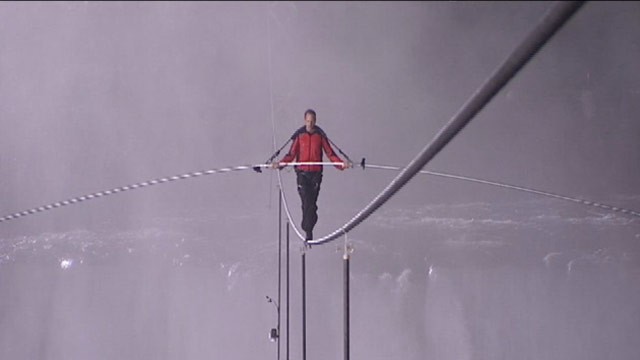
This isn't the first – and it won’t be the last – insanely dangerous thing someone has done to garner instant fame. Remember this past June when Nik Wallenda walked across Niagara Falls on a tight rope?
Both dare-devils survived their crazy stunts, and both made the headlines for the next few days.

Maybe it’s the reality TV generation we unfortunately are in, but it appears the only way to get on television these days is to be doing insanely crazy stuff.

From shows which test people’s level of bravery like Survivor, to ones that test our patience like The Jersey Shore, you don’t have to be a talented actor or have any sense of real intellect or creativity these days to get on a major network.

Just being beautiful and allowing yourself to be humiliated for all to see appears to be the norm.

And if you aren't beautiful, or willing to be voted off the island, you can always jump out of a balloon high up near the barrier between space and Earth, or walk across Niagara Falls.

Why do television networks produce this puff? Whatever happened to shows which actually made us think, feel and laugh?

Truth is, broadcasters have always catered to the largest and widest possible audiences. That’s why they are called “broad” casters. It’s like fishing, they toss their net of shows out into the viewing ocean, and whatever people fall into their net they contain with mindless drivel, while the rest escape to their digital, on demand podcasts.

Perhaps that’s why television and radio are dying – because of the failure of broadcasters to keep pace with the competition from the on demand digital media.

Television and radio broadcasters on the major networks in both Canada and the States have reported significant drops in their viewing and listening audiences over the past decade.

Over a decade ago, on demand digital media didn't exist. We were forced to watch and listen to whatever television and radio programming network executives thought we wanted.

Now we the people are calling the shots. With on demand digital media, we the people are our own program directors. We may occasionally surf late night television, and tune into local radio shows for our morning commutes. However more of us are just saying no to the broadcasters stilted and stale programming choices, as we discover shows that actually mean something to us on our podcast catchers, and other digital media such as Netflix, Apple TV, and on demand networks and shows available through other similar systems.
Although watching someone free-fall from a low Earth orbit may entertain and amaze us for 15-seconds, that 15-seconds of fame is long gone almost as fast as it began.

To really have a successful television or radio show, you need a stable of steady, regular, dedicated viewers and listeners. Tossing out the old fishnet and hoping you catch something is very fleeting, and won’t build a dedicated fan-base to sell advertising.

And if you don’t continue to sell advertising, eventually you won’t be in business, because that’s what pays the bills.

But hey, look on the bright side – at least you can get your 15-seconds of fame. Well, so long as the broadcast television and radio stations continue to exist in the ever growing world of on demand digital media.

How much time is left?

Better hurry up.

Fifteen-seconds doesn't last long.

Nope.

Not long at all.