Showing posts with label Internet. Show all posts

Thursday, 2 May 2013

Crowdfunding’s Appeal is It’s Biggest Drawback


We’re well into our crowdfunding project to raise funds for the world’s first crowdfunded On-Demand Internet Television network.

I’d like to say it is going better than expected.

I’d LOVE to say that.

But I can’t.

Because it’s not – if anything it’s either exceedingly slow, or not even getting off the ground – and we are well into our second week.
We’re doing everything we are supposed to according to all the research we’ve done. We’ve got a great project video, a compelling story about what we are doing and why, great perks at various price points so as to not exclude low funders nor limit high rollers.

We’re promoting this project all over the place, we’ve had some press, and you can find us on all the major social networks.

We even have what I’ve begun calling our “social media army” tweeting, re-tweeting, posting, and sharing our project across their social networks.

We know we are reaching people, we average between 1,500 to 2,000 unique visitors to our Indiegogo project page every day.

Still, we are well below our predicted funding goals for this time in the project.

Why?

I’ve been debating that question with friends and colleagues since we started, as the project never really took off.

Is our project video not interesting enough?

We’ve re-done the video three times, each one different to see if that’s the cause.
Is the content just not interesting or informative enough?

Again, this has been re-jigged a couple of times, to see if that’s the problem.

Do we not have enough perks, or are the perks just not good value for the money?
We explored numerous other projects, comparing ours to ones that have exceeded their funding goals. Our perks seem to be in line with these, in some cases they are better.

For every possible reason, there are a zillion other reasons.

The caveat I’m learning as we take our lumps through this crowdfunding project is the lure of the masses, but those masses sometimes just don’t bite.

That’s the great appeal of crowdfunding – reaching out to millions of people, getting them behind your cause, and watching your dreams grow.

That appeal is also the biggest drawback – when your idea falls flat, fails miserably to attract anyone, and you feel exposed, naked in the wind, as your dreams are blown away.

Crowdfunding may be a great way to raise funds, but if the concept you’re putting forward doesn’t take, it’s a painful process to go through.

And that’s crowdfunding’s biggest drawback.


Thursday, 25 April 2013

Ever Wanted to Be On TV? Here’s Your Chance


We’ve added some cool swag – perks, gifts, give-a-ways – to our On-Demand Internet Television crowdfunding project, including an all expense paid trip for you and a friend to Toronto, Ontario, Canada, to appear in a television show!

If you’ve always wanted to appear on TV, or just want a vacation in one of the cleanest, friendliest and most exciting big cities in the world – here’s your chance.

We really are sick and tired of not finding anything good on television, and we want to change that.

How do we change that?

We ask YOU what you want to see.

No joke.
We’ll have discussion forums, where you can suggest a show idea, discuss and debate show ideas, and the shows which get enough interest could eventually end up being produced by our award-winning production teams, and shown exclusively on our hip and trendy new network.

And because our network is on-demand, you can watch what you want, when you want, and where you want.
But we can’t do any of this without support from YOU.

So, if you are also sick and tired of never finding anything good on television, please support our On-Demand Internet Television crowdfunding project.

Thank you for making On-Demand Internet Television matter.

Wednesday, 24 April 2013

Why Television As We Know It Must Change


When television first broadcast black and white signals several decades ago, life was simple.
Families were used to spending time together, gathered around the radio listening to radio shows, and naturally did the same when television first entered our living rooms.

Times have certainly changed.

Many families have so many televisions at home, they rarely, if ever watch anything together.
And even if they only have one television, because of the Internet and the ease of streaming video, even single TV homes rarely gather ‘round the tube, watching television.

This fragmentation of audiences is the big reason On-Demand Internet Television is the wave of the future.

Family members don’t scatter after dinner because they can’t stand each other – at least we hope they don’t.

NO.

They scatter because of their individual interests, which mean they all like to watch different things on television.

And On-Demand Internet Television provides the ability for everyone – Mom, Dad, the kids, even the dog if he has a favorite show – to all be easily entertained, each with their own show.

On-Demand Internet Television provides a narrowcasting model, where you the viewers discuss, debate and ultimately vote on the shows you want to see.

Broadcast television stations have been losing viewers since streaming videos on the net became a past time. Today, they are at a tipping point, where if they don’t get into the speciality narrowcasting market, they’ll eventually disappear.

Though how they will go about doing just that remains to be seen, as their entire business model wraps around a broad audience, not a narrowcasted fragmented one.

Maybe that’s why On-Demand Internet Television matters? 

Tuesday, 23 April 2013

Circumcising Your Own Cord – Doesn’t Have to Hurt


Millions have cut the cord with their cable or satellite providers across the globe – and you can too.

And you know what?

It doesn’t hurt.

Really.

For years big corporations have forced us to order channels we never wanted, because they bundled them together in packages.

For even the cheapest channel you don’t watch, that’s many dollars wasted.

Far worse, after a hard day’s work, when you just want to fall into the comfy confines of your favorite easy chair and watch a little television to relax, you can easily get frustrated flipping around, just trying to find something worthwhile to watch.

You don’t have to be a victim to bad television anymore.


On-Demand Internet Television is a crowdfunding project, to create the world’s first Internet-based television network, which shows what you want to watch, available at anytime and from any connected device.

How does a television network know what you want to watch?

Through forums and discussion groups, viewers are encouraged to provide show concepts and ideas, which will be discussed among the greater viewer-base.

Shows which receive a lot of viewer support will be created, and placed on-demand online.
So you really can have a say in what is available on television.

And finally, after a long hard day at work, when you collapse into your favorite chair, and switch on your television, there will be something on just for you!

You have the power of choice.

Exercise your power.

Make On-Demand Internet Television Matter.


It won’t happen without YOU.

Monday, 22 April 2013

So What Is On-Demand Internet Television?

Millions have already cut the cord with their cable or satellite providers, and are enjoying television anytime, and on any device they have via on-demand services over the Internet.

Problem with many of these on-demand services, is they serve up the same distasteful menu of Reality TV, sitcoms, game shows, and even re-runs of once great shows, but nothing new, and original.

And when they do their own programming, just because it receives rave reviews from the television critics, doesn’t mean you are going to like it.

Television is like food – we all have different tastes.

Some like it spicy, others run to the bathroom at the mere thought.
The same goes for television shows. Actually, it’s even more so for television – we all have such varied and unique interests, hobbies, career aspirations – so naturally we’ll all have very different tastes in what we like to watch on television.

That’s the magic of our crowdfundng project – we open up the discuss forums, giving you a voice.

Be heard – tell us what YOU want to see on television.

If enough people get talking about it, we’ll create the show – and FINALLY there will be something YOU want to watch on television.

Even better, because it’s on-demand over the Internet, YOU can watch it when you want too, and on any connected device.

So while waiting in line at the grocery story, you can be watching your favorite show on your mobile phone, and thanks to cloud-based computing, you can continue watching your favorite show after you put your groceries away on your connected big screen television in your living room!

All of this can only happen with YOU.

So please help us make on-demand Internet television possible. DONATE to our crowdfunding project NOW – we’ve got some great gifts as our way of saying ‘thank you.’

Once you’ve made your contribution, don’t forget to spread the word – the more people that know we exist, the better. Tell EVERYONE you know via Twitter, Facebook, Google+, Pinterest – whatever social network you are on – please share this link. 

Thank you for making On-Demand Internet Television matter.

Saturday, 20 April 2013

End Boredom, Get a Perk, Feel Good -- Why Not?

Yesterday I launched my very first crowdfunding project on Indiegogo -- On-Demand Internet Television.


Crowdfunding is using social media to  raise funds for anything – be it a business, a creative project, or as in my case – a bit of both. From a business start-up point of view, it’s also a great way to see if the business idea has a market, because you can see by how many fans do – or don’t – jump on board to support it either through promoting it via their social networks, contributing ideas to help it grow, or even donating to the cause to ensure it takes shape.

You may have heard of websites like Kickstarter and Indiegogo – these are the biggest and most talked about crowdfunding websites out there, which help people raise funds by growing a social following of people interested in seeing their ideas happen.

Of course, there’s also something in it for the fans that donate to the cause – gifts are set at different levels of funding which encourage people interested in making the idea happen, to open up their wallets.

The On-Demand Internet Television crowdfunding project is a really cool one -- which I hope you will check out, select a perk, and even share it with your social circles to make it happen.

Help us rid the world of boredom, by creating the first television network with programming that you'll actually watch.

How do we know you'll watch it?

Check out the crowdfunding site here to learn more, and please help us make this possible by donating to the cause and sharing the site with your friends.

Over the next 50 days, I'll be using this blog to share my thoughts, feelings, successes and failures about crowdfunding the worlds first viewer created television network.

See what challenges we go through as we crowdfund -- great if you have an idea you've always wanted to try, but just don't know how to raise money to start it.

Thanks for reading this blog -- and for supporting our crowdfunding project!


Tuesday, 9 April 2013

Have You Cut the Cord?


As digital cable and satellite services increase the amount of channels on the dial, you’d think there would be more on television to watch.

Think again.

Much of the crap they serve on cable and satellite is all owned by the same giant conglomerate companies.

And what’s the fundamental business model of most giant conglomerate companies? To be cost effective – AKA – cheap.

Although you may have thousands of channels to choose from, if you really take the time to explore them, you’ll find many channels run the same shows over and over again. Other channels show old re-runs of those very same shows. And still other channels lack anything that interests you.

It’s how these giant conglomerate corporations save money, while providing the illusion of vast and varied programming.
And it’s why between 10-15 percent of North American’s are “cutting the cord” with their cable and/or satellite providers, and switching to on-demand Internet television.

On-demand Internet television is always fresh – it costs a fraction to produce high quality shows as the giant conglomerate companies, and it’s made just for you.

Really.

NO.

Really.

On-demand Internet television is a smaller market, so the shows are created for very narrow demographic groups, which means you are much more likely to find the shows you really want to watch.

Instead of flipping through an endless stream of repeated syndicated and stale programming.

So if you haven’t cut the cord yet – what are you waiting for?

Tuesday, 2 April 2013

Where Do You Watch It?


Remember the old days, when you had to rush home to catch your favorite show on TV?

People would literally dash out of social functions with friends to turn on their television, sit in the dark, alone, and watch their favorite show.

That was if they were polite. Some would just tune into their favorite shows wherever they were, often without asking the host first!

The VCR certainly changed that – but they weren’t fool-proof, occasionally eating a tape, or if there wasn’t enough tape left you’d miss the end of whatever you were recording.

Personal Video Recorders (PVRs) also called Digital Video Recorders (DVRs) have made the recording of television shows almost fool-proof. Almost. If there’s a power failure, or your cable or satellite service goes down, there still is nothing you can do.

That’s where the power of on-demand Internet Television comes into the picture – pardon the pun. It’s on-demand, so you don’t have to worry about missing anything, because you choose when and where you watch.

And because it’s on the Internet, you can be just about anywhere in the world – so long as you have access to the net.
Over 15 percent of Canadian households claimed they got most of their television via on-demand digital media last year. That number is expected to climb to well over 40% over the next decade, and could even go as high as 60% by some estimates.

No longer do you have to run home to ensure your PVR catches your favorite show.
You can be anywhere and watch.

From your bathroom, a party at a friend’s place, work, or even in the park.

Toss in cloud-based computing technologies, and you have some cool television tech – it gives you the ability to continue watching on-demand Internet Television exactly where you left off, somewhere else and on a completely different device!

So that show you were watching on your iPhone during lunch but only got halfway through can be viewed right where you left off, on your connected large screen TV in your living room at home after work!

Though being able to watch on-demand Internet television anywhere can raise eyebrows too.
Listening to someone chatter on their mobile device while in the bathroom stall next to you is awkward enough. Overhearing them watching a television show while they do their “business” is downright dirty.

Not all content available on-demand is suitable for children. As some bus riders found last year, when a man began watching an adult movie on his tablet while on the bus.

Televisions across the globe have been used for years by couples to avoid contact during arguments. With on-demand Internet Television, those arguments can be extended to public spaces, as people continue to avoid each other by streaming their “distractions” on their mobile devices so they don’t have to actually talk to each other.

Speaking of public spaces, society already has become more anti-social, as we spend more time with our mobile devices, than with each other, even in social settings. Just go into any coffee shop that has free Wi-Fi, and you’ll see most people are busy watching their mobile devices, instead of interacting with each other.

Used to be, coffee shops were a great place for singles to mix and mingle, because you could easily go up to a stranger, and have a nice conversation over a couple of hot beverages.

Mobile devices have become gatekeepers in a sense, making it harder to approach someone that you can’t make eye contact with, because they never look up from their mobile device.
Still, it’s better than listening to someone watch TV in the bathroom.

Damn that flushing toilet – now I’ll never know what happened to JR!

Wednesday, 17 October 2012

The Crazy World of Free Online Classified Buy and Selling


Thanks to the Internet, online shopping is as common as water these days. You can purchase just about anything online that you can in the real, physical world – from tech and toys, to even cars.
But ever try and sell used stuff on Craig’s List, Kijiji or a similar free online classified website?

Makes me wonder if you get what you pay for doesn't just extend to buyers, but to sellers too.

I did my research, scouted around the sites to see what my older stuff was selling for by others. Grabbed some good quality pictures of the items I had for sale. Got detailed descriptions, directly from the manufacturer’s websites for accuracy. I even made sure I was posting in the correct sections, and that I wasn't cross-posting or breaking any of the rules.

Then I waited. And waited. And – oh – wait a response.

“Cash price?”

Uh?

As I’m not a retail or big box store, I assumed everything for sale on these websites is listed for cash. I’m certainly not going to take a cheque from someone I don’t know. If you take the time to actually read the rules, and safety guidelines which are posted on these sites for safe buying and selling, they even warn you to only do business in person, in a public place, and for cash.

I responded: “Yes, I take cash.”

And I got back: “I know – nevah mind.”

WTF?

Maybe I’m missing something here, but I thought that’s what this person was asking? Perhaps if he, she or it wrote a complete sentence, clearly expressing their question, I’d be more able to answer!

Then I started getting ridiculous counter offers. I anticipated people wanting to barter, that’s often the nature of these things. But some were so bargain basement low, I might as well be giving it away for free.

Oh yeah, I got someone asking if they’d take a trade in fresh strawberries. Seriously! Here I am, selling off some old tech which is in excellent condition, just not currently in use, and I got someone offering fruit in exchange for it!

I did not even consider for a millisecond responding to the strawberry nut case. Actually I did, but because I was taught if you have nothing good to say, don’t say anything, I restrained myself.

I did get some serious sounding interest, within a reasonable price range, and I responded asking for the usual information you’d expect to exchange with someone who you were about to engage in a business deal – their name, number and when they could pick it up.

None responded. Maybe it became to real for them and they suddenly realized their allowance, unemployment welfare cheques or food stamps wouldn't cover the cost they themselves had negotiated, because as soon as it was time to do business, they disappeared!

Maybe I should have taken the strawberry nut case up on his offer? Then at least I’d have something to munch on while I contemplate the craziness of these free online classified sites.

Monday, 15 October 2012

The Insanely Dangerous Things We Do to Get On TV


The Austrian dare-devil dropped about 1, 100 kilometres per hour (684 miles per hour) breaking several world records, while becoming the trending topics on most of the social networks, and having his space-suit-mug plastered on all media around the world.

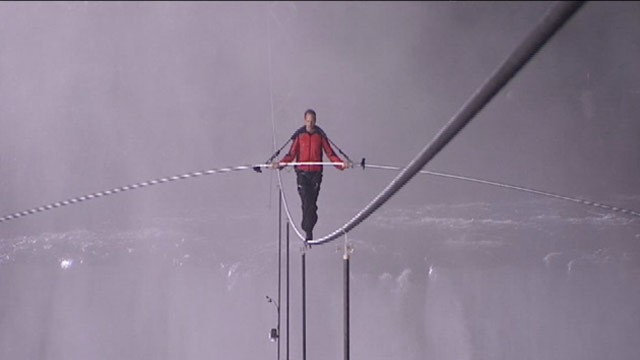
This isn't the first – and it won’t be the last – insanely dangerous thing someone has done to garner instant fame. Remember this past June when Nik Wallenda walked across Niagara Falls on a tight rope?
Both dare-devils survived their crazy stunts, and both made the headlines for the next few days.

Maybe it’s the reality TV generation we unfortunately are in, but it appears the only way to get on television these days is to be doing insanely crazy stuff.

From shows which test people’s level of bravery like Survivor, to ones that test our patience like The Jersey Shore, you don’t have to be a talented actor or have any sense of real intellect or creativity these days to get on a major network.

Just being beautiful and allowing yourself to be humiliated for all to see appears to be the norm.

And if you aren't beautiful, or willing to be voted off the island, you can always jump out of a balloon high up near the barrier between space and Earth, or walk across Niagara Falls.

Why do television networks produce this puff? Whatever happened to shows which actually made us think, feel and laugh?

Truth is, broadcasters have always catered to the largest and widest possible audiences. That’s why they are called “broad” casters. It’s like fishing, they toss their net of shows out into the viewing ocean, and whatever people fall into their net they contain with mindless drivel, while the rest escape to their digital, on demand podcasts.

Perhaps that’s why television and radio are dying – because of the failure of broadcasters to keep pace with the competition from the on demand digital media.

Television and radio broadcasters on the major networks in both Canada and the States have reported significant drops in their viewing and listening audiences over the past decade.

Over a decade ago, on demand digital media didn't exist. We were forced to watch and listen to whatever television and radio programming network executives thought we wanted.

Now we the people are calling the shots. With on demand digital media, we the people are our own program directors. We may occasionally surf late night television, and tune into local radio shows for our morning commutes. However more of us are just saying no to the broadcasters stilted and stale programming choices, as we discover shows that actually mean something to us on our podcast catchers, and other digital media such as Netflix, Apple TV, and on demand networks and shows available through other similar systems.
Although watching someone free-fall from a low Earth orbit may entertain and amaze us for 15-seconds, that 15-seconds of fame is long gone almost as fast as it began.

To really have a successful television or radio show, you need a stable of steady, regular, dedicated viewers and listeners. Tossing out the old fishnet and hoping you catch something is very fleeting, and won’t build a dedicated fan-base to sell advertising.

And if you don’t continue to sell advertising, eventually you won’t be in business, because that’s what pays the bills.

But hey, look on the bright side – at least you can get your 15-seconds of fame. Well, so long as the broadcast television and radio stations continue to exist in the ever growing world of on demand digital media.

How much time is left?

Better hurry up.

Fifteen-seconds doesn't last long.

Nope.

Not long at all.

Thursday, 19 July 2012

How Finicky We Social Networkers Are


Remember Myspace and Tom? Tom was the guy everyone added on the once popular social networking site, which has become a virtual dust bowl, with a shadow of its former user base.

Recently, Digg was dismantled – literally, as parts of it were sold off to various bidders, from the media and private corporations.

Eight-year-old Digg also once was a giant among social networking sites, but as the lawyers dig through the company’s bits and pieces, it too will slowly vanish into the night.

Is it that Myspace and Digg really lost focus, and could not keep up with Facebook, Yahoo and newcomers like Google+?

Or, are attention spans to short online, and we’re only really interested in the next big thing?

Technology is a wonderful thing, but all too often what we once thought of as amazing eventually becomes horrible gone wrong, as newer things – that do the same thing – shine brighter.

Myspace and Digg did the same things most of the other social networks do – they bring complete strangers together, sharing ideas and stories about the world we live in through the multimedia universe of the worldwide web.

Each social network has its own identity in a way – how you share content and connect with people on each is different – but generally they all serve the same purpose and function.

We are driven to the latest greatest thing.

Why?

Perhaps, it’s because the vast majority of social networking users are younger generations, raised on a fast-paced high tech diet that teaches “new is good,” and “old is bad?”
When the new iPhone 4s came out with Siri, everyone just had to have it. Then Samsung came out with the Galaxy S III, and everyone just had to have that.

They are both smartphones with cool features, and boundless apps. But alas, only one thing can ever be the newest thing.

Just ask Einstein about time and space.

Though what usually spells the beginning of the end for a social network isn’t the sudden rush of its users to the latest newest social network. Nope, usually the final dagger is jabbed by the outgoing social network itself.

As Myspace’s users started to leave en mass to join Facebook, Myspace began introducing new features and even re-designed their layout. Their new features were buggy, their customer support was non-existent, and so they actually drove the few stragglers away to the other social networks.

Digg went through a similar set of disturbing changes – as people lost interest in the site, they made many changes, which fell far short of winning back users.

And now, Digg is being broken up, sold off in pieces like an old car is sold off for spare parts.

But the real reason social networks fail is because we lack the attention span to stay with them. Which makes you wonder – will the almighty Facebook be around in ten years?

Wednesday, 18 July 2012

Firefox is No Longer Foxy


Poor Microsoft, they never could get their web browser Internet Explorer just right. Years ago, at the dawn of the Internet, there were those using MS Internet Explorer, and those who knew better were using Netscape.

Earlier in the 2000’s, Firefox became the web browser for power users. Internet Explorer, while it could always do the job, just wasn’t a very sexy web browser. And we all know the power of sex in advertising.
I was using Firefox as my primary default web browser until a few days ago. Once I loved the browser – if you can in fact “love” a web browser. I enjoyed the numerous themes available to customize it, the plug-ins which made it faster, safer and more secure, and the way showed every web page I visited cleanly and quickly.

Then, over the past month or so, Firefox just wasn’t all that foxy a lady anymore.

First there was that horrible update a few weeks back, where Adobe’s Flash update prevented Firefox users from seeing videos.

Then I began to notice a lot of my plug-ins had stopped working. I was on the BETA channel, but not by choice – another beef I had with Firefox. Having an iPhone, I wanted to sync my web browsing bookmarks and history with my iPhone so I could easily visit the pages I frequent on my mobile device. Firefox can sync with the Firefox iPhone app – but only if the desktop version of Firefox is the BETA version.

Grrrrrrr!

I don’t like being on the BETA version of anything – why should I be a crash test dummy for someone else’s product or service? Besides, who wants to be a crash test dummy?
Being on the BETA test version of Firefox, I noticed there was a new update every week. We all like our apps and applications to be updated regularly. However weekly is a bit much!

As these weekly updates took place, every so often one or more of my plug-ins would stop working. It’s understandable that a plug-in may stop working when a new version of an app is released. However, its also normal for that plug-in to be updated, or the app to be revised to allow the plug-in to function again.

Not with Firefox on the BETA test channel – once an app stopped working, it was pretty much dead.

I also noticed themes which I downloaded directly from Firefox’s website eventually stopped working too, forcing me to always download new themes, or just revert back to the default look of the web browser.

Enough was enough – no longer was Firefox being a good little web browser. It had become the rotten spoiled teenager, and I wasn’t going to let it control my web viewing any longer.

So, I checked out Opera, Safari, even the most current version of MS Internet Explorer.

Sorry Microsoft, but Google’s Chrome won out this time.

I haven’t been using Chrome for long, but so far I am mightily impressed. The browser is far faster than Firefox, has many of the same plug-ins I was using in Firefox (only these ones actually work!) and it works seamlessly with my Google+ account.

I’m saddened by having to drop Firefox as my primary web browser. But the team at Firefox lost me with their constant updates, lack of continuity for plug-ins, and their seemingly lack of integrity in quality control.

I have a feeling the reason they update Firefox so often, is because they are fixing the bugs they should have caught BEFORE releasing the previous version to the public. Not all bugs will be caught, hence the use of BETA test groups. But when your software becomes more of a pain in the rump, than a joy to use it is time to move on.

Wednesday, 20 June 2012

Flashback to the Old Hot Wax Days

My age was showing, but I was glowing, as I reminisced about days of old with a couple younger colleagues today.
 
We were discussing desktop publishing, layout and design, and we were discussing the various software applications people use in this field, when one of my colleagues asked what ever happened to Adobe Pagemaker.

Ah, Pagemaker, that takes me back to days long before computers were popular for layout and design. Incidentally, Adobe Pagemaker was morphed into Adobe’s Creative Suite (CS) and became Adobe InDesign.

But my mind began to wander, as I described the old days of layout and design. Back then, the tools of the trade were anything but high tech. Cork cutting boards, X-Acto knives, rulers, scissors, rollers and burning, BURNING hot wax littered the layout and designer’s desks.

Many times I’d burn myself on the hot wax, rushing to paste together a story in time for a print run. Luckily it was like a candle burn, nothing major.

Back then, printed pages were literally cut and pasted together on long wax coated pages called “proofs.” Hot wax was rolled onto these proofs, and each story was cut into pieces, and each piece was coated in this hot wax. The wax would allow you to slide each bit into the perfect spot in the layout, creating a page in the newspaper. Then the pages were hung like freshly washed clothes to dry.

It was a time consuming process, requiring steady hands, and a solid eye for being able to see when things were aligned just right. The most skilled at this could eyeball a single line of type (say a headline) without a ruler, and just know when it was perfectly straight on the page.

Though each proof came with pastel pink and blue grid lines, showing you the way. 

To reduce some of the repetitive tasks of this time consuming process, layout designers kept many common elements on the side of their desks ready to go. The “paste-up board” as it was often called, because it had elements (such as page identifiers, logos, staff by-lines, datelines, place lines and so on) were all lying there, pre-sized and waiting to be pasted-up onto the page.

The area surrounding your pages in most desktop layout design applications is still called the paste-up board today, and is used to story common elements which can be copied into place.
These completed waxed pages would then be sent to the printers, where they would take them and create plates which they’d use for a print run.

When breaking news occurred, the poor layout designer literally had to start from scratch, because nothing was electronically designed, so the page or pages affected by the new story had to be recreated.

This is was why deadlines were so very important back in those days, as a breaking news story could delay the print run of a newspaper for hours. 

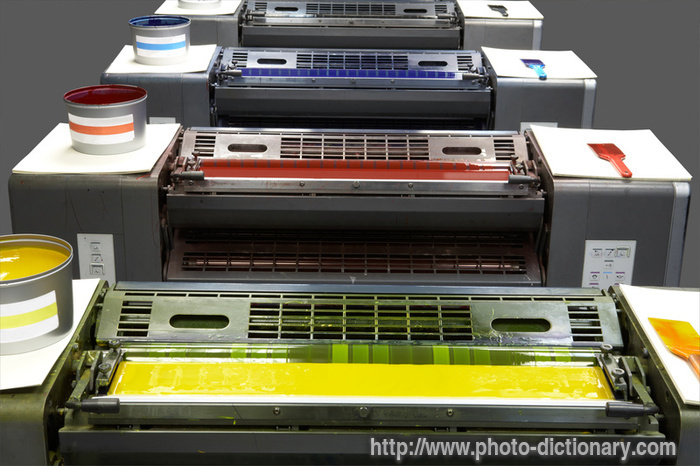
Once a print run begins, it takes some time to get started again, because of the way inks are printed in layers at different stages to achieve different colors and effects. So it still takes time to stop and start the actual production of a paper.

That’s why most major daily papers have two or three print runs, say a morning, afternoon and evening run. Some even have different edition runs, say one for the city, and one for distribution outside the city in the suburbs. If a breaking story changes the paper, they will toss the revised story into the next print run, instead of stopping the presses completely.

This is partially why newspapers are dying. Often, by the time they have hit newsstands, many of the stories are already out of date.

With 24-hour, seven-day-per-week news channels on television and radio, and with the global reach of the always on Internet, developing news stories change constantly. Newspapers can’t change once printed.

The always on digital media also has driven us to expect news to be new the second we see it. When you read something in a newspaper, it was current at the time it was written.
And newspapers take so much time to read, while television, radio, even the Internet can broadcast the news to us bringing us up-to-speed in minutes.

Although newspapers are a dying breed, I miss the old days of the hot wax, Xacto Knives, and paste-up boards. Back then, laying out a page was a much more hands-on process, because you physically placed stories on the page. These days, you point, click and drag your stories into place.

It just doesn’t have the same feel.