Showing posts with label Google. Show all posts

Thursday, 21 March 2013

Wearable Tech and Its Impact on the Modern You


As wearable technologies like Google Glass and the rumoured Apple iWatch are making headlines – and neither product has been released to consumers yet – it raises the real question, just how life changing will all this tech you wear be?

Very life changing.

Immensely life changing.

Imagine the cute salesperson trying to sell you a new whatchamacallit starts flirting with you big time. You’re instantly attracted to the bright eyes bashing about you – but you don’t know anything about this person.

Using your Google Glasses, you conduct a Google search of the person’s face, and instantly find from their Facebook profile that they went to the same university, studied Environmental Studies, have a dog, and appear to post a lot about hating their work – which is where you are now.

Hmmm.

You bring up their LinkedIN profile and see they used to be a manager of a bank, and have worked on and off in retail and telemarketing.

Hmmm.

You check out their Twitter page and see they recently had a sex change.

Moving on.

Despite the fictional scenario, all of those things – and more – could be quite possible if the smart folks at Google use technologies already widely available – facial recognition, voice commands, and the ability to access search results from those voice commands.

Aside from a lot of lonely nights for our fictitious sales person, what if the reverse happened to you, but instead of a potential date, you were being interviewed for a job?

We’ve all been warned not to post anything online that a potential employer might take offence too – but who listens to free advice these days?

As you sit there, describing yourself and where you want to be in five years, that potential employer could be seeing your drunken pictures posted on Google Plus, or that video you posted of your old boss picking her nose on YouTube.

Don’t worry, there are lots of other great places to work.

Even the rumoured iWatch – and we all know most products Apple leaks out as rumours actually are released – could be a source of pain for those in the hot seat.

It’s bad enough when friends go out to spend a great time with each other, only to ignore each other most of the night as they gaze eyes-down into their mobile devices.

Only with the iWatch, those eyes will be on each other’s own wrists, texting, tweeting, posting updates, checking the scores of your favourite sports teams.

Kind of defeats the whole point of hanging with friends.

Though I suppose there is one benefit to all this wearable tech – unlike our phones which we put in our pockets, rarely do we take off our watches and glasses, so the excuse: “I accidentally tossed my tech in with my clothes wash,” just won’t hold.

But people lose watches all the time.

Hmmm. 

Wednesday, 28 November 2012

Feds Go After Social Media Giant Concerned for Privacy – And It’s Not Facebook


Canada’s federal government is formally requesting Twitter testify before a House of Commons committee studying privacy and social media, after they refused to voluntarily appear when initially approached.

Second only to Facebook, Twitter is one of the most popular social media networking services, with an estimated 500 million users. Facebook has over 600 million users, while Google Plus draws in an estimated 400 million users.

Both Facebook and Google voluntarily appeared before the Canadian government’s committee – yet Twitter refused.

Last May, the Commons committee began investigating how social media companies protect the personal information of their users, because of high profile interventions from Canada’s Privacy Commissioner with Facebook and Google just weeks earlier.

Usually it’s social media mega-site Facebook which is in the news for its self-serving privacy policies, but this time, the social network seemingly with something to hide is Twitter.
Twitter’s refusal to appear before the committee hearing falls amidst the company’s aggressive positioning to take-over the top spot in social media.

Many companies have gone out of business, as Twitter adds features and functionality to its social networking service, which previously could only be found through third-party companies. 

As Twitter adds these new perks to its service, it disables the ability of these third-party companies from providing the same service, by changing its Application Programming Interface (API).

Twitter has been consistent in denying third-party companies from providing apps which “replicate its core user experience,” as the company puts it. However, as Twitter adds to that “core user experience” it is putting companies out of business and people out of work.

However, this past August, Twitter announced major changes to its API, and since then, has been rolling out many features previously provided by third-party companies to its service.

As these new features are rolled into the giant social networking site – commonly called the world’s largest microblogging site – one has to question how the company is managing its member’s personal information?

Perhaps Twitter has been so busy gobbling up third-party features, the top brass has let that part of their business slide?

Or perhaps Twitter has discovered new ways to use that personal private information, which they fear could land them in the penalty box at a federal government investigation into privacy and social media?

We’ll have to wait and see, because the Canadian government’s House of Commons Committee hasn't sent out the formal letter to appear to Twitter as of this writing.

The motion to formally call Twitter to testify came after a representative from Facebook took committee members through that company's privacy policies.

Although Facebook’s relationship with Canada’s Privacy Commissioner has improved much since their initial meeting, by exploring the types of personal information collected, managed and stored with the world’s largest social networking service, the Canadian government is convinced they need Twitter’s participation to protect the interests of Canadians, and ultimately all of its users.

Canadians are among the top users of social media, along with the United States and the United Kingdom.

There are just over 10 million Twitter accounts based in Canada, according to a recent study by a Paris research group.

Another recent study says that Facebook has about 18 million Canadian users, more than half the country's total population.

Thursday, 4 October 2012

Mind Controlled Self-Driving Cars, and Instant Shipping


Imagine ordering some way cool gizmo off some infomercial or shopping channel you’re watching on television, and having it instantly created from scratch right in your home! No need to wait for overnight shipping, that way cool gizmo appears right in your home.

That’s just one of many possible amazing future paths we are on, thanks to 3D printers, and other cool tech.

3D Printers take blueprint instructions for physical objects you feed into their attached computers, and actually build the thing, by layering the components one on top of the other, until the way cool gizmo you ordered off the tele is complete.

It’s called the additive manufacturing process, where a digital model of a solid object is literally built from the ground-up, via these layers.

This amazing technology is currently being used to create jewellery, footwear  toys, tools, prototypes, automotive, aerospace, medical and dental equipment, and a handful of others.

Recently, a man was arrested in the States for using a 3Dprinter to create handguns – so down the road, expect these printers to have some sort of security chips in ‘em similar to the ones in standard paper printers which prevent you from scanning or printing paper currency.
Another cool tech scenario – you hop in your car, think where you want to go, it plots the best route based on current traffic and weather conditions, and takes you there, all without you having to do a thing!

Self-driving cars are already here – we've all heard about the ones Google uses to capture their street views. According to Google, they have been working on consumer models of these for some time, and are anticipating selling self-driving cars within the next few years – pending government regulations and of course your own nerves!

Global Positioning Systems (GPS) are already in most newer cars, along with built-in WiFi, 3G or in newer cars, LTE high speed wireless data , allowing your car’s computer to know where you are, and feed into the traffic and weather information networks.

And there are companies working on transferring yourthoughts directly into electronic impulses which can be read and understood bycomputers. This is still very experimental, but they are making significant progress on this front.

Put all that tech together and having your car know where you want to go, calculate the best route, and then proceed to take you there isn't that far a stretch.

Now, if only technology could do my laundry, clean my home, make me dinner and walk the dog for me!

Wednesday, 18 July 2012

Firefox is No Longer Foxy


Poor Microsoft, they never could get their web browser Internet Explorer just right. Years ago, at the dawn of the Internet, there were those using MS Internet Explorer, and those who knew better were using Netscape.

Earlier in the 2000’s, Firefox became the web browser for power users. Internet Explorer, while it could always do the job, just wasn’t a very sexy web browser. And we all know the power of sex in advertising.
I was using Firefox as my primary default web browser until a few days ago. Once I loved the browser – if you can in fact “love” a web browser. I enjoyed the numerous themes available to customize it, the plug-ins which made it faster, safer and more secure, and the way showed every web page I visited cleanly and quickly.

Then, over the past month or so, Firefox just wasn’t all that foxy a lady anymore.

First there was that horrible update a few weeks back, where Adobe’s Flash update prevented Firefox users from seeing videos.

Then I began to notice a lot of my plug-ins had stopped working. I was on the BETA channel, but not by choice – another beef I had with Firefox. Having an iPhone, I wanted to sync my web browsing bookmarks and history with my iPhone so I could easily visit the pages I frequent on my mobile device. Firefox can sync with the Firefox iPhone app – but only if the desktop version of Firefox is the BETA version.

Grrrrrrr!

I don’t like being on the BETA version of anything – why should I be a crash test dummy for someone else’s product or service? Besides, who wants to be a crash test dummy?
Being on the BETA test version of Firefox, I noticed there was a new update every week. We all like our apps and applications to be updated regularly. However weekly is a bit much!

As these weekly updates took place, every so often one or more of my plug-ins would stop working. It’s understandable that a plug-in may stop working when a new version of an app is released. However, its also normal for that plug-in to be updated, or the app to be revised to allow the plug-in to function again.

Not with Firefox on the BETA test channel – once an app stopped working, it was pretty much dead.

I also noticed themes which I downloaded directly from Firefox’s website eventually stopped working too, forcing me to always download new themes, or just revert back to the default look of the web browser.

Enough was enough – no longer was Firefox being a good little web browser. It had become the rotten spoiled teenager, and I wasn’t going to let it control my web viewing any longer.

So, I checked out Opera, Safari, even the most current version of MS Internet Explorer.

Sorry Microsoft, but Google’s Chrome won out this time.

I haven’t been using Chrome for long, but so far I am mightily impressed. The browser is far faster than Firefox, has many of the same plug-ins I was using in Firefox (only these ones actually work!) and it works seamlessly with my Google+ account.

I’m saddened by having to drop Firefox as my primary web browser. But the team at Firefox lost me with their constant updates, lack of continuity for plug-ins, and their seemingly lack of integrity in quality control.

I have a feeling the reason they update Firefox so often, is because they are fixing the bugs they should have caught BEFORE releasing the previous version to the public. Not all bugs will be caught, hence the use of BETA test groups. But when your software becomes more of a pain in the rump, than a joy to use it is time to move on.

Friday, 6 July 2012

Is Social Media Really the Real You?

Back in high school, while most were dating, I’d be smack dab in front of the computer, chatting and downloading.

This predates the Internet, back to the days of Bulletin Board Systems (BBS) and dial-up modem connections.

This goes way back to the days when CompuServe and America Online were king, and only a handful of people actually knew what email was, let alone had it.

I’d chat with some dude named “The Terminator” about his BBS named “The Forbidden Zone,” or with another system operator (called Sysop in BBS slang) named “Mike Donovan” about his “V-BBS.” I remember having long debates in the chat forums with “Tiny Dancer,” “Mayor Hardin,” and someone that called himself “Thing.”

On these dial-up computer networks, everyone went by a handle, some even taking on the persona or character of their chosen name in the chats, by typing as if they really were The Terminator, or whoever else they chose to be.

As BBS computer networks were a basis for the Internet as we know it today, it got me thinking – just how real are the people we chat with online now?

Just as it was back in the era of the BBS, it’s not very hard to log onto any social network site, make up an assumed name, and post content under that assumed identity.

Twitter has tried to prevent people from assuming celebrity identities, by verifying such accounts – but even these verifications can be faked.

I get posts all the time from Albert Einstein on Google+ -- and although I’m honored that one of the greatest minds of the Twentieth Century shares his thoughts with me, Einstein died long before the two young men who created Google were even born.

I also get posts from Planet Earth on Google+ -- which is even more interesting, because I didn’t know the Earth could talk.

Clearly, someone on Google+ is posting under Einstein and the Earth’s identities, which brings us back to the original question, how real are we on our social networks?

We grow friends, fans and followers on Facebook, Twitter, Google+, YouTube, Pinterest and the rest. But even if we are posting as ourselves, under our real names, are we really real?

Do we really share what is actually happening right now in our lives online? And if we do, do others really care?

Just how different are you online from the real life person you are, in the real world?

Do your posts reflect the real you?

How would I know that?

How would you know that my posts are really me?

This social networking thing is really confusing.

Thursday, 7 June 2012

Why Everyone is on Facebook’s Back?

Not long ago Facebook was the golden child of the Internet. Not as old as Yahoo, or Google, but had just as much of a following and fan base.

Everyone had a Facebook account. Everyone was hooked on checking their Facebook regularly. And everyone was into bitching about Facebook’s constantly changing privacy features.

We still complain about Facebook, but now it’s the largest social network itself which we just can’t seem to stand, instead of its constantly changing privacy settings.

For over a week, trending topics about the death of Facebook have been popping up on the social networks.

Why?

Could it be all the hype surrounding the spunky rarely wearing a suite Mark Zuckerberg, founder and head geek at Facebook?

Just prior to all the negativity online, the world was glued to news of Facebook going public. The mainstream media, the blogosphere, and all the social networks were buzzing with rumors about the date, the price and how much those that bought into Facebook in its early days would make.

On that day, when Facebook went public, everyone was so focused on the massive amount of money flowing into the pockets of those with Facebook stock, people forgot to invest, and within hours of it’s launch, the stock had nose-dived well below expectations.

The same week Facebook went public, Zuckerberg marries his long-time girlfriend at a surprise wedding ceremony with a handful of select invitees.

Very romantic, and a poetic conclusion to one life ending and another beginning for the couple, as they enter marriage and adulthood.

But maybe, the world just had enough Facebook? Too much of a good thing and all that?

Maybe all the hype around the stock offering, around the wealth, around the life and times of the social network’s boss – we just couldn’t stand it anymore!!!!

So today, the world’s largest social network is taking a beating in both stock and word-of-mouth. It’ll be interesting to see which has the greater effect -- the ups and downs of dollars, or the rants on the social networks – because it was those initial rants and raves which made Facebook the giant which it is today.

This could be the true test of social media influence and an even bigger test for the public relations team which has to figure themselves out of this mess. Although the all mighty dollar rules the world, it’s word of mouth which rules the social networks.

Monday, 28 May 2012

What Good Are Social Networking Apps That Don’t Work?

Recently, the fine folks at Google released the latest updates for their social networking app for Google+ on iPhone, and just last week for Android. All the tech media was buzzing with how Google had done a wonderful job, producing one of the most visually stunning apps ever.
Even I was impressed with the sheer beauty of the Google+ app’s design. The app smoothly scrolls both the image and the text of a post, placing the emphasis on the image by showing you that, as you scroll through your post streams.

As the app seductively scrolls in a full-color image, and alluringly pumps in the comment and descriptive link, you’re drawn into its appeal, like a lonely person surfing the net for some much needed company on date night.

However, just like that lonely person on date night may be taken in by lust at first sight, instead of love, my lust over the Google+ app has ended abruptly, and I wonder what I ever saw in it in the first place.

Although the Google+ app is a beautiful piece of app, it’s completely useless otherwise.

When you create a post on Google+ via the web, as soon as you enter a web address, Google+ pulls in images from the post, allowing you to choose which image to associate with your post. That image is then displayed along with your post on both the web and app feeds. It also uses the title of the page or headline from the text as the hyperlink as well as the description of the web page.

However, when I tried to post a link using Google’s beautiful new G+ app, it just posted the HTML link to the stream. I tried several times, and in all frustrated attempts, instead of getting the stunningly beautiful images, headlines and page descriptions, I got an ugly HTML link. I checked this out on the website, and sure enough, the link I posted was just that – an HTML link – nothing to look at.

Who’s going to click on some ugly link without any description or image, amidst a sea of descriptions and images from those posting on the web? Isn’t the whole point of the G+ app to create complete posts – with images and descriptive links – from anywhere at any time?

What good is an app, if all you can do is view the amazing things others are posting via the web?

To be fair, the G+ app does have some useful functions – you receive alerts on comments, new followers, and other notifications, and you can take a picture from your Smartphone and upload it to your stream. You can even use the G+ cool Messenger to ‘Hangout’ with up to 10 friends in a video conference using the app – that is really impressive.

But the most common thing we do on any of the social networks – from Facebook, Twitter, even Pinterest, is post to our feeds and streams.

You can post to your G+ stream using the Google+ app. You can choose which ‘circles’ (groups) of people your post is visible too, post your location, and attach a photo from your phone.

But when you try to attach a link you’ve copied while browsing the net as most of us do, all you can post is the ugly HTML link, along with any comments you add.

I suppose if you have the time, you can capture a screen shot of an image from the page you are linking too, save it to your phone, and then attach it to the post, along with the link. Aside from this being a lot of work, you’ll still have an ugly HTML link, as opposed to a clickable headline.

I’m a big fan of HootSuite to manage my Facebook and Twitter feeds. From Vancouver, Canada, HootSuite is a great piece of software, which allows me to create complete posts. What I really like about this application, is it’s a real time saver – I can schedule posts to go off to any or all of the social networks it supports at anytime on any day. 

The mobile version of HootSuite isn’t as fully functional as the web-based application, but I can still post complete posts – with images and shortened links – from the app.

Google+’s app doesn’t even shorten the links.

The chatter over at HootSuite is they are working on adding support for G+ “as soon as immediately possible” – which can’t be soon enough, because although the Google+ app is great eye candy, looks will only ever get you so far.

Friday, 25 May 2012

How Social Networking and Tech Are Changing Our View of the World

Today, Google posted a short video showing off a view from their new much talked about augmented reality glasses.

Augmented Reality (AR) places a tiny computer screen within your visual frame of reference, so you can utilize technology in a whole new way. Imagine seeing a concert poster, and then telling your glasses to call the number on the poster to order tickets. It would be like Apple’s iPhone 4s virtual assistant Siri being able to see.

Pretty cool indeed – and AR isn’t just limited to Google’s glasses. There are some smartphone AR games, which use the camera and GPS to place ghosts or other characters on the screen, using your current location as the background. You have to run around and avoid running into them.
AR is the latest in visual tech invading our mind’s eye.

Remember when 3D movies first came out? No – I’m not talking about the current crop of movies which use polarized plastic lenses, I’m talking about the original 3D movies, where you had cheap paper glasses, with a piece of red and blue plastic to see through on either eye.

I remember growing up and usually around Halloween, there’d be a scary 3D movie shown on one of the major TV networks. A fast food burger joint like Burger King or McDonald’s usually partnered in on these things, giving out free blue and red 3D glasses with their “happy meals.” The movies were cheesy B-movies, and the 3D effects weren’t that good. But as it only happened once a year, it was a different way to enjoy a night at home, with good friends, watching really bad movies.

These days, 3D movies are a lot better – the technology to produce, show and view them as changed quite a bit since the B-Movie horror days of my youth.

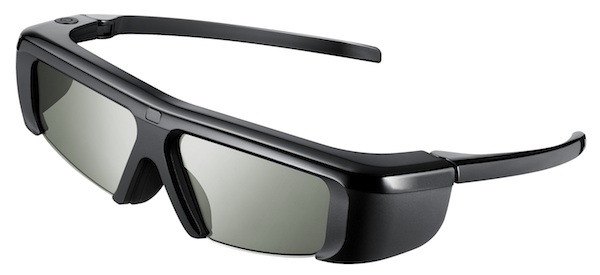
But you still have to wear those blasted glasses, which are never comfortable, especially for people like me that already wear glasses to see.

Now that we have 3D tech on TVs, that too is changing. Some of the major TV manufacturers are already testing out models which display 3D video, without having to wear those awful 3D glasses.

However, Google’s taken things to the next level, by incorporating high-tech glasses into our reality – to augment our reality with a smartphone.

The potential uses for AR glasses are mind-blowing. Doctors could perform surgery with greater precision, guided by their AR glasses. You’d never get lost walking in a strange neighborhood, as your AR glasses would clearly show you the way.
Forget your grocery list at home? No problem, your AR glasses would tell you what you need to buy, as you visually scan the grocery store shelves.

While at a party, you’d never forget anyone’s name, as your AR glasses could show you the person’s name, and complete contact details as you talked to them. You could even add each other to your social networks instantly, tweet about the conversation, or snap a picture or video of it instantly, without lifting your phone – just use your AR glasses.

Augmented Reality is a very cool way of seeing the future. I just hope the AR glasses are more comfortable than those blasted 3D ones we have to wear to watch movies.