Showing posts with label iPhone. Show all posts

Monday, 25 March 2013

Thanks to Our Wired World, We’re Running Out of Numbers


As our dependence on mobile technology grows, our need for more numbers to link those magical devices grows too.

SO much so, mobile service providers and governments are coming up with more creative ways to keep us from running out of numbers.

They can do what is taking place in Canada’s largest city today – Toronto gets two new area codes as of today, 437 and 365.

This adds a millions of potential phone combinations to an already crowded see of 10-digit codes.

Or you can go the way of some big service providers, which encourage you to have one number which is shared among all your mobile devices.

Alternatively, you could cut the cord with your phone company, and go completely digital, using a Voice Internet Protocol (VOIP) based service such as Skype.

Maybe that’s why software giant Microsoft recently bought out Skype – which incidentally is giving out free VOIP calling for one month, to current MSN account holders, to lure them over to their newly acquired messaging platform.

All of these solutions work – for now.

What happens when Apple’s iWatch, Samsung’s version of the iWatch and Google Glass from the search engine company hit the streets later this year?

Think about all the numbers most people currently have – home landline, office landline, their personal smartphone and tablet, and then their work smartphone.

Some even have separate lines for their home office and home – both landline and mobile.

We’re swamped in a vast ocean of 10-digit dialing.

I remember years ago, when we only had to dial seven digits to connect over the phone. That’s before we got the addition of ONE – just one area code to our major urban area.

Now here in Toronto, we have six – SIX – area codes, and you’d never not dial the area code plus the number you are dialing.

As technical advances release us from the cables and cords of the past, allowing us to be free, and still be wired to the world, we’ll need to work together to ensure we don’t run out of numbers to connect our wireless devices.

Otherwise, regardless of how wonderful the tech is, it’ll be useless.

Wednesday, 9 January 2013

Honestly Apple, Really? NO


Today the tech world is swirling with yet another rumour about the latest product that might be coming from Apple – a cheaper version of its flagship iPhone.

The rumour says the “new” cheaper version, will have a larger screen, and a new design, and is economically priced for third-world economies.

For years, Apple’s marketing mantra has been to leak rumours, mis-information and in some cases actually intentionally leave prototypes of their latest tech in public places, to be mysteriously found and leaked to the world.

Remember when the prototype of an iPhone was “accidentally”left at a bar, and it’s grainy amateurish pictures went viral over the social networks?

This is how they “surprise” us with their product launches; to keep is guessing as to which rumours are true, and which ones weren't.
Honesty is the foundation of any relationship, except it would appear, if you are an Apple customer – gossip mongering is hardly an honourable form of communications.

Seriously Apple, when you first rumoured, leaked and yes – lied – about your future tech toys, it proved to be a very successful marketing campaign.

But come on now – we’re all a little older and wiser to this game, and we’re sick and tired of hearing about what may come.

Just tell it like it is. Give it to me straight up and honest. I can take it – and I bet so too can everyone else.
Real trend setters are constantly changing their tactics, because that’s how you set the standards everyone else wants to follow.

If you keep dancing to the same song, eventually others will get bored and just walk away – WALK AWAY I SAY.

We all miss Steve Jobs, and we've all heard the rumours that Apple won’t be the same without him.

Prove those rumours wrong, by giving us something more than just more rumours.

Friday, 9 November 2012

Apple’s iCloud Almost Killed My Outlook


I've said it before, and I’ll say it again – I love my iPhone. From a design, usability, and functionality point of view, it’s an amazing piece of tech.

But, as I've also said before and will say again – I hate Apple’s software which they force you to use on their devices.

Apple’s iTunes often crashes, must be uninstalled and then re-installed to resolve issues, and on more than several occasions, has simply stopped working for no reason whatsoever. One minute it was fully functional, the next it’s hung or “bricked.”

Being an old school techy, I tend to take a while to gravitate to new technologies. I read reviews, read up on bug reports, and wait until I see the initial bugs which come with all early stages of tech are resolved.

I’ve been keeping out of the cloud for this reason – it’s still a new and somewhat experimental technological marvel. I’m used to backing up everything – including my iPhone – to my computer.
However, there are some cool benefits to sharing data with the cloud. Responses to emails from my iPhone would be in my Outlook on my computer, and any other iOS device I share via Apple’s iCloud. All my photos, apps, and other data would be available in the cloud too.

If Apple’s iCloud wasn’t like their other software which is complete and utter garbage.

I’m a very tech-savvy person. You know that friend that you always call when your latest tech suddenly stops working and you can’t figure it out? I’m that friend.

I don’t know why I thought iCloud would be any better of an experience than Apple’s immature iTunes – I read lots of instances of conflicts between MS-Outlook and the iCloud. But there were work-arounds, so I figured, if I encountered one of the many problems I read about, at least I could fix it. (And I'm using MS-Outlook 2007, which is supposedly fully compatible with Apple's iCloud.)

At first, when I tried to just turn on iCloud on my computer, it kept freezing. I did a search, and just like iTunes, the solution was to uninstall the application on my computer, reboot my system, and re-install it fresh.

I did this, and voila – it worked. Though someone should be challenging the Apple software team about why their software becomes corrupted so easily, and OFTEN requires their CUSTOMERS to uninstall and re-install it!

Although iCloud said it would take less than a minute to sync my computer with the cloud, it took about five minutes, and when it was done, my Outlook looked like it had never been used – all my emails, contacts, calendars and notes were gone!

My iPhone, still had all the emails, contacts and calendars which it had originally, but nothing from my PC was on my iPhone which wasn't already there prior to this so-called iCloud ‘sync.’

Now, being a techy geek, I had anticipated potential problems, so I made a backup of my MS-Outlook PST file prior to doing this iCloud thing. I always keep backups, but I made sure to make a current one so I wouldn't lose anything should the iCloud prove as well designed as iTunes.
And that’s a good thing – I immediately turned off iCloud on my iPhone and PC. Uninstalled the iCloud Control Panel on my PC – no I didn't re-install it – are you mad?!?!?

Then I copied the backup MS-Outlook PST file over the now corrupted one by iCloud. All my emails, contacts, calendars and notes were restored. Though I lost a few notes on my iPhone which for some reason iTunes didn’t sync with my PC (which I also did just prior to this iCloud trial), everything was back to normal.

I could only imagine the horror a regular iOS device user (iPhone, iPad, iPod) may go through installing and using iCloud. Most people aren't as geeky as me, and probably wouldn't even know how to backup their MS-Outlook, let alone restore it.

Apple has come under fire recently, as their new iPhone and iPad mini aren't as groundbreaking, heart-stopping amazing tech releases which we came to expect under Steve Jobs.

Many critics claim that since Job’s death just over a year ago, Apple’s once bright star will start to dim.
I don’t think this dimming has as much to do with the tragic loss of Jobs, but instead has been building over time.

Apple started as a computer hardware company, when they launched the first Apple Computers. Their third generation Apple IIe desktop computers back in the 1980’s were the start of their popularity in the home. They were forced to create an operating system – software – for their hardware to run.

Software has always taken a back seat at Apple. Their software has been designed much like their hardware – visually stunning, and extremely user-friendly – almost innate for most people to figure out.

However, as a hardware company first and foremost, their software is always buggy to the point of failing to do what it’s supposed to.

Apple’s iTunes is clunky, crashes, needs to be re-installed, and often fails to sync properly.
My recent experience with Apple’s iCloud – it’s clunky, crashes, needs to be re-installed, and it failed to sync properly.

Sound familiar?

If Apple wants to remain the shining star which Steve Jobs created, it’ll have to start catching up on the software side of things – because although I love my iPhone, as most with these devices do – I can’t stand iTunes or the iCloud – as most forced to use this software probably do too.

Friday, 22 June 2012

Cool Apps Only Work if Used – Duh!

Anyone who knows me knows I love my iPhone. It is far more than a phone, and more than a computer, because it’s so personal.
 
Which is probably why I have over a 150 apps on the thing.

I have an app -- SoundHound -- that will “listen” to songs, identify the name of the song, the band playing it, the songwriters, even display the lyrics in Karaoke format as the music is playing so I can sing along.

I have an app that tells me my current heart rate, and what I should be aiming for at rest and during a workout. I have an app that will help me rest and sleep, by playing soothing sounds, images and binaural beats – which the documentation claims, are psychological sounds to put your mind in specific mental states.

When you have apps to seduce you to sleep at the psychological level – you just know they must have an app for everything.

But then you get apps which do wonderful and amazing things, but they require your friends to use them too.

One of the coolest apps I have is Bump, which allows you to instantly share selected photos and contact details with another person, just by bumping your smartphone (iPhone, BlackBerry or Android) together.

It eliminates the hassle of trying to type in their contact details quickly, and ensures that neither person writes down the wrong information. 

Whenever I want to exchange my contact details with a new friend or colleague, I always ask “do you bump?”

After their initial reaction of “WTF?!?” fades, I explain the Bump app, and ask if they use it.
Although everyone seems really curious how it works – by sharing your contact details over Wi-Fi or 3G networks – they admit that they don’t have the app. So, instead of getting to use this really awesome high-tech way of connecting with someone, we do it the old fashioned way, and either exchange business cards, or verbally tell each other our contact details, as we hammer them into our phones.

What a waste of good tech!

Another really cool app I use which goes to waste far too often is Viber. Viber allows you to make voice calls and send Short Message Service (SMS) text messages to anyone around the world, using your smartphone’s data plan, instead of it’s voice plan. This means you avoid long distance calls, and don’t use up your voice plan’s minutes. 

I’ve used Viber, and text messages are sent and received almost instantly – you’d never know it was being relayed using a data service instead of your service provider’s SMS network. Voice calls are crisp and clear, and you’d never know you were talking on a data plan instead of a voice network.

Problem is – as with Bump – in order to utilize this cool tech, your friends have to use it too. I have a handful of friends using Viber. 

Or should I say, I have a handful of friends that HAVE Viber on their phones. When someone in your smartphone’s contact list installs Viber, you are automatically notified by the app, so you can now use it.

However, you can still make calls and send text messages to those who have Viber using your service provider’s voice and SMS network – and I find on average, most people still do.

Doesn’t this defeat the purpose of having the app? 

Viber doesn’t share any personal information, you don’t have to join anything to use it. Just you and your buddy have to have the app installed and running on your smartphones to make voice or text message calls using it.

I turn off apps when I’m not using them, but I always keep Viber running so that those who have it and have my iPhone’s number can take advantage of it. But they don’t – usually when they call me, it’s through the normal cell network.

Another cool use of tech wasted.

Makes me wonder if I should even bother to keep Viber running, or if I should even bother to keep Viber or Bump installed on my phone. Although they are both great apps, what’s the use if no one is using ‘em?

Sometimes, even the best apps can be so frustrating!

Wednesday, 30 May 2012

Hey Apple – Love the iPhone, Fix the iTunes

The tech world is always buzzing with the latest rumors from Apple. 

Will the next iPhone have a virtual keyboard which projects itself onto any surface? How about a holo-beam, capable of projecting anything on the iPhone’s screen into thin air – similar to the holodeck on Star Trek The Next Generation, only much smaller? Will they introduce a male version of the digital personal assistant Siri, so you can choose whether your phone is male or female?

Apple has an amazing marketing machine. They get the word out about their products through the rumor mill. Usually, when a rumor is spread about a company’s products, services, or even the company itself, it is negative. But Apple intentionally creates rumors about potential products and product features to generate so much media and geekdom hype that come launch day, we’re all like meth addicts climbing the walls waiting for our next fix.

Apple’s products for the most part are also technological break-throughs that rock the world, and change the way we do things for ever.

Remember the original Sony Walkman? A massive -- by today’s standards -- square of plastic, with a row of control buttons on the side.

We’re not talking about the next generation Walkman, which had the CD-player in it, we’re talkin’ the original from the 1980’s – long before anyone had ever seen a metallic disc – unless you’re referring to a heavy metal rock band’s metal-painted record. Remember those?

Both the record and the audio cassette became history as CDs and DVDs took the world by storm.
But the real innovation which shook the world was Apple’s iPod – a tiny portable MP3 player, which allowed you to carry more music, and it was crystal clear because it was digital audio.

When Steve Jobs first announced the iPhone with his famous phrase “this changes everything,” he wasn’t lying.

Before the iPhone, all most of us did on cell phones was talk, text and occasionally surf the net, using really bad text-driven cell phone browsers.

Who would have thought we’d ask our Smartphone for directions, what the weather forecast will be like, or to name the song currently playing in the restaurant?

Apple’s marketing machine is slick and creative, but their hardware products are also equally impressive – if not more so.

However, Apple’s software is surprisingly really, really, REALLY awful. Or at least it is on my MS-Windows machine, which may also be part of the issue.

Whenever I plug my iPhone into my computer to charge and sync with iTunes, I always cringe, watching with a tummy-turning uneasiness to see how iTunes will screw up my iPhone today.

Unless you jailbreak your iPhone, you have to use Apple’s iTunes to download and update apps, podcasts, and the latest updates to the iPhone’s operating system -- iOS.

You’d think Apple would have put as much care into creating iTunes, as they did their iTunes-dependent devices – iPods, iPads and iPhones all require iTunes for content management, unless they are jailbroken.

Think again.

It’s as if iTunes has a mind all its own, some days it’s in a great mood, and syncs without any issues.
The next day, it gives me an error and refuses to sync. Sometimes all it takes is unplugging my iPhone, closing iTunes, and starting again. Sometimes I have to delete backup files. Sometimes I have to enter crazy chaotic command line codes from an MS-DOS prompt window. Sometimes I just say ?!?!?! it and reset my iPhone to factory settings, and then restore everything from my network’s backup.

iTunes sucks – no – it is a disaster of an application. My iPhone can be working perfectly, and iTunes may have worked just as perfectly previously. But without any updates or warnings to either, when I plug in the iPhone – poof – iTunes decides to go all meshuguna crazy on me, and throws a fit. 

Maybe it’s because of Apple’s long standing rivalry with Microsoft. I run MS-Windows machines – as do about 95 percent of the planet – so maybe the Windows version of iTunes isn’t as error-free as it’s more native Apple-based Operating System (the Mac OS)?

If it is – Apple – get over it. Not everyone using an iPhone is going to change their entire platform to conform to your standards.

Whatever the issue – Apple really needs to seriously fix iTunes. Although Apple let the genie out of the tech bottle by giving the world its first real Smartphone, they are no longer the only game in town.

Monday, 28 May 2012

What Good Are Social Networking Apps That Don’t Work?

Recently, the fine folks at Google released the latest updates for their social networking app for Google+ on iPhone, and just last week for Android. All the tech media was buzzing with how Google had done a wonderful job, producing one of the most visually stunning apps ever.
Even I was impressed with the sheer beauty of the Google+ app’s design. The app smoothly scrolls both the image and the text of a post, placing the emphasis on the image by showing you that, as you scroll through your post streams.

As the app seductively scrolls in a full-color image, and alluringly pumps in the comment and descriptive link, you’re drawn into its appeal, like a lonely person surfing the net for some much needed company on date night.

However, just like that lonely person on date night may be taken in by lust at first sight, instead of love, my lust over the Google+ app has ended abruptly, and I wonder what I ever saw in it in the first place.

Although the Google+ app is a beautiful piece of app, it’s completely useless otherwise.

When you create a post on Google+ via the web, as soon as you enter a web address, Google+ pulls in images from the post, allowing you to choose which image to associate with your post. That image is then displayed along with your post on both the web and app feeds. It also uses the title of the page or headline from the text as the hyperlink as well as the description of the web page.

However, when I tried to post a link using Google’s beautiful new G+ app, it just posted the HTML link to the stream. I tried several times, and in all frustrated attempts, instead of getting the stunningly beautiful images, headlines and page descriptions, I got an ugly HTML link. I checked this out on the website, and sure enough, the link I posted was just that – an HTML link – nothing to look at.

Who’s going to click on some ugly link without any description or image, amidst a sea of descriptions and images from those posting on the web? Isn’t the whole point of the G+ app to create complete posts – with images and descriptive links – from anywhere at any time?

What good is an app, if all you can do is view the amazing things others are posting via the web?

To be fair, the G+ app does have some useful functions – you receive alerts on comments, new followers, and other notifications, and you can take a picture from your Smartphone and upload it to your stream. You can even use the G+ cool Messenger to ‘Hangout’ with up to 10 friends in a video conference using the app – that is really impressive.

But the most common thing we do on any of the social networks – from Facebook, Twitter, even Pinterest, is post to our feeds and streams.

You can post to your G+ stream using the Google+ app. You can choose which ‘circles’ (groups) of people your post is visible too, post your location, and attach a photo from your phone.

But when you try to attach a link you’ve copied while browsing the net as most of us do, all you can post is the ugly HTML link, along with any comments you add.

I suppose if you have the time, you can capture a screen shot of an image from the page you are linking too, save it to your phone, and then attach it to the post, along with the link. Aside from this being a lot of work, you’ll still have an ugly HTML link, as opposed to a clickable headline.

I’m a big fan of HootSuite to manage my Facebook and Twitter feeds. From Vancouver, Canada, HootSuite is a great piece of software, which allows me to create complete posts. What I really like about this application, is it’s a real time saver – I can schedule posts to go off to any or all of the social networks it supports at anytime on any day. 

The mobile version of HootSuite isn’t as fully functional as the web-based application, but I can still post complete posts – with images and shortened links – from the app.

Google+’s app doesn’t even shorten the links.

The chatter over at HootSuite is they are working on adding support for G+ “as soon as immediately possible” – which can’t be soon enough, because although the Google+ app is great eye candy, looks will only ever get you so far.

Friday, 25 May 2012

How Social Networking and Tech Are Changing Our View of the World

Today, Google posted a short video showing off a view from their new much talked about augmented reality glasses.

Augmented Reality (AR) places a tiny computer screen within your visual frame of reference, so you can utilize technology in a whole new way. Imagine seeing a concert poster, and then telling your glasses to call the number on the poster to order tickets. It would be like Apple’s iPhone 4s virtual assistant Siri being able to see.

Pretty cool indeed – and AR isn’t just limited to Google’s glasses. There are some smartphone AR games, which use the camera and GPS to place ghosts or other characters on the screen, using your current location as the background. You have to run around and avoid running into them.
AR is the latest in visual tech invading our mind’s eye.

Remember when 3D movies first came out? No – I’m not talking about the current crop of movies which use polarized plastic lenses, I’m talking about the original 3D movies, where you had cheap paper glasses, with a piece of red and blue plastic to see through on either eye.

I remember growing up and usually around Halloween, there’d be a scary 3D movie shown on one of the major TV networks. A fast food burger joint like Burger King or McDonald’s usually partnered in on these things, giving out free blue and red 3D glasses with their “happy meals.” The movies were cheesy B-movies, and the 3D effects weren’t that good. But as it only happened once a year, it was a different way to enjoy a night at home, with good friends, watching really bad movies.

These days, 3D movies are a lot better – the technology to produce, show and view them as changed quite a bit since the B-Movie horror days of my youth.

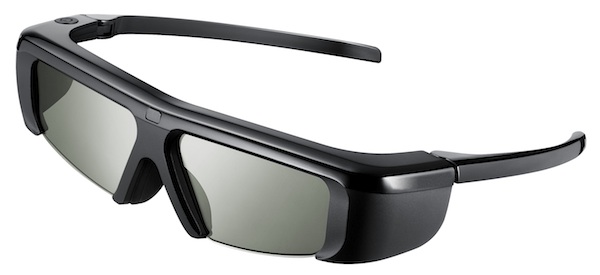
But you still have to wear those blasted glasses, which are never comfortable, especially for people like me that already wear glasses to see.

Now that we have 3D tech on TVs, that too is changing. Some of the major TV manufacturers are already testing out models which display 3D video, without having to wear those awful 3D glasses.

However, Google’s taken things to the next level, by incorporating high-tech glasses into our reality – to augment our reality with a smartphone.

The potential uses for AR glasses are mind-blowing. Doctors could perform surgery with greater precision, guided by their AR glasses. You’d never get lost walking in a strange neighborhood, as your AR glasses would clearly show you the way.
Forget your grocery list at home? No problem, your AR glasses would tell you what you need to buy, as you visually scan the grocery store shelves.

While at a party, you’d never forget anyone’s name, as your AR glasses could show you the person’s name, and complete contact details as you talked to them. You could even add each other to your social networks instantly, tweet about the conversation, or snap a picture or video of it instantly, without lifting your phone – just use your AR glasses.

Augmented Reality is a very cool way of seeing the future. I just hope the AR glasses are more comfortable than those blasted 3D ones we have to wear to watch movies.