Showing posts with label Oil Industry. Show all posts

Friday, 22 March 2013

The Best Way to Green the Planet -- Mentally


As Earth Hour approaches this weekend, we'll all be huddled in the dark, thinking how to be more green.

Though there is more too it than switching off the lights. Driving fossil fuelled vehicles causes the most pollution in major cities, and is a big part of polluting our air.


Topping the list, is London, England where residents pay on average US$933 per month, while the average parking fees people in Hong Kong pay aren’t far behind – it came in second on the most expensive places to park list – at US$744.72.

Some places didn’t seem all that bad, residents in Kitchener-Waterloo, Ontario, Canada only pay on average US$116.94 per month to park their vehicles. The most expensive Canadian city? Calgary, Alberta at US$453.38 – and Calgary is the only Canadian location to make the top ten of the international most expensive places to park.

Whether you drive a Hummer in mid-town New York – the most expensive place to park in the United States – or a Lorry in London, UK – the most expensive place to park in the world – parking fees should be high.
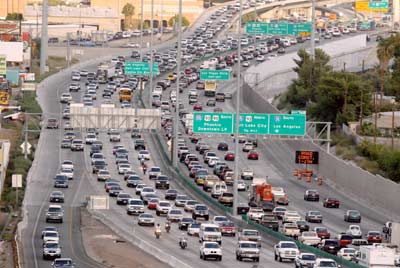
Higher parking fees discourage people from driving in major urban centers, reducing the amount of vehicles in confined city spaces. Not only will this reduce commute times, thanks to the reduction in overall traffic, but all those nasty greenhouse gases spewed out from those vehicles is reduced too.

What a hassle – you say – how am I to go anywhere?

You’ll find a way.

We always do.

As more buildings are jammed into our already overcrowded urban areas, there are fewer and fewer spots to park. This generally increases the costs associated with parking, which is a good thing.

It forces people to think of alternative modes of transportation – such as taking public transit, riding a bike, walking, or if a car is absolutely required, car pooling.

Ironic how environmental disasters like British Petroleum’soil slick in the Gulf of Mexico bring attention to the need for more green solutions, but what really brings about change is our own discomfort.

As parking spots in our urban centers are eaten up by newer developments, bringing even more people into the urban centers with cars and trucks, it constantly takes longer and longer to circle the block looking for a parking spot.

As those parking spots are increasingly rare, the cost to use them constantly increases.

Both the high fees and the hassle of finding a spot to park work on us psychologically, forcing us to think of other ways to get around.

Maybe the solution to our dependence on fossil fuels lies in our minds?

Thursday, 29 November 2012

Canada’s Largest City is Full of – Well – You Know


As most of the major urban centres across the globe embrace environmental policies, Canada’s largest city of Toronto appears not too.

Earlier this month, they paved over bike lanes on a major downtown street, to allow more room for gas guzzling cars, taking away space from environmentally-friendly clean pedal-powered cyclists.

Then yesterday, they reversed their decision banning the sale of single use plastic bags, after pressure from retailers claiming it would kill them.

Cry me a river – retailers in Toronto and many of the surrounding suburbs already charge five-cents for plastic bags, even though the City of Toronto removed that green by-law this past summer. Many retailers in – and for some reason out of Toronto – still charge five-cents if you want to carry home the stuff you just paid for.

Actually, charging for plastic bags is a good idea. It encourages people to bring their own reusable cloth bags when shopping. However, retailers shouldn't be allowed to profit from a green initiative – those funds should be put back into city programs specifically for improving our environment.

But the ultimate issue which Toronto Council backed away from favouring business over the environment is the outright ban on plastic bags in the first place.

Plastic – a chemical composition of fibres created from filthy petrochemicals – takes years to decompose, and when it does, it leaves the chemical residue in it’s wake, causing further pollution. Even biodegradable plastics leave this chemical residue.

An economical and environmentally-friendly alternative is to bring your own cloth bags – which a ban on plastic encourages.

It also encourages retailers to think of alternatives for packaging their products, which is something the suits and ties that run retail just don’t do enough of.

Although we’re a far more environmentally aware society, we still are very much a disposable one. From fast-food containers, to all the stuff we buy wrapped in layers of plastic, paper, cardboard and Styrofoam.

If manufacturers, retailers and anyone else selling goods gave more thought to how their customers will carry their products upon purchase, we’d all be better off.
We want the stuff we buy to be clean and unbroken, and expect a method of getting it from store shelf to home or business in it’s original clean and unbroken state. But we don’t need all the packaging materials most things are crammed with.

Packaging materials which eventually find their way to landfills in many instances, and recycling if we’re lucky.

Or worse – in the case of plastic bags – enjoying a lifespan buried beneath our homes, businesses and schools, leaching Cancer-causing chemicals into our drinking water, the Earth we grow our food, feed our livestock with and allow our kids to play on.

Banning plastic bags was a good idea Toronto.

Reversing that decision because you got cold feet will be felt by you, me, our children, their children their children’s kids and their kids, and countless other generations.

All because a small group of politicians in Canada’s largest city stopped thinking green. 

Thursday, 15 November 2012

The Ying and Yang of Being Held Hostage by Big Oil


It’s amazing how gullible the oil and gas executives think we are. For years in Canada and the United States, there have been concerns of price fixing on the famed – or now infamous – fossil fuel which runs the world.

The oil and gas industry claims these sudden price changes are due to the constant supply and demand of the market. The more oil and gas we consume, the higher the price. The less we consume, the lower the price, as the more supply.

Sounds like basic high school economics. But it’s just a ruse to throw us off their money making plans.

Federal governments in both halves of North America, and even in other parts of the world have launched investigations into these price fixing concerns – never being able to prove it because of the sneaky Arab oil tycoons that control the big oil and gas companies.

We haven’t heard much about price fixing for a while. As in the past, the sneaky tyrants running the world by controlling the flow of oil have a way to keep us off their tracks.

Today, the price at the pumps – as it has become known – is expected to drop by 1.1 cents per litre. Yes, drop – as in be cheaper!
That sounds pretty good, unless you factor in previously it rose by 2.1 cents per litre.

The cost of fuel for our gas guzzling cars has constantly increased and decreased by mere cents every day, for the past several months.

If you plot the course of gas on the whole, the price has actually risen more than fallen. But most are none the wiser – as we rejoice when we here gas prices drop by a mere fraction of a penny, thinking that’s a bargain!

What a deal – I might as well fill up my car now.

That’s the whole ploy – raise prices slowly over time, slightly dropping them every so often to give the appearance of a real economic supply and demand price structure – but in the end, it’s clever math used to by devious oil and gas tycoons to deceive you.

One day, governments will catch on to this latest ruse and again the price fixing talk will hit the press. Until then, rejoice in learning that the auto industry actually may be moving away from big evil dirty oil.

Yesterday, Motor Trend Magazine named it’s car of the year – and it doesn't run on gas.

The Tesla Model S is a completely electric vehicle (EV for short), and it’s designed to compete against the luxurious BMW 5 series.

It does so well – Motor Trend isn't the only auto reviewer I've heard give award-winning marks to the Tesla Model S, but Motor Trend is the major auto magazine which sets the standard for auto reviewers worldwide.

And it’s about time an alternatively fuelled vehicle made the top pick.

For years we've heard governments and automakers a like brag about how they are leading the way in terms of researching alternative fuelled vehicle research to break our dependence upon foreign oil.

Funny, the first car to become a real alternatively fuelled vehicle of choice isn't from any of the major automakers.

A little company called Tesla Motors, which started in almost a decade ago, had a vision of making electric vehicles which not only had the pep of a gas engine, but didn't scare you with ridiculously low distance limits before the battery needed a charge.

Tesla impressed us with their super car, which not only didn't have short distance woes, but was able to get from zero to 60 in under five seconds – comparable to Porsche, and other gas-powered high-end sport cars.

The Tesla Model S continues these amazing stats, and unlike their super car – the Tesla Roadster which was just a two-seater – the Tesla S has room for four full-sized adults, groceries, and all the comforts of a high-end everyday driving sedan.

Congratulations Tesla –and keep it up.

The world needs innovative and imaginative inventors like you, to break us from our dependencies on big black oil.

Because it’s sadly obvious, governments and the traditional big automakers aren't going to do it – they talk, and talk and talk.

Occasionally the major automakers release a demo of one of their concept cars.
But none has come out with anything really practical – like Tesla.

Even General Motor’s Chevy Volt and the Nissan Leaf have limits which make them only practical for city dwellers. And the Nissan Leaf looks like an egg with it's back cut-off -- not very attractive!

Both GM and Nissan are still peddling gas guzzling vehicles. Until they break their ties completely with big oil, they will never make a decent EV or other alternative fuelled vehicle.

Once you make a deal with the devil, you play by the devil’s terms. And the devil – in this case big Arab oil – won’t allow the major automakers to manufacture anything which really cuts into the oil and gas tycoon’s profits.

Tesla Motors never made that deal with the devil. From day one, they were making cars which ran on free electrons, instead of filthy – and costly – black oil.

The world needs more Tesla Motorheads – willing to stand up to the devil.