Showing posts with label Transit. Show all posts

Friday, 22 March 2013

The Best Way to Green the Planet -- Mentally


As Earth Hour approaches this weekend, we'll all be huddled in the dark, thinking how to be more green.

Though there is more too it than switching off the lights. Driving fossil fuelled vehicles causes the most pollution in major cities, and is a big part of polluting our air.


Topping the list, is London, England where residents pay on average US$933 per month, while the average parking fees people in Hong Kong pay aren’t far behind – it came in second on the most expensive places to park list – at US$744.72.

Some places didn’t seem all that bad, residents in Kitchener-Waterloo, Ontario, Canada only pay on average US$116.94 per month to park their vehicles. The most expensive Canadian city? Calgary, Alberta at US$453.38 – and Calgary is the only Canadian location to make the top ten of the international most expensive places to park.

Whether you drive a Hummer in mid-town New York – the most expensive place to park in the United States – or a Lorry in London, UK – the most expensive place to park in the world – parking fees should be high.
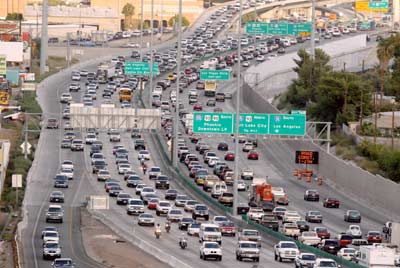
Higher parking fees discourage people from driving in major urban centers, reducing the amount of vehicles in confined city spaces. Not only will this reduce commute times, thanks to the reduction in overall traffic, but all those nasty greenhouse gases spewed out from those vehicles is reduced too.

What a hassle – you say – how am I to go anywhere?

You’ll find a way.

We always do.

As more buildings are jammed into our already overcrowded urban areas, there are fewer and fewer spots to park. This generally increases the costs associated with parking, which is a good thing.

It forces people to think of alternative modes of transportation – such as taking public transit, riding a bike, walking, or if a car is absolutely required, car pooling.

Ironic how environmental disasters like British Petroleum’soil slick in the Gulf of Mexico bring attention to the need for more green solutions, but what really brings about change is our own discomfort.

As parking spots in our urban centers are eaten up by newer developments, bringing even more people into the urban centers with cars and trucks, it constantly takes longer and longer to circle the block looking for a parking spot.

As those parking spots are increasingly rare, the cost to use them constantly increases.

Both the high fees and the hassle of finding a spot to park work on us psychologically, forcing us to think of other ways to get around.

Maybe the solution to our dependence on fossil fuels lies in our minds?

Tuesday, 4 December 2012

North American VS European Cities – A Tale of Green Greed


On a day when Toronto, ON. Canada was ranked one of the top fifteen cities in the world to live in, the cost for getting around that city increased.

That is if you are an environmentally-friendly commuter. The city’s politicians approved a fare hike for the Toronto Transit Commission, the city-run public transit service which averages about 450 passenger rides every year, making it one of the busiest transit systems in the world.

Also on a day when the largest city in Canada was placed on this top livable cities list, the provincial transit service – GO for Government of Ontario Transit – announced plans to also increase it’s prices.

Human resources consulting firm Mercer supposedly considers transportation, along with government stability, crime rates, banking, health care, pollution levels, housing and recreation when they create these lists.

Although there are far worse places in the world to live, there are far greener cities in the world to live than Toronto -- or any North American city.

Vienna, Zurich, Munich and Frankfurt all ranked highest on the list – which says something about European versus North American cities when it comes to being the best places to live.

Europe has embraced alternative modes of travel to gas guzzling cars. It isn't uncommon for people in these places to take public transit, bike, or even car pool if they do have to drive.

Toronto – which ranked 14 on the list and Montreal – which ranked 23—both have excellent public transit systems. However, in both cities – actually many North American cities – there appears to be a stigma associated with taking public transit.

Those who take public transit in major urban centres in North America are often seen as the working poor, the trailer-park-trash of the urban jungle. The rift-raft that can’t afford a car.

That’s why public transit is so poorly funded in North American cities. It’s all in the head. Or at least the heads of the people that live there.

In Europe, the costs of operating the public transit systems are paid for largely by local and federal levels of government. It’s not considered a working poor rift-raft using service – it’s considered a necessity for the people and the good of the city.
Europeans don’t attach silly stigmas to those who take public transit. They realize that if it weren't for the public transit system, they’d spend hours in traffic just to get to work each day. If it weren't for public transit, they’d sit in traffic jams inhaling horrible fumes each day just to see their friends and family. They know they’d be contributing to global warming every time they went to the corner store.
Oh wait – we know all these things here in North America too.

So why do we attach idiotic ideologies about those taking public transit in Canada and the United States?

And worse, because of those idiotic ideologies, we force the costs of public transit onto the backs of those who take it – instead of using the tax-base to pay for it – which furthers that mentality because if the government doesn't think paying for public transit is a good thing, why should the average citizen?

And as we always complain about high taxes, governments always cut funding to the least popular government services – which usually means public transit because of this silly mentality North American cities have about the green way to travel.

So governments continue to under-fund transit in North America, increasing costs to riders, which translates into fewer people taking transit – ultimately pushing more people into their cars, creating enormous traffic tie-ups, pumping toxic fumes into the air we breathe, while increasing the amount of greenhouse gasses in our environment.

Which begs the question – how’d any North American city even make the top livable cities in the world to live in?

Wednesday, 3 October 2012

City of Toronto LEAST Environment-Friendly?


Canada’s largest city has many things to be proud of. It’s always the cleanest and friendliest of the big urban centres I've ever been too.

But as we become more aware of our environment and the importance of protecting and preserving it for future generations, Canada’s largest city of Toronto is possibly the least green.

Or that’s the image the city is projecting to the nearly 6 million residents of the Greater Toronto Area, as today’s council meeting is all about environment bashing.

Under the previous mayor, the city implemented a five cent fee for plastic bags. Retailers charged five cents per bag. The fee was designed to reduce the amount of plastic bags going to landfill, by encouraging people to reuse their own plastic bags, or bring cloth shopping bags.

According to many local businesses, this worked. It certainly did for me – I got into the habit of always bringing my own bags.

You’d think that five cents the city of Toronto collected to reduce plastic bag use would go to fund an environmental initiative for the city, or at the very least back to the city.

Nope. It went straight into the pockets of the retailers!
So, many residents became understandably cynical about the five cent plastic bag “tax” and current Toronto Mayor Rob Ford campaigned during the last election to eliminate this fee.

In the Spring, Mayor Ford’s election promise was fulfilled, and then some – not only did council vote out the five cent fee, but they actually did do good for the environment – they voted in a complete ban on all plastic bags period.

Plastic, an oil-based product from foreign –owned petroleum suppliers – takes decades to break down, and leaves a chemical goo behind, poisoning the environment.

Recycled paper bags, or using and reusing cloth bags is a green solution.
Banning plastic bags was good.

However, the city’s Mayor probably took some heat from his backers, and he’s trying to back pedal the decision to ban plastic bags by reopening the debate, and calling for another vote on the ban.

Boo Mayor Rob Ford – boo.

As if plastic bags weren't a big enough distraction for Canada’s largest city, they also are voting today to axe a short bike lane that cost millions to put in.

Toronto is the only major urban centre I have ever been to, where if you don’t own a car, you are considered trailer park trash.

No kidding – when I go someplace nearby and I’m asked if I had trouble finding parking, and I admit I took the subway or bus, people look at me like I’m some sort of lower class peasant.

Ever try to drive in New York City? It’s often faster to walk. London, England’s Underground is world famous for being safe, fast and able to take you to just about anywhere you want. In either place, usually you know who drove – they are always the last person to show up because traffic in both cities is horrendous.

I've never been made to feel bad for not driving in New York, London, or any other major urban centre.

But here in Canada’s largest city, public transit is so severely underfunded, not a year goes by without a fare increase, cuts to service, or both.

Taking green alternatives to sitting in Toronto traffic isn't only underfunded, it’s almost completely discouraged.

Why else would the city of Toronto be voting today to reopen a bike lane to gas guzzling cars?

If Toronto’s councillors were smart enough to jump on the environmental bandwagon, they’d soon reap its many rewards.

Charging people for plastic bags is a nuisance, but if properly done, creates environmentally-friendly habits which will eventually kill the nuisance factor. Funnelling funds from such a fee into environmental programs – such as recycling, the manufacture of locally sourced reusable cloth grocery bags, or other such things – would eliminate the cynicism, and make a solid green initiative which the councillors and mayor would have every right to be proud of. 

Taking a page out of London, England’s green initiatives, Toronto should ban automobiles from the downtown, except for delivery trucks and emergency vehicles. All other vehicles should be charged a steep fee.

Bike and bus lanes need to be increased – NOT decreased!

And public transit needs to be funded – hey maybe that five cent per plastic bag fee can fund this too.

Constantly cutting public transit, bike lanes, and allowing plastic bags sends the wrong message to citizens, and enforces old ways of thinking, which aren't environmentally or economically sustainable.

It encourages people to use their cars no matter how bad traffic is. It encourages wasteful disposable society viewpoints around packaging. And it even worse than what these habits do to the environment, it creates a society where people think less of those who do otherwise.
It’s a dark stain on the fabric of a once great urban city.

One of the world’s most well respected – if not THE most respected urban planner – Jane Jacobs thought so highly of Toronto, she moved up here from her American home in Boston to live out her final years.

Jacob’s book “The Life and Death of Great American Cities” is still required reading for anyone in urban planning, and many other similar degrees.

Oh what would Jane Jacobs say of our once great city if she were alive today?

Thursday, 31 May 2012

Tweet, Like, Fan, Friend and Post from the London Underground

Today, London, England’s famous subway system – the Underground – became a Wi-Fi access point for the city’s commuters.

Or at least some of those commuters – Virgin Media is working with Transport London to wire about 80 station platforms, allowing Londoners to use their Wi-Fi-capable mobile devices while waiting for the next train.

Don’t worry, annoying ring tones won’t wake you on your morning commute – the Wi-Fi service is only available from station platforms, instead of trains – for now.

As we become increasingly more dependent on our Smartphones, tablets, laptops and just about anything else in our digital world, the ability to access these devices grows too.

And it makes sense to eventually expand Wi-Fi access from subway platforms to within the actual trains – who wants their game of Angry Birds suddenly cut off because the train arrives?

There has been talk in other cities of wiring their undergrounds so passengers on mobile devices could use those devices deep under our cities.

Earlier this month, The New York Times reported that Boingo – love that name! – will be providing Wi-Fi access to its subscribers at subway platforms in Manhattan, Brooklyn, the Bronx and Queens.

Over two years ago, Canada’s largest city started taking bids on wiring their subway stations too. The Toronto Transit Commission (TTC) began screening potential contractors to set up cell service across all 67 station platforms in Toronto, with an estimated roll-out by mid 2012.

Since that 2010 report, the TTC has not made any further announcements about this roll-out, which was supposed to happen around this time.

Maybe the efforts by London and New York City will kick start Toronto’s council to get off their butts and get with the times?

Although for those of us enjoy our morning nap during our commutes into work, it might be nice to delay expansion of Wi-Fi to the trains, or to have Wi-Fi quiet zones so that we can continue to get some much needed sleep.