Showing posts with label Earth. Show all posts

Friday, 22 March 2013

The Best Way to Green the Planet -- Mentally


As Earth Hour approaches this weekend, we'll all be huddled in the dark, thinking how to be more green.

Though there is more too it than switching off the lights. Driving fossil fuelled vehicles causes the most pollution in major cities, and is a big part of polluting our air.


Topping the list, is London, England where residents pay on average US$933 per month, while the average parking fees people in Hong Kong pay aren’t far behind – it came in second on the most expensive places to park list – at US$744.72.

Some places didn’t seem all that bad, residents in Kitchener-Waterloo, Ontario, Canada only pay on average US$116.94 per month to park their vehicles. The most expensive Canadian city? Calgary, Alberta at US$453.38 – and Calgary is the only Canadian location to make the top ten of the international most expensive places to park.

Whether you drive a Hummer in mid-town New York – the most expensive place to park in the United States – or a Lorry in London, UK – the most expensive place to park in the world – parking fees should be high.
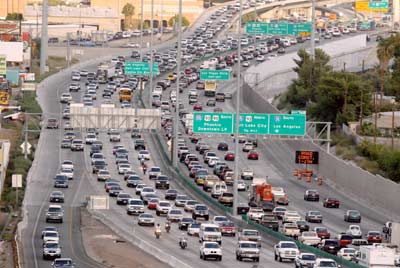
Higher parking fees discourage people from driving in major urban centers, reducing the amount of vehicles in confined city spaces. Not only will this reduce commute times, thanks to the reduction in overall traffic, but all those nasty greenhouse gases spewed out from those vehicles is reduced too.

What a hassle – you say – how am I to go anywhere?

You’ll find a way.

We always do.

As more buildings are jammed into our already overcrowded urban areas, there are fewer and fewer spots to park. This generally increases the costs associated with parking, which is a good thing.

It forces people to think of alternative modes of transportation – such as taking public transit, riding a bike, walking, or if a car is absolutely required, car pooling.

Ironic how environmental disasters like British Petroleum’soil slick in the Gulf of Mexico bring attention to the need for more green solutions, but what really brings about change is our own discomfort.

As parking spots in our urban centers are eaten up by newer developments, bringing even more people into the urban centers with cars and trucks, it constantly takes longer and longer to circle the block looking for a parking spot.

As those parking spots are increasingly rare, the cost to use them constantly increases.

Both the high fees and the hassle of finding a spot to park work on us psychologically, forcing us to think of other ways to get around.

Maybe the solution to our dependence on fossil fuels lies in our minds?

Tuesday, 3 July 2012

Intelligent Life Outside Planet Earth?

What if there is intelligent life outside of our own solar system?

The ancient Greek Philosophers thought the skies above were the heavens, and the sun, stars, winds, rain and just about everything else, came from various gods.

Thanks to technology, we now know that the sun rise and set isn’t controlled by Zeus, Apollo, or some other god-like being, but is just the natural course of planetary orbits within our solar system.

The real question scientists and sci-fi aficionados have been seeking to solve, is whether there really are other intelligent life forms.

Movie makers have long used this question to entertain us, creating a whole genre of films featuring the stereotypical olive-green men from Mars, with those scary dark as night eyes, long faces, and just as creepily long arms and legs. Sadly, most of these movies are so bad, they shouldn’t even qualify for their “B-Movie” labels.

But the question I started thinking about wasn’t whether intelligent life exists outside of our safe and comfortable home of planet Earth. My thoughts turned to the infamous “what if?”

What if we do discover intelligent beings, able to communicate with us? What then?

We have enough difficulty communicating with ourselves, with all the wars going on around the globe. Some of us can’t talk to our own boss, wife, or even to our kids without getting all tongue-tied.
How would we relate to beings from another world?
 
Would we be open to sharing our socio-economic and technical knowledge? Would they?

Assuming there are beings intelligent enough to visit us – as we certainly haven’t mastered space travel yet – they would probably be far more advanced than us.

Maybe they have solved all of the common global crisis we face now – war, starvation, famine, drought, holes in the ozone, global warming . . .

It would be an amazing bit of luck to pick the brains of some alien race, who could solve all – or even just one – of these problems.

But then again, what could we offer in return?

Here, have a cheese doodle.

Yeah. Right.

Chances are, if aliens were able to solve the distances of space travel to visit it us, we’d be so far beneath them on the evolutionary scale, we may seem like cockroaches appear to us.

And for the most part, we crush cockroaches, as we just see them as filthy, disgusting insects that invade our homes scavenging for food.

One of the greatest minds in our time, Stephen Hawking even suggested not long ago, that we should stop sending out signals, satellites, and other spacecraft in search of alien life, because it puts us at grave risk.

To Hawking, sending out these beacons is like showing the insect exterminator where the hive is. We human beings haven’t exactly been all that peaceful with others from distant lands down here on Earth – just think of all the wars and currently and previously being fought.

What makes us so sure aliens able to travel to other worlds would be any different?

Our planet is a wealth of natural resources, ripe for the picking of any alien species which might use it for food, fuel or a new home.

And if they have mastered space travel, they certainly have the technological power to displace and destroy us as they harvest our planet’s resources, or make themselves home.

Tuesday, 5 June 2012

Transit of Venus May Answer Age Old Question Where Did I Come From?

Tonight, a rare cosmic phenomenon will occur high up above our heads – Venus’ orbit brings it right in front of our Sun.

Depending on where on this planet you happen to be, you’ll most likely start to see Venus as it transits across Sun from 5:30pm EST. Astronomers call this the Transit of Venus, and it’s a very rare event – miss tonight’s event and you’ll have to wait about 105 years to see it happen again.

But for amateur astronomers like myself, it isn’t just the infrequency of these celestial events which makes them so enticing. Most think of us sky watchers as space geeks. Sci-fi fans that dress like their favorite Star Trek characters, still living at home in their parent’s basements. Awkward in social situations, unless we are talking about string theory, black holes, and Captain Kirk.

Not true.

Well, okay, I enjoy Star Trek, have discussed string theory, black holes and Captain Kirk . . . but the rest is just wrong!

Seriously – astronomy is more than just watching the stars.

Astronomy is all about unraveling the mysteries which human beings have been seeking since we could think. Is there life on other planets? Are there other worlds like our own? And the ultimate question – where did I come from?

Truth is, astronomers know where we all came from, and it doesn’t relate to the birds and the bees. 

We’re all aliens from another world – or more accurately – we’re all composed of the bits and pieces from other worlds, which compose our bodies, making us who and what we are.

A little before you were born – say about 14 billion years ago – there was this Big Bang, which exploded all the elements outwards, into the vacuum of space.

All the basic elements found on the periodic table -- oxygen, hydrogen, helium and the rest – were scattered throughout our universe from that original Big Bang.

As the basic elements collided with each other in clouds of dust and debris, over billions of years of swirling in space, they formed planets, stars, comets, asteroids, meteors, plants, trees, mountain tops and eventually you.

You are composed of the fabric of space – all the elements within your body originated in that cosmic explosion billions of years ago. Now don’t you feel old?

We human beings are composed of carbon, hydrogen, oxygen and a few other basic elements. And all of these elements – even the ones composing our bodies today – originated from that massive explosion billions of years ago.

So when astronomers salivate over rare cosmic events like tonight’s Transit of Venus, we’re not just watching something rare occur – we’re trying to learn more about ourselves, and where we all came from.

Because although we know all matter that exists everywhere anywhere in our universe came from the Big Bang, we still don’t really know where the Big Bang came from.

But by looking up, one day we may figure it all out, and finally answer those questions which we have been asking since we could think – where did I come from?