Showing posts with label alternative fuels. Show all posts

Friday, 22 March 2013

The Best Way to Green the Planet -- Mentally


As Earth Hour approaches this weekend, we'll all be huddled in the dark, thinking how to be more green.

Though there is more too it than switching off the lights. Driving fossil fuelled vehicles causes the most pollution in major cities, and is a big part of polluting our air.


Topping the list, is London, England where residents pay on average US$933 per month, while the average parking fees people in Hong Kong pay aren’t far behind – it came in second on the most expensive places to park list – at US$744.72.

Some places didn’t seem all that bad, residents in Kitchener-Waterloo, Ontario, Canada only pay on average US$116.94 per month to park their vehicles. The most expensive Canadian city? Calgary, Alberta at US$453.38 – and Calgary is the only Canadian location to make the top ten of the international most expensive places to park.

Whether you drive a Hummer in mid-town New York – the most expensive place to park in the United States – or a Lorry in London, UK – the most expensive place to park in the world – parking fees should be high.
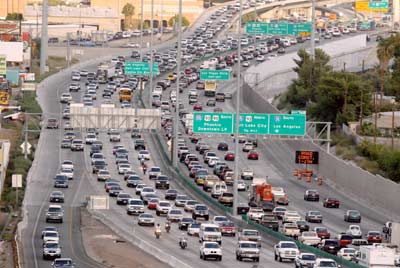
Higher parking fees discourage people from driving in major urban centers, reducing the amount of vehicles in confined city spaces. Not only will this reduce commute times, thanks to the reduction in overall traffic, but all those nasty greenhouse gases spewed out from those vehicles is reduced too.

What a hassle – you say – how am I to go anywhere?

You’ll find a way.

We always do.

As more buildings are jammed into our already overcrowded urban areas, there are fewer and fewer spots to park. This generally increases the costs associated with parking, which is a good thing.

It forces people to think of alternative modes of transportation – such as taking public transit, riding a bike, walking, or if a car is absolutely required, car pooling.

Ironic how environmental disasters like British Petroleum’soil slick in the Gulf of Mexico bring attention to the need for more green solutions, but what really brings about change is our own discomfort.

As parking spots in our urban centers are eaten up by newer developments, bringing even more people into the urban centers with cars and trucks, it constantly takes longer and longer to circle the block looking for a parking spot.

As those parking spots are increasingly rare, the cost to use them constantly increases.

Both the high fees and the hassle of finding a spot to park work on us psychologically, forcing us to think of other ways to get around.

Maybe the solution to our dependence on fossil fuels lies in our minds?

Tuesday, 4 December 2012

North American VS European Cities – A Tale of Green Greed


On a day when Toronto, ON. Canada was ranked one of the top fifteen cities in the world to live in, the cost for getting around that city increased.

That is if you are an environmentally-friendly commuter. The city’s politicians approved a fare hike for the Toronto Transit Commission, the city-run public transit service which averages about 450 passenger rides every year, making it one of the busiest transit systems in the world.

Also on a day when the largest city in Canada was placed on this top livable cities list, the provincial transit service – GO for Government of Ontario Transit – announced plans to also increase it’s prices.

Human resources consulting firm Mercer supposedly considers transportation, along with government stability, crime rates, banking, health care, pollution levels, housing and recreation when they create these lists.

Although there are far worse places in the world to live, there are far greener cities in the world to live than Toronto -- or any North American city.

Vienna, Zurich, Munich and Frankfurt all ranked highest on the list – which says something about European versus North American cities when it comes to being the best places to live.

Europe has embraced alternative modes of travel to gas guzzling cars. It isn't uncommon for people in these places to take public transit, bike, or even car pool if they do have to drive.

Toronto – which ranked 14 on the list and Montreal – which ranked 23—both have excellent public transit systems. However, in both cities – actually many North American cities – there appears to be a stigma associated with taking public transit.

Those who take public transit in major urban centres in North America are often seen as the working poor, the trailer-park-trash of the urban jungle. The rift-raft that can’t afford a car.

That’s why public transit is so poorly funded in North American cities. It’s all in the head. Or at least the heads of the people that live there.

In Europe, the costs of operating the public transit systems are paid for largely by local and federal levels of government. It’s not considered a working poor rift-raft using service – it’s considered a necessity for the people and the good of the city.
Europeans don’t attach silly stigmas to those who take public transit. They realize that if it weren't for the public transit system, they’d spend hours in traffic just to get to work each day. If it weren't for public transit, they’d sit in traffic jams inhaling horrible fumes each day just to see their friends and family. They know they’d be contributing to global warming every time they went to the corner store.
Oh wait – we know all these things here in North America too.

So why do we attach idiotic ideologies about those taking public transit in Canada and the United States?

And worse, because of those idiotic ideologies, we force the costs of public transit onto the backs of those who take it – instead of using the tax-base to pay for it – which furthers that mentality because if the government doesn't think paying for public transit is a good thing, why should the average citizen?

And as we always complain about high taxes, governments always cut funding to the least popular government services – which usually means public transit because of this silly mentality North American cities have about the green way to travel.

So governments continue to under-fund transit in North America, increasing costs to riders, which translates into fewer people taking transit – ultimately pushing more people into their cars, creating enormous traffic tie-ups, pumping toxic fumes into the air we breathe, while increasing the amount of greenhouse gasses in our environment.

Which begs the question – how’d any North American city even make the top livable cities in the world to live in?