Showing posts with label Communications. Show all posts

Monday, 10 December 2012

Look – It’s The Queen – In 3D!


You know technology has made it to the big time, when even the stodgy old Royal Family, used to ancient horse drawn carriages, starts to embrace it.

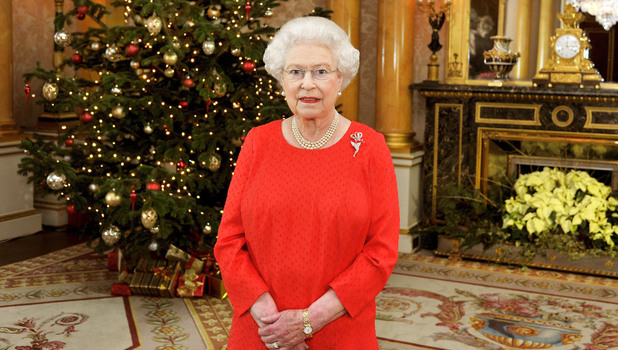
The annual Christmas Day Message from her Royal Highness, the Queen of England, will be recorded in three-dimension high definition – this is the first time a member of the Royal Family will be in 3D.

The BBC offered to broadcast the recent wedding Prince William to Kate Middleton, but the Royals declined.

Although the annual Christmas Day Message is usually brief – lasting under 30-minutes if that – and usually about the same things – a call for world peace, environmentalism, hope and prosperity for the coming year – perhaps this sudden change towards new technologies means a new fresh message from The Queen?

Perhaps we’ll have a more pragmatic, practical and realistic message, with tangible themes, instead of the usual call to the impossible world peace?

The notion of peace around the world is a nice pipe dream, but that is all it ever was and will be.

So long as we human beings have free will, free thought, and freedom of choice, we will constantly battle one another to express that free will, free thought and freedom of choice.

The constant never-ending war in the Middle East is based entirely on two diametrically opposed cultures expressing their ideological and political thoughts. This battle ground – which began in the 1960’s – has the occasional cease-fire, when the two sides appear to be getting along and moving towards peace.
But peace in the Middle East will never happen – so the notion of a world at peace is a fairy tale. Perhaps that’s why The Queen’s Annual Christmas Day message always includes this notion, because the life of fairy tales and fiction makes up much of the history of the Monarchy?

However, modern day technologies like HD 3D TV are far removed from the world of fairy tales. Technological marvels may start out as a mental image, a figment of one’s imagination, but soon become reality as soon as a method of creating that fiction for real is invented.

That’s just what the Royal Family – and other world leaders need – a way to turn the ideas of fiction such as world peace – into reality.

Then these annual messages from The Queen of England, the Pope, and other world leaders won’t appear so artificial and meaningless.

Tuesday, 13 November 2012

How Do You Decide Who You’ll Call Back Instantly and Who You Won’t?


When you receive an email or voice-mail, do you always respond right away?

In our always on, always available world, it’s almost impossible to ignore a message when it comes in – but do you?

My iPhone will signal the arrival of emails, texts, voice messages, even chat requests instantly. I know even if I have the ringer muted, as I get a little vibration, or even if I turn that off, it’ll still light up and let me know someone wants me to stop everything I’m doing, and pay them some attention.

That’s how it feels in our world of instant communications – that I’m to stop whatever it is I am doing, no matter how important, and check to see who sent me what.

And often I do – I just can’t help myself. I could be watching an amazing movie for the first time, have my fork up to my mouth about to chomp on an incredibly deliciously smelling meal, but I’ll put the fork down, and reach for my iPhone.

The office? Oh, I’ll call them back tomorrow.

It’s so easy to make decisions about who we respond to and who we don’t right away.

The girlfriend? I better take this NOW.

See?

We all do it. Make instant decisions about who we will contact right away, the second they email, text, voice message or send a chat request. And we all know this too.

So when you are the person that doesn’t get called back right away, how do you feel?

Pretty bad uh?

Me too.

It sucks to not be important enough to get an instant return email, call, text or even a quick acknowledgement of existence.

But that happens to us all too.

We are all on someone’s mental list of important enough to call back right away, just as we are all on someone’s mental list of not important enough to call back right away.

Isn’t technology wonderful?

Technology has made a world where we all expect – anticipate even – instantly being in touch with those we want to talk to RIGHT NOW – but we know that doesn’t always happen.

Even though we all know they got that message right away.

What’s that saying, a watched kettle never boils?

Maybe in today’s always on high tech world, a watched phone never rings? Or it’ll ring, but whether or not you choose to answer depends on you.

Monday, 5 November 2012

The Death of Payphones Could Kill Us All

Technorati. claim code: J3GQF9KRK2NV

If there’s anything Hurricane Sandy taught us, is that despite our amazing advances in technology, we’re still subject to the might of Mother Nature.

If it wasn't for coin operated payphones, many people in the affected areas of the largest superstorm to hit North America would never have been able to call for help. About 30,000 to 40,000 people just in New Jersey are homeless. Cell towers and power lines are still non-functional in many large urban centres  due to flooding.

Let the lone payphone saved the day – enabling people to reach out to their friends, family and colleagues, even if just for a moment, to let us know they are still alive.

Without the lone payphone, many would still be worried sick, wondering if their son, daughter, mom, dad, brother, sister, aunt, uncle, or best friend survived one of the worst natural disasters ever.


But the lone payphone is dying.

It’s been on the most endangered tech watch list for some time.

Since the first mobile telephone call in St. Louis Missouri on June 17, 1946 by three Bell Labs scientists, the  payphone's days have been numbered. Ironically, there wasn't much interest in the initial concept of being able to make a phone call from anywhere – the suits and ties didn't think anyone would be interested in chatting on the phone while walking their dog, driving their car, or any of the many things we do today.

Boy were they wrong. These days, it’s almost impossible to get a word in unless you are texting, tweeting or talking on a mobile device.

And mobile devices are no longer restricted to just cell and smartphones – tablets, mini-tablets, music players, even laptops to a lesser degree are all ways we stay connected when out and about.

Our mobile digital world has slowly been strangling payphones – many shopping malls across North America have been ripping them out, to make space for more public seating space, more retail store space, or even more signage space for billboards and posters.

The last refuge of the payphone – the corner gas station – is even turning away this now out-dated mode of communications.

I remember when I was a kid, and I’d go up with my uncle to the family cottage. We’d always stop off at the gas station at the top of the hill just as we entered town. My uncle would hand me a quarter, tell me to call ahead to see if they needed us to pickup anything, while he’d fill up the gas tank.

For as long as cars have been on the road, there have been payphones at gas stations. Whether it was to call ahead or call for help, if you were out and needed to make a call, you knew that there was always a payphone at a gas station.

Not anymore – most gas stations have nixed their payphones, replacing them with places to get hot coffee.

And the number of payphones in Canada could be cut by about 25 percent if the big and bullying phone companies don’t get their way.

Bell Canada is threatening the Canadian Radio and Telecommunications Commission (CRTC) – the Canadian government’s federal regulator on such things – that if they aren’t allowed to increase the cost of a payphone call from 50 cents to a whole buck, they’ll be forced to remove payphones from the system to offset rising costs.

Phone and cable companies in Canada have used this strong-arm tactic before – and won – to get more money. Whenever they want to raise rates, they always threaten the government with reductions in service if they don’t get their way.

They did this only a handful of years back, when they wanted to increase cable rates claiming the cost of providing communications technologies to the northern parts of the country were forcing them to raise costs across the board. They threatened that if they didn’t get their rate increase, they’d just delay or stop outright providing new technologies in the north. Essentially they threatened to cut off Canada’s north from the digital revolution sweeping across the world.

Freakin’ bullies.

If the communications giants like Bell Canada don’t get to raise the cost of dialing a payphone, they could disappear like dinosaurs.

And as global warming, climate change, solar storms, and other natural phenomenon which is beyond any of our control increases the likelihood of superstorms, we could find ourselves in dire situations, without a means of calling for help.

Scientists are predicting an increase in earthquakes, hurricanes, tornadic activity, and even snow and ice storms, because of changes they've been monitoring here on Earth, and out in space from satellites, and the International Space Station.

So at a time when we may need an old, out-dated form of communication – the lone payphone – we may not be able to find one.

Tuesday, 3 July 2012

Intelligent Life Outside Planet Earth?

What if there is intelligent life outside of our own solar system?

The ancient Greek Philosophers thought the skies above were the heavens, and the sun, stars, winds, rain and just about everything else, came from various gods.

Thanks to technology, we now know that the sun rise and set isn’t controlled by Zeus, Apollo, or some other god-like being, but is just the natural course of planetary orbits within our solar system.

The real question scientists and sci-fi aficionados have been seeking to solve, is whether there really are other intelligent life forms.

Movie makers have long used this question to entertain us, creating a whole genre of films featuring the stereotypical olive-green men from Mars, with those scary dark as night eyes, long faces, and just as creepily long arms and legs. Sadly, most of these movies are so bad, they shouldn’t even qualify for their “B-Movie” labels.

But the question I started thinking about wasn’t whether intelligent life exists outside of our safe and comfortable home of planet Earth. My thoughts turned to the infamous “what if?”

What if we do discover intelligent beings, able to communicate with us? What then?

We have enough difficulty communicating with ourselves, with all the wars going on around the globe. Some of us can’t talk to our own boss, wife, or even to our kids without getting all tongue-tied.
How would we relate to beings from another world?
 
Would we be open to sharing our socio-economic and technical knowledge? Would they?

Assuming there are beings intelligent enough to visit us – as we certainly haven’t mastered space travel yet – they would probably be far more advanced than us.

Maybe they have solved all of the common global crisis we face now – war, starvation, famine, drought, holes in the ozone, global warming . . .

It would be an amazing bit of luck to pick the brains of some alien race, who could solve all – or even just one – of these problems.

But then again, what could we offer in return?

Here, have a cheese doodle.

Yeah. Right.

Chances are, if aliens were able to solve the distances of space travel to visit it us, we’d be so far beneath them on the evolutionary scale, we may seem like cockroaches appear to us.

And for the most part, we crush cockroaches, as we just see them as filthy, disgusting insects that invade our homes scavenging for food.

One of the greatest minds in our time, Stephen Hawking even suggested not long ago, that we should stop sending out signals, satellites, and other spacecraft in search of alien life, because it puts us at grave risk.

To Hawking, sending out these beacons is like showing the insect exterminator where the hive is. We human beings haven’t exactly been all that peaceful with others from distant lands down here on Earth – just think of all the wars and currently and previously being fought.

What makes us so sure aliens able to travel to other worlds would be any different?

Our planet is a wealth of natural resources, ripe for the picking of any alien species which might use it for food, fuel or a new home.

And if they have mastered space travel, they certainly have the technological power to displace and destroy us as they harvest our planet’s resources, or make themselves home.

Thursday, 14 June 2012

Has Technology Created a Society without Faces?

I get a lot of emails – many of us do. Email is such an efficient yet invisible form of communications. There are so many forums on the Internet where we can communicate with complete strangers, never having seen their faces.

It used to be only on online chat forums that this completely faceless form of communications ruled.
But now I’m finding more and more people are willing to actually do business without ever actually meeting the person or persons they are to be working with.

I know the days are long since gone where you’d conclude a deal with just a handshake. But at the very least, that handshake gave you the opportunity to look your business associate in the eyes.

By not seeing the people we are conducting business with, we’re creating a very different society than what we have been used too.

Sure, there’s Facebook, Google+, Twitter, and the other social networks with their walls of faces. But even social networking isn’t real socializing in the real world. Though it may lead to that in some cases, for most of us on the social networks, we’ll never shake hands in real-time.

Email and social networking lacks the character in a person’s voice. There’s no body language to see if everyone really is on the same page. And there’s no small talk.

That’s the real loss. For years cultural anthropologists have told us we are social animals. We thrive in communities driven by many social interactions -- surrounded by small talk.

Small talk, water cooler chatter, even a simple smile and a warm “good morning” are all disappearing thanks to the faceless society of today.

It’s so easy to send off a quick email to a friend or colleague, asking about the wife, their kids or them – but do you really expect them to give you a detailed answer? If they do, do you respond with heartfelt sympathy or concern?

Usually not – email and social networking isn’t the forum for doing such things. If you were really concerned, you’d call and ask – but as our society becomes more digital and less personal, that phone is getting all the heavier to lift.

And that’s really very sad, tragic even, because it is the social interaction in life which makes life worthy of living.

There is an element of socializing in social networking, but rarely does it actually involve getting together in the real world, and actually talking. Just scroll through your friends, followers and fans on your social networks and count those you’ve met in person, and for most, it’ll be a very small percentage.

Sure, we have those funky characters called emoticons which are used to represent our feelings, but these can’t really replace the real thing. And we have live streaming video, using services like Google Hangouts and Skype, but even these aren’t the same as being in the same room, and sharing the same experiences.

And that is what is really missing from our technology driven world today – the sharing of real world experiences.

Although technology is bringing us all closer together, because we can talk, text, post, tweet and stream from anywhere to anywhere, technology is stealing away one of the vital elements of being life – human contact.