Though there is more too it than switching off the lights. Driving fossil fuelled vehicles causes the most pollution in major cities, and is a big part of polluting our air.
A 2010 survey by Colliers International ranked the most expensive places to park.
Topping the list, is London, England where residents pay on
average US$933 per month, while the average parking fees people in Hong Kong
pay aren’t far behind – it came in second on the most expensive places to park
list – at US$744.72.
Some places didn’t seem all that bad, residents in
Kitchener-Waterloo, Ontario, Canada only pay on average US$116.94 per month to
park their vehicles. The most expensive Canadian city? Calgary, Alberta at
US$453.38 – and Calgary is the only Canadian location to make the top ten of
the international most expensive places to park.
Whether you drive a Hummer in mid-town New York – the most
expensive place to park in the United States – or a Lorry in London, UK – the
most expensive place to park in the world – parking fees should be high.
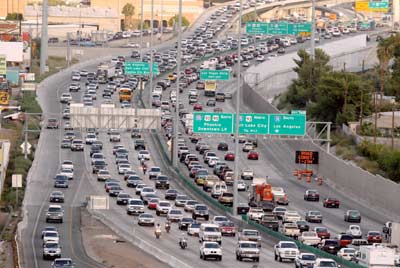 Higher parking fees discourage people from driving in major
urban centers, reducing the amount of vehicles in confined city spaces. Not
only will this reduce commute times, thanks to the reduction in overall
traffic, but all those nasty greenhouse gases spewed out from those vehicles is
reduced too.
Higher parking fees discourage people from driving in major
urban centers, reducing the amount of vehicles in confined city spaces. Not
only will this reduce commute times, thanks to the reduction in overall
traffic, but all those nasty greenhouse gases spewed out from those vehicles is
reduced too.
What a hassle – you say – how am I to go anywhere?
You’ll find a way.
We always do.
As more buildings are jammed into our already overcrowded
urban areas, there are fewer and fewer spots to park. This generally increases
the costs associated with parking, which is a good thing.
It forces people to think of alternative modes of
transportation – such as taking public transit, riding a bike, walking, or if a
car is absolutely required, car pooling.
 Ironic how environmental disasters like British Petroleum’soil slick in the Gulf of Mexico bring attention to the need for more green
solutions, but what really brings about change is our own discomfort.
Ironic how environmental disasters like British Petroleum’soil slick in the Gulf of Mexico bring attention to the need for more green
solutions, but what really brings about change is our own discomfort.
As parking spots in our urban centers are eaten up by newer
developments, bringing even more people into the urban centers with cars and
trucks, it constantly takes longer and longer to circle the block looking for a
parking spot.
As those parking spots are increasingly rare, the cost to
use them constantly increases.
Both the high fees and the hassle of finding a spot to park
work on us psychologically, forcing us to think of other ways to get around.
Maybe the solution to our dependence on fossil fuels lies in
our minds?

No comments:
Post a Comment
Thank you kindly for your feedback! All comments are reviewed prior to posting.